Why do exchange rates change daily?
Exchange rates don’t stay the same because currencies are traded around the world every day. Like the price of stocks or commodities, currency exchange rates rise and fall based on supply and demand. When more people want to buy a currency, its value usually increases.
When more people want to sell it, its value often falls. This buying and selling happens continuously in the global foreign exchange market, where banks, businesses, governments, and investors exchange currencies around the clock during the business week. Interest rates, economic news, political events, and market expectations all influence these daily price changes.
Understanding why exchange rates change daily can help you make better decisions when exchanging currencies or sending money abroad.
What makes exchange rates change every day?
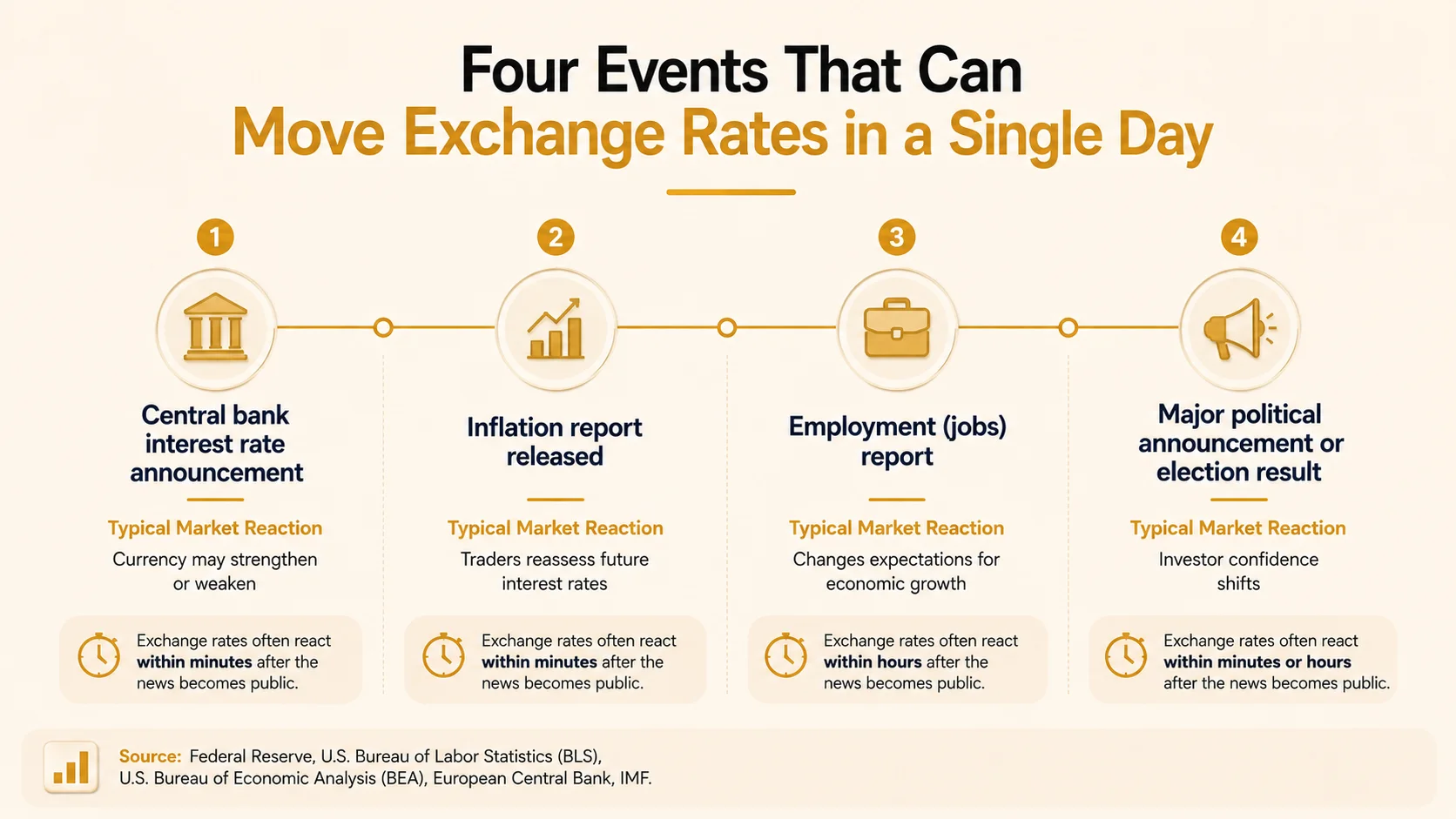
At the heart of every exchange rate movement is supply and demand. If more people want to own a currency, its value usually rises. If more people want to sell it, the value falls. But what causes people to buy or sell one currency instead of another? Several factors influence these decisions every day.
Interest rates
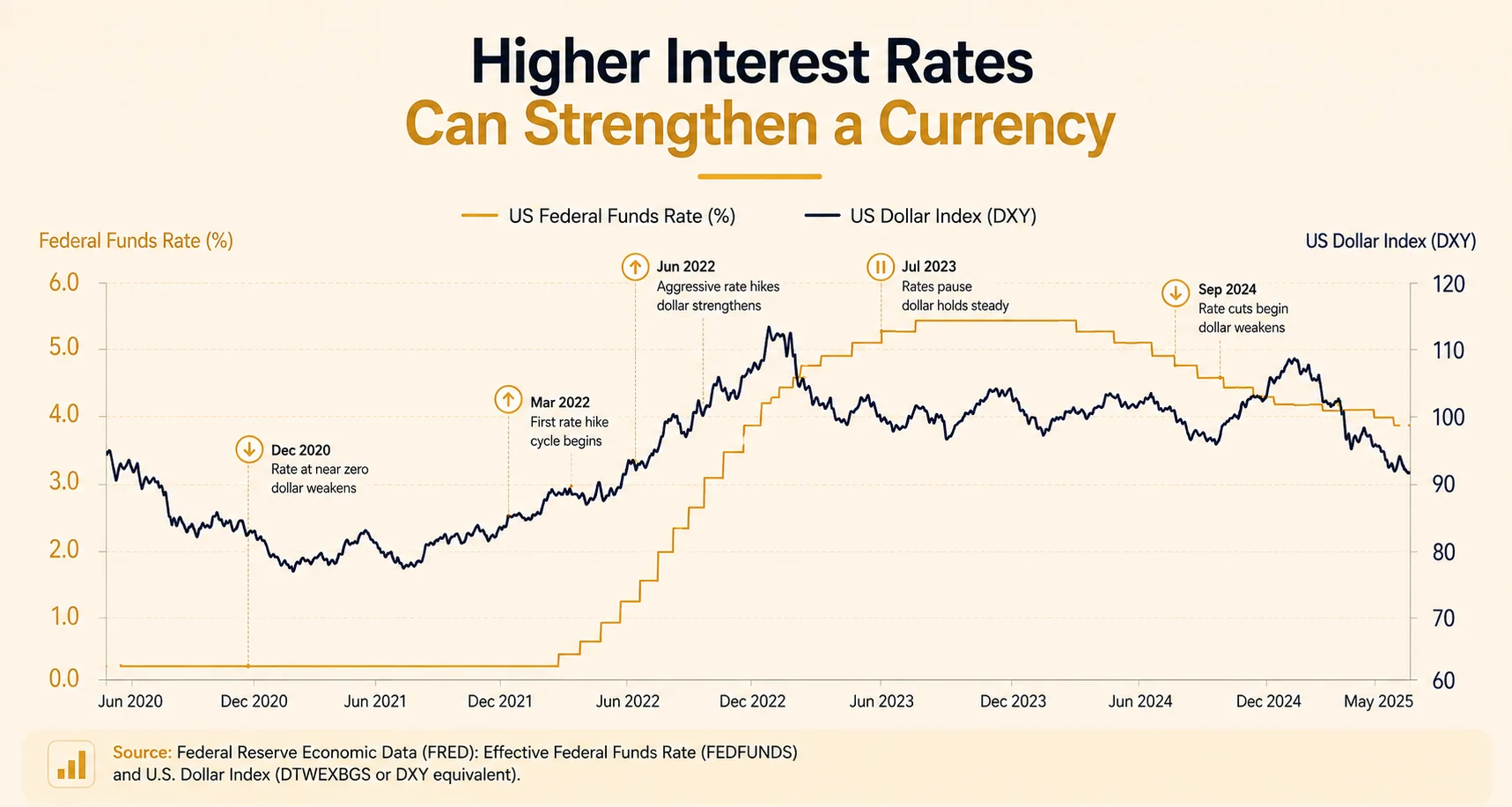
Interest rates are one of the biggest influences on currency values. When a country’s central bank raises interest rates, investors often earn better returns on savings, bonds, and other investments. This attracts foreign investment and increases demand for that country’s currency, which can push its value higher. Lower interest rates can have the opposite effect by making the currency less attractive to investors.
Economic performance
The health of a country’s economy also affects its currency. Investors closely watch reports on economic growth, inflation, employment, and consumer spending because they indicate how well the economy is performing. Strong economic data often increases confidence, encouraging more people to buy the currency. Weak economic reports can reduce confidence and contribute to exchange rate fluctuations.
Political events
Political stability plays an important role in currency markets. Elections, government policy changes, trade disputes, wars, and geopolitical tensions can all influence investor confidence. Stable governments generally encourage investment, while uncertainty often causes investors to move their money into currencies they consider safer. These shifts can quickly affect exchange rates.
Market speculation
Many people trading currencies are trying to profit from future price movements rather than making payments or exchanging money for travel. If traders believe a country’s economy is about to strengthen, they may start buying its currency before positive news is released. Likewise, expectations of weaker economic conditions can lead to selling. These expectations contribute significantly to daily exchange rate volatility.
Supply and demand
All of these factors eventually come back to supply and demand. Interest rates, economic performance, political events, and market expectations all influence how many people want to buy or sell a currency. Since millions of transactions take place every day, exchange rates constantly adjust to reflect the balance between buyers and sellers. This is why the rate you see in the morning may not be the same later in the day.
How do changing exchange rates affect you?
Even small changes in exchange rates can have a noticeable impact on your finances. If you’re traveling abroad, a stronger home currency means your money can go further. If your currency weakens, you’ll need to spend more to buy the same amount of foreign currency.
Exchange rates also affect people who make international purchases, pay overseas tuition fees, or support family members living in another country. A small change in the exchange rate could mean your recipient receives more or less money, even if you send the same amount.
Businesses feel these changes too. Companies that import goods may pay more when their local currency loses value, while exporters can benefit if their products become cheaper for overseas buyers. Businesses that receive international payments also need to consider how exchange rate movements affect their revenue.
If you regularly make an international money transfer or transfer money overseas, comparing exchange rates before confirming your transaction can help you get better value. Even a small difference in the exchange rate may save money over time and make it easier to find a cheap international money transfer.
Can you predict exchange rates?
Predicting exchange rates is extremely difficult, even for professional economists and financial institutions.
Currency values respond to new information almost instantly. An unexpected inflation report, a central bank announcement, or a major political event can cause exchange rates to change within minutes. Since these events aren’t always predictable, it’s impossible to know with certainty where a currency will move next.
Rather than trying to time the market, it’s usually more practical to focus on getting a fair exchange rate and understanding any fees before making a transfer. If your payment isn’t urgent, monitoring exchange rates over a few days may help you decide when to exchange your money.
Using a reliable international money transfer platform can also make it easier to compare rates and costs before sending funds. While no provider can guarantee the best rate every time, choosing the safest way to transfer money means looking beyond the exchange rate alone and considering transparency, security, and total transfer costs.
Frequently asked questions
Why do exchange rates change every day?
Exchange rates change because currencies are constantly being bought and sold in the global foreign exchange market. Changes in supply and demand, economic data, interest rates, political events, and investor confidence all influence currency values.
What has the biggest impact on exchange rates?
There isn’t a single factor. Interest rates, inflation, economic growth, political stability, and market expectations all work together to influence exchange rates every day.
Who decides exchange rates?
For most currencies, exchange rates are determined by the foreign exchange market. In some countries with fixed exchange rate systems, central banks play a larger role by maintaining a set exchange rate.
Why do exchange rates change several times a day?
The foreign exchange market operates continuously during the business week. Since millions of currency transactions happen every day, exchange rates are updated whenever supply and demand change.
Can I lock in an exchange rate?
Some financial institutions and payment providers offer products that allow customers to lock in an exchange rate for a future transaction. Availability depends on the provider, the currency, and local regulations.
Conclusion
Exchange rates change every day because the global currency market never stands still. Interest rates, economic performance, political events, investor expectations, and supply and demand all influence how much one currency is worth compared to another. While you can’t control these movements, understanding what drives them can help you make more informed decisions when exchanging currencies, traveling, or sending money internationally.
How PureFi can help
Whether you’re making an international money transfer, managing a foreign exchange account, or using a digital multi-currency account, PureFi helps eligible users view supported exchange rates and applicable fees before confirming a transaction. That means greater transparency when you send money internationally online or manage money across borders.
Availability, eligibility, supported countries, currencies, and services may vary.
Learn more about how PureFi can help you send, save, and grow money across borders, or download the app to get started today.