What's the Difference Between a Checking and Savings Account?
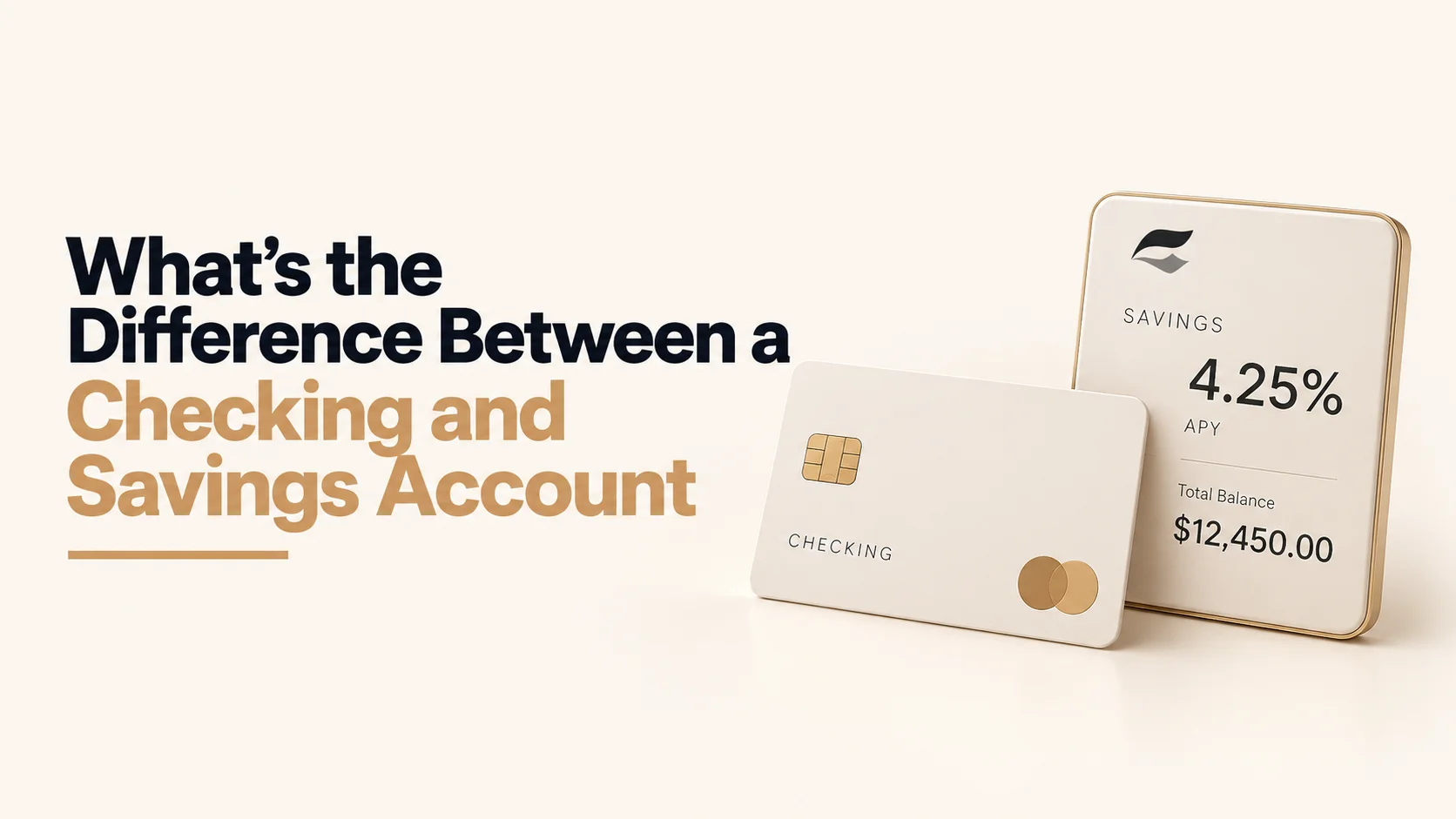
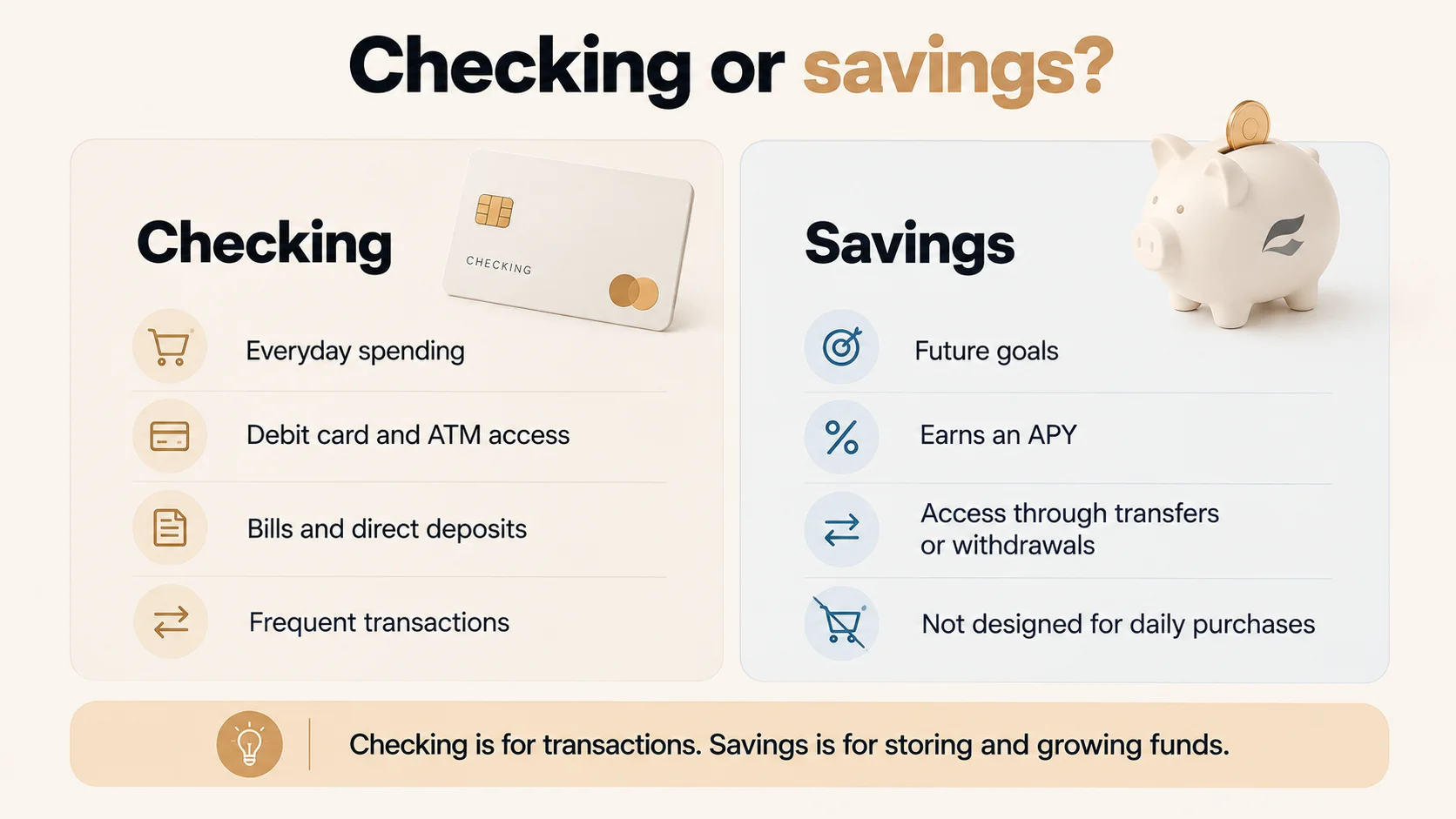
A checking account is designed for regular spending, while a savings account is designed for holding money and earning yield. Checking accounts provide easier access through debit cards, ATMs, checks, and bill payments. Savings accounts usually provide access through withdrawals or transfers. Savings earnings come from the APY offered by the bank or provider, and that rate can change. Eligible checking and savings deposits may receive FDIC protection when held at an insured bank. A digital savings platform may use a different account structure, so its access rules and protection should always be checked.
Checking vs. Savings Accounts at a Glance
Checking and savings accounts can both hold money, accept deposits, and support transfers. Their main difference is how the money is meant to be used.
| Feature | Checking account | Savings account |
|---|---|---|
| Main purpose | Everyday transactions | Holding money for future needs |
| Debit card | Usually included | Sometimes unavailable or limited |
| Bill payments | Common | Usually not the main purpose |
| Checks | Often available | Usually unavailable |
| ATM access | Common | Depends on the provider |
| Earnings | Often low or none | Usually earns an APY |
| Withdrawals | Designed for frequent use | Provider limits may apply |
| Fees | May include monthly or overdraft fees | May include monthly or excess-activity fees |
| Deposit protection | Eligible deposits may be FDIC insured | Eligible deposits may be FDIC insured |
The exact features depend on the bank and account. Some checking accounts earn a small APY, while some savings accounts provide an ATM card. The account agreement gives the final rules.
What Is a Checking Account?
A checking account is a transaction account. It is designed to receive money and pay for regular expenses. A paycheck may enter through direct deposit, and the account holder can then use the balance for rent, groceries, utilities, subscriptions, and other purchases.
Common Checking Account Features
Most checking accounts provide several ways to receive, spend, and transfer money:
- A debit card for in-store and online purchases
- ATM access for cash withdrawals
- Direct deposit for paychecks and other payments
- Checks, bank transfers, automatic payments, and online bill payment
Fees and Limits to Check
Checking accounts can still have limits on ATM withdrawals, debit card spending, and transfers. A bank may also hold a new deposit until the funds become available.
Some banks charge a monthly fee unless the customer maintains a minimum balance or receives qualifying direct deposits. Other costs can include out-of-network ATM, wire, statement, and overdraft fees.
A checking account is therefore useful when quick access matters more than earning a high APY. Its job is to make everyday payments easier.
What Is a Savings Account?
A savings account is meant to hold money that is not needed for regular spending. People commonly use one for emergencies, travel, a home deposit, education, repairs, or another planned expense.
How a Savings Account Earns
Unlike most checking accounts, a savings account normally earns an APY. A higher APY can help the balance grow faster when the starting amount, time, fees, and account activity stay the same. However, savings APYs are often variable, so the provider may raise or lower the rate after the account opens.
A savings account may be available through a branch-based bank, online bank, or credit union. A high-yield savings account works similarly but normally offers a higher APY than a basic savings product.
Common Reasons to Use a Savings Account
A savings account can keep money separate for:
- Emergency expenses
- Travel or a major purchase
- Education or home-related costs
- Another short-term financial goal
Some people use a separate account for each goal. Our guide to different types of savings accounts explains the common options.
An online savings app may provide balance tracking, automatic transfers, and goal tools. A high-yield savings app can make the account easier to manage, but convenience does not explain the underlying product. Check whether the money is held as an insured deposit or placed into another asset.
A high-yield digital savings account held at an FDIC-insured bank may qualify for deposit protection within legal limits. A high-yield investment platform may generate projected earnings from investments or real assets instead. That type of product can have different risks and should not be described as an insured bank account unless it genuinely uses one.
How Do Access and Withdrawals Differ?
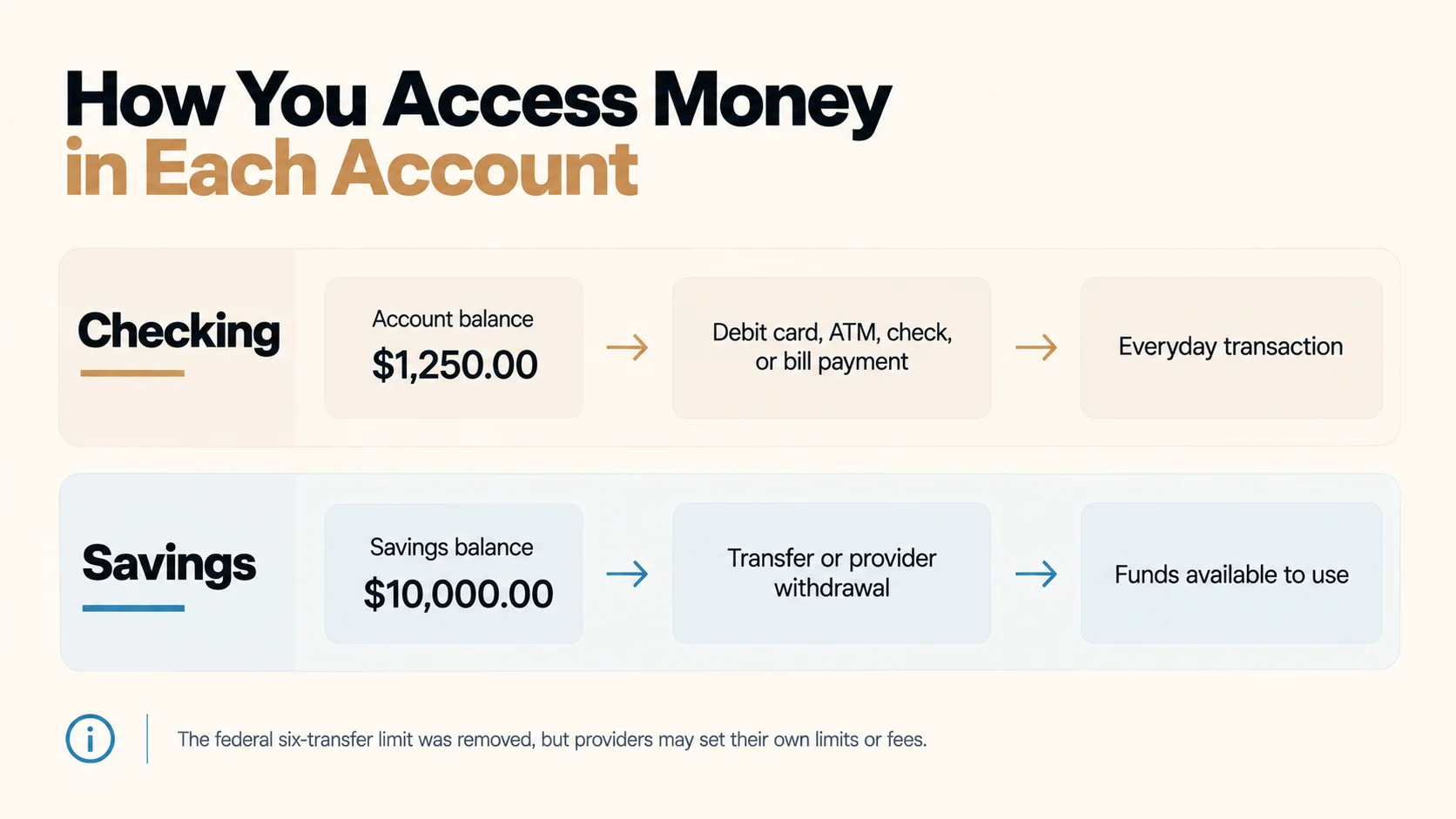
Checking accounts provide several direct ways to spend. You can normally use a debit card, write a check, schedule a bill payment, withdraw cash, or authorize an electronic payment. The merchant or biller receives payment directly from the checking balance.
Savings accounts are less focused on direct purchases. Access commonly happens through a transfer to checking, an ATM withdrawal, a bank transfer, or a withdrawal requested from the provider. Some savings accounts include an ATM card, but many do not include checks or everyday debit card purchases.
Federal Regulation D once limited certain convenient savings-account transfers and withdrawals to six per month. The Federal Reserve deleted that federal limit in April 2020. A bank can still set its own transaction limits or charge fees under its account terms, so customers should check the provider’s current policy rather than assuming every savings account allows unlimited activity.
Access times also differ. A transfer within the same bank may be quick, while an external transfer can take longer. Review the method and timing before opening an account. Our guide to withdrawing from a high-yield savings account covers the common options.
Keeping too much spending money in savings can create unnecessary transfers. Keeping all long-term savings in checking can make the money easier to spend and may produce little or no yield. The purpose of the funds should guide where they sit.
Which Account Is Better for Everyday Spending?
A checking account is normally the better option for regular spending. It is built to handle frequent transactions and gives the account holder several ways to pay.
It may be the better fit for:
- Receiving a paycheck
- Paying rent, utilities, and credit card bills
- Making debit card purchases
- Withdrawing cash regularly
- Managing subscriptions and automatic payments
Account alerts can help customers track low balances, forgotten subscriptions, and unusual transactions.
When the account lacks enough available funds, a payment may be declined or create a negative balance. The result and possible fee depend on the bank and overdraft settings.
Compare the monthly fee, minimum balance, ATM network, overdraft policy, and direct-deposit rules. Convenient access may matter more than a small APY offset by regular fees.
Which Account Is Better for Saving?
A savings account is normally better for money being kept for a future goal. Separating it from everyday spending can make the balance easier to protect and track. The account may also generate more earnings than a standard checking account.
The APY is important, but it should not be the only feature considered. Review whether the rate applies to the full balance, whether it is promotional, and whether certain deposits or activities are required. A strong advertised rate may be less useful if the account charges a monthly fee or makes withdrawals difficult.
People who want to avoid recurring charges can compare high-yield savings accounts with no monthly fees. They should still check transfer charges, wire fees, minimum requirements, and any conditions attached to the advertised APY.
Access also matters. Emergency savings should be available when an unexpected bill arrives. Money for a goal several years away may not require the same level of immediate access. The account should match the purpose and expected withdrawal date.
Before opening an account, confirm the provider’s identity requirements, funding methods, minimum deposit, APY, fees, transfer times, and protection. The steps in our guide to opening a high-yield savings account can help you prepare.
Put Your Dollars Into Something Real
With PureFi, your projected earnings come from shares of real homes with tenants. Choose your properties from your phone, review the documents, and see every fee before you confirm.
Learn more about how PureFi can help you own real estate shares or download the app to get started today.
Up to 6% APY is projected, variable, and not guaranteed. Property shares can lose value. PureFi is not a bank, and its balances and real estate shares are not covered by FDIC insurance or another government deposit scheme.