Does a Savings Account Build Credit?
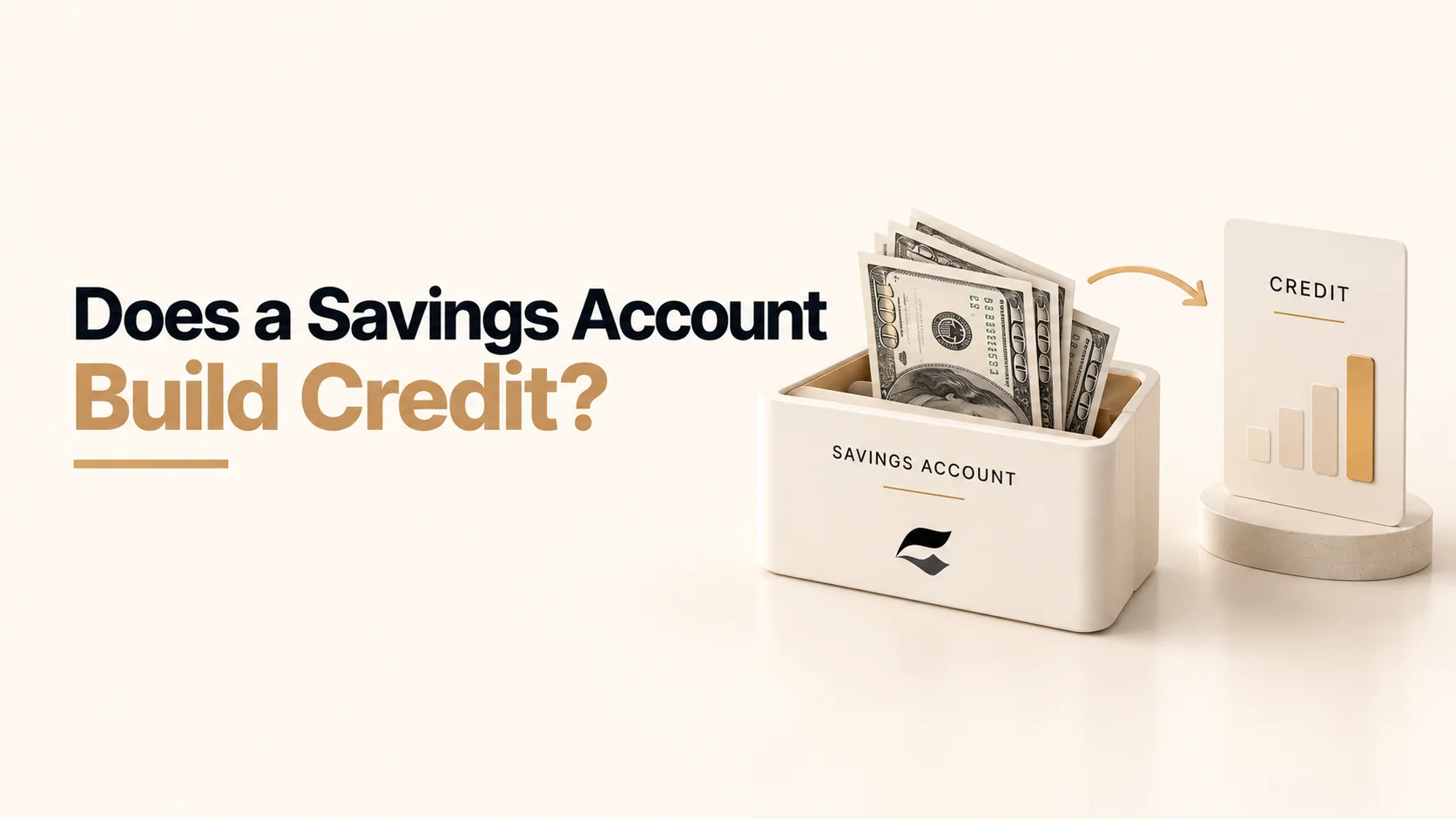
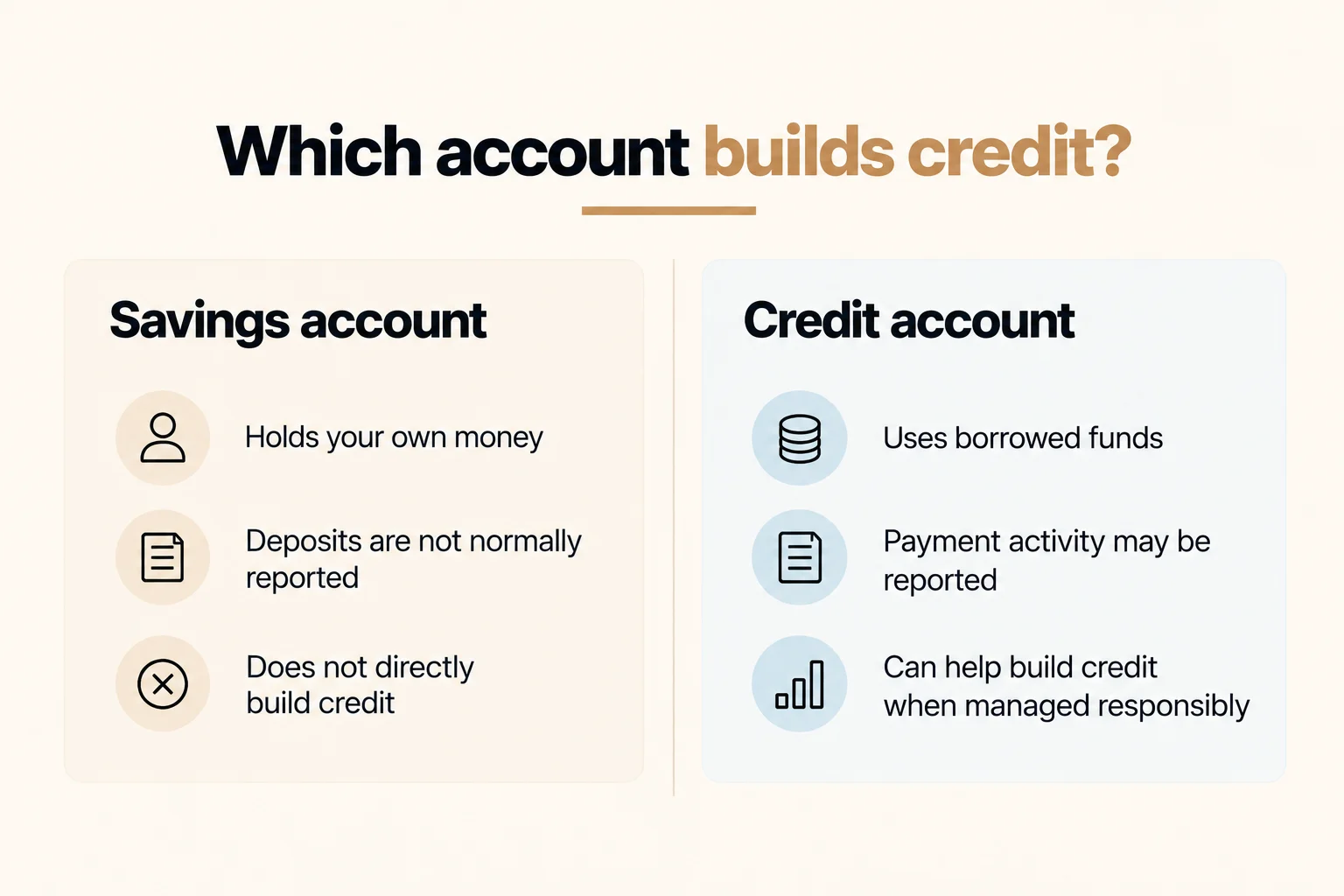
A savings account does not usually build credit because it holds your own money rather than funds you borrow. The bank may pay a variable yield on the balance, and that rate can change. You can generally access the money under the account rules, while eligible deposits at an insured bank or credit union may receive federal protection. Although savings can support stronger financial habits, deposits and withdrawals are not normally reported to the major credit bureaus.
Does a Savings Account Affect Your Credit Score?
A standard savings account normally has no direct effect on your credit score. Opening the account, adding money, receiving earnings, making withdrawals, or maintaining a large balance will not usually raise or lower your score.
Credit scores are calculated using information found in your credit reports. These reports mainly track how you manage money that you borrow, such as credit cards, mortgages, auto loans, and personal loans.
A savings account works differently. You deposit money that already belongs to you. The bank is not extending credit simply because it accepts your deposit.
As a result, the following actions do not normally affect your credit score:
- Opening a standard savings account
- Depositing or withdrawing money
- Receiving earnings on the balance
- Keeping a high or low balance
- Leaving the account open for several years
- Closing the account in good standing
A savings account can help you prepare for emergencies and avoid unnecessary debt, but those benefits do not appear directly in your credit score.
Read Does Opening a High-Yield Savings Account Affect Your Credit Score? for more information about account applications and credit checks.
Why Does a Savings Account Not Build Credit?
Credit scores measure the likelihood that a borrower will repay money as agreed. A lender can report a credit account’s balance, payment history, limit, status, and age to the major credit bureaus.
A savings account does not include a loan or credit limit. There is no required monthly debt payment and no borrowed balance to repay.
Keeping $10,000 in savings may make it easier to cover an unexpected expense. However, the amount does not become part of your credit utilization, payment history, credit mix, or average account age.
The same applies to regular savings deposits. Adding $200 every month shows a useful financial habit, but the bank does not normally report those deposits to Experian, Equifax, or TransUnion as credit activity.
Closing a savings account in good standing also does not normally shorten your credit history. That is because the savings account was not part of that history in the first place.
Can a Savings Account Indirectly Affect Your Credit?
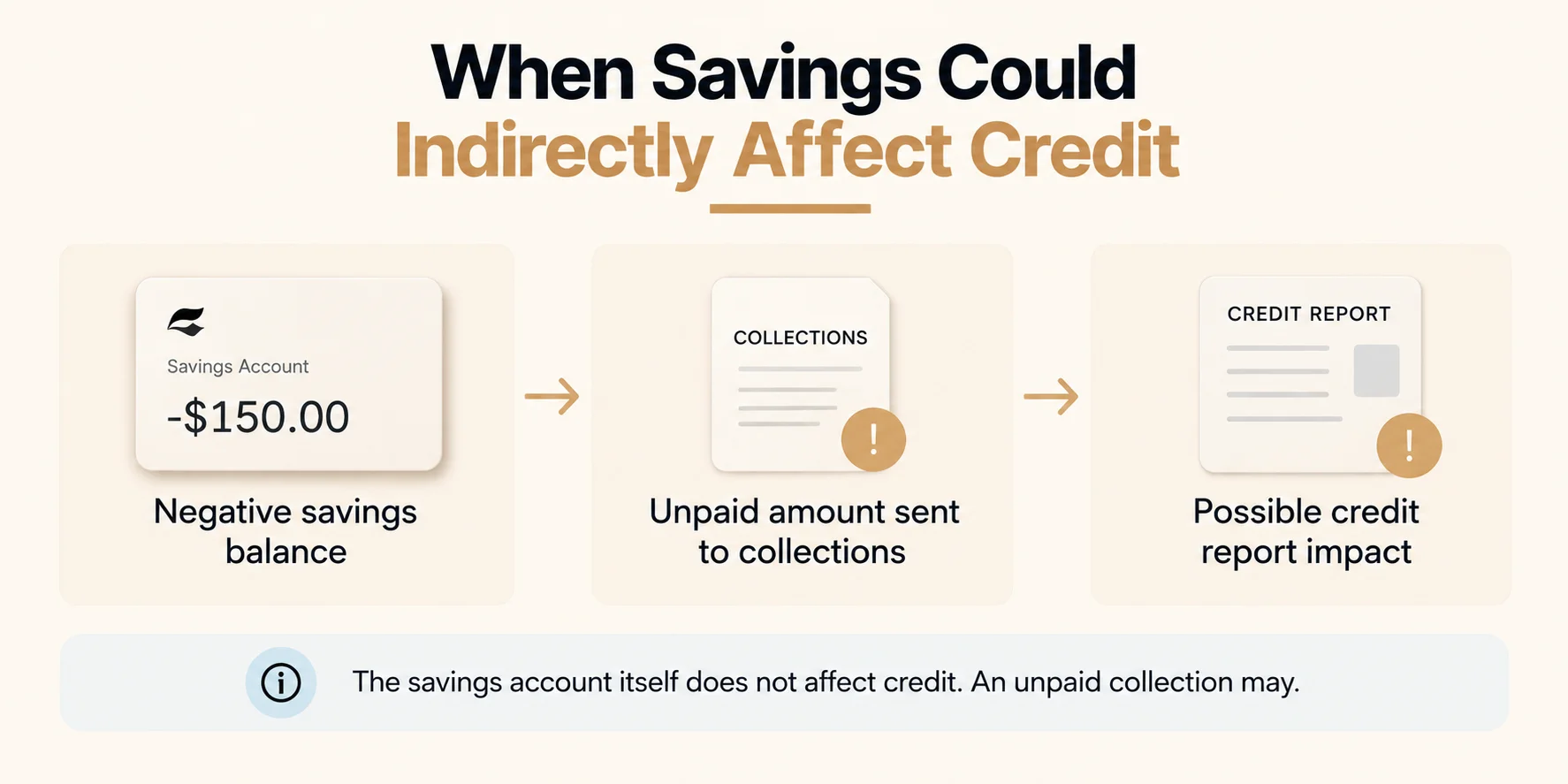
A savings account usually has no direct effect on credit, but certain problems or connected services may have an indirect effect.
An Unpaid Negative Balance Goes to Collections
Savings accounts are not normally meant to have negative balances. Still, an account could become negative because of a reversed deposit, returned transfer, unexpected fee, or another unsettled transaction.
The bank may first contact you and ask you to repay the amount. If the balance remains unpaid, it could close the account and send the debt to a collection agency.
A collection account may appear on your credit report if the collection company reports it to the credit bureaus. The possible credit effect would come from the unpaid debt, not from using a savings account.
Before closing an account, wait for all pending deposits, transfers, and fees to clear. Ask the provider to confirm that the final balance is zero.
The Account Includes a Credit Product
A bank may offer an overdraft line, credit card, or loan alongside a savings account. Applying for or using the separate credit product could affect your credit.
For example, a linked line of credit may appear on your credit report. Late payments or an unpaid balance on that line could damage your score.
The savings account itself is still not the cause. The effect comes from the connected borrowing feature.
Check the application carefully to confirm whether you are opening only a savings account or accepting an additional credit product.
The Provider Performs a Hard Inquiry
A hard inquiry usually happens when you apply to borrow money. It can appear on your credit report and may cause a small, temporary score reduction.
Savings account applications do not usually require a hard inquiry. A provider may instead verify your identity, review a specialty banking report, or make a soft inquiry that does not affect your score.
However, policies vary. A hard inquiry may be more likely if the application also includes an overdraft line or another credit feature.
If you are unsure, ask the provider whether opening the account will involve a soft inquiry, hard inquiry, or deposit-account screening report.
What Might a Bank Check When You Apply?
A bank still needs to verify your identity and decide whether it can open an account for you. It may review a specialty banking report from a company such as ChexSystems or Early Warning Services.
These reports focus on deposit-account history rather than traditional borrowing. They may include information about:
- Accounts closed by a bank or credit union
- Unpaid negative balances
- Returned payments
- Suspected fraud
- Previous account applications
- Repeated account misuse
A banking history report is not the same as a credit report. An inquiry appearing on a ChexSystems report does not normally become a hard inquiry on your traditional credit file.
This means someone can have a strong credit score but still face difficulty opening a savings account because of previous banking problems. Someone with a limited credit history may still qualify if their identity and banking history meet the provider’s requirements.
Opening several savings accounts does not usually build or damage credit either. However, repeated applications may appear on a specialty banking report. Read Can You Have Multiple High-Yield Savings Accounts? for more details.
What Actually Helps Build Credit?
Building credit generally requires an account that reports your payment activity to at least one of the major credit bureaus.
Common options include:
- A secured credit card
- A regular credit card
- A credit-builder loan
- A student credit card
- Becoming an authorized user on a responsibly managed credit card
Opening a credit account is only the first step. How you manage it matters more.
Pay every bill by its due date. Payment history is an important part of most credit-scoring models. Even one missed payment can remain on a credit report for years.
Keep credit card balances low compared with their limits. A card with a $1,000 limit and a $900 balance can create a high utilization rate, even if you make the minimum payment on time.
Avoid applying for several credit products within a short period. Each application may create a hard inquiry, and multiple inquiries can make you appear more dependent on new borrowing.
You should also review your credit reports for incorrect balances, accounts you do not recognize, or payments wrongly marked late. Correcting inaccurate information can prevent errors from unfairly lowering your score.
A savings account can support these habits indirectly. Emergency savings may help you make a credit card or loan payment when an unexpected expense occurs. The savings balance still does not build credit by itself, but it can make responsible credit management easier.
Should You Still Have a Savings Account?
A savings account remains useful even though it does not build credit. Its main purpose is to keep money available for future needs rather than record borrowing activity.
You might use one for:
- An emergency fund
- A vacation
- A home or car repair
- A rental deposit
- A future purchase
- Annual bills
- Medical expenses
Keeping savings separate from checking can also reduce the temptation to spend money reserved for a goal.
A high-yield digital savings account may offer a more competitive APY than a basic account while keeping funds accessible. A high yield savings app may also make it easier to check your balance and schedule transfers from your phone.
However, the app itself does not determine how the account works. Check which bank holds the deposits, what fees apply, how quickly transfers are processed, and whether eligible balances receive federal protection.
Our guides to the different types of savings accounts and the benefits of a high-yield savings account can help you compare the available options.
Put Your Dollars Into Something Real
With PureFi, your projected earnings come from shares of real homes with tenants. Choose your properties from your phone, review the documents, and see every fee before you confirm.
Learn more about how PureFi can help you own real estate shares or download the app to get started today.
Up to 6% APY is projected, variable, and not guaranteed. Property shares can lose value. PureFi is not a bank, and its balances and real estate shares are not covered by FDIC insurance or another government deposit scheme.