What Is a High-Yield Savings Account?
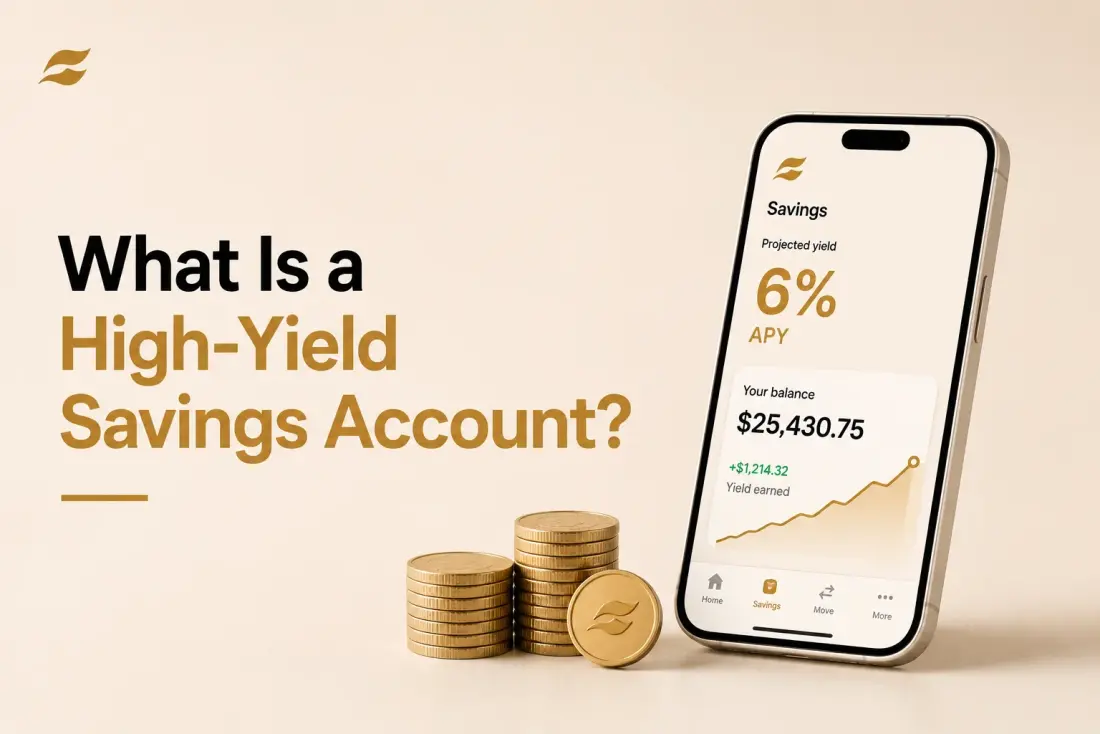
A high-yield savings account is one that helps your savings grow at a higher rate than a standard savings account. You add money, keep it in the account, and earn a return based on the account’s annual percentage yield, or APY.
The word “high” is relative. There is no fixed APY an account must offer to use the name. It simply means the rate is higher than the rate commonly available on standard savings accounts at that time.
Many of these accounts are offered online. They are often used for emergency funds, a home deposit, a planned trip, or cash that you don’t need for daily spending. Your money stays available, but it also has a chance to grow while you wait to use it.
In this article, we’ll take a closer look at where the yield comes from, whether the rate can change, what access you have to your money, and what protection applies.
How Does a High-Yield Savings Account Work?
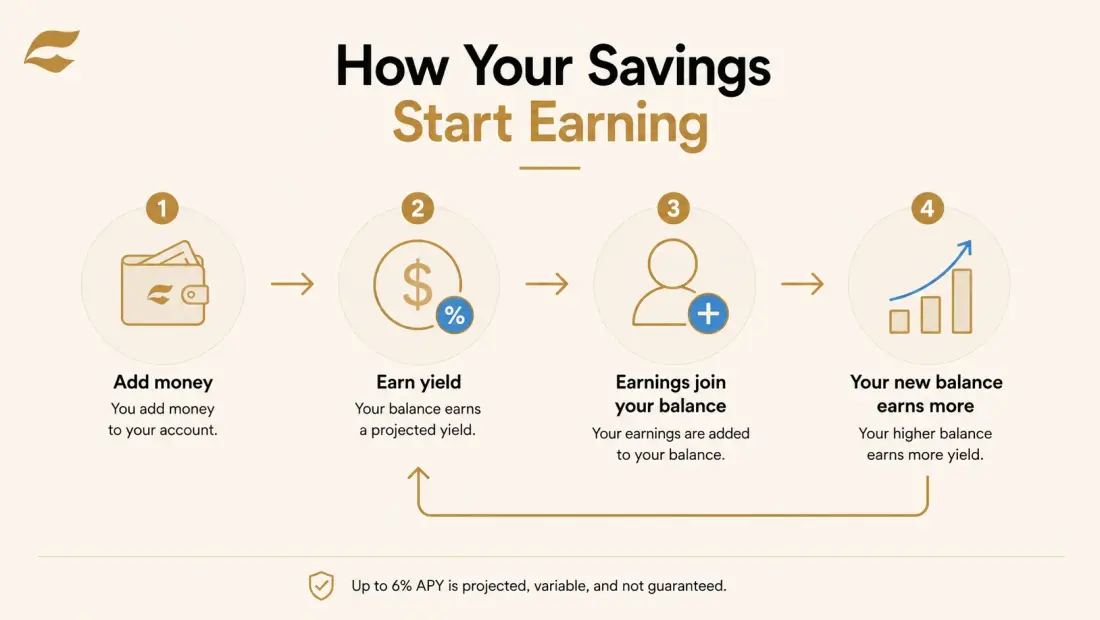
You start by adding money to the account. The provider then calculates your earnings using your balance and the current APY. Those earnings are added to the account at set times, such as daily or monthly.
Once they reach your balance, they can begin earning too. This is known as compounding.
Say you put $5,000 into an account offering 4% APY. If the APY stayed the same for a full year and you made no withdrawals, you would earn about $200. Leave those earnings in the account, and the next calculation starts from a slightly larger balance.
In real life, the result may be different. The APY can change. You might add more money, take some out, or pay a fee. That is why an advertised APY is a useful comparison number, not a promise of exactly what you will earn.
Why Do Online Accounts Often Offer Higher APYs?
An online bank can operate without a large network of branches. That can mean lower costs for buildings, staff, and day-to-day branch services. Some providers use those savings to offer customers a better APY or fewer account fees.
This does not mean every online savings account offers a strong rate. It also does not mean a branch-based account cannot offer one. The provider, the account terms, and the wider rate environment all play a part.
An online high-yield savings account may also work differently from the account you use for bills. Cash deposits can be harder, transfers can take time, and customer support may be fully digital. These details matter if you need quick access to your savings.
What Does APY Tell You?
APY shows the return an account could earn over one year with compounding included. It gives you one number you can use to compare accounts that add earnings on different schedules.
For example, two providers may promote similar rates. If one compounds more often, its APY can be slightly higher. The APY brings that difference into the number you see.
The Consumer Financial Protection Bureau’s APY rules require a standard calculation based on a 365-day year. The calculation assumes the starting amount and the earnings remain in the account for the full period.
Your actual earnings will depend on:
- Your balance
- How long you keep the money there
- Any deposits or withdrawals you make
- Changes to the APY
- Fees charged by the provider
Most high-yield account rates are variable. A provider can change the APY after you open the account. A strong rate today could be lower a few months from now.
High-Yield Savings Account vs. Standard Savings Account
Both accounts give you a place to keep savings. The difference you will notice first is the APY, but it is not the only one.
| Feature | Standard savings account | High-yield savings account |
|---|---|---|
| APY | Usually lower | Usually higher |
| Account access | Often available at a branch and online | Commonly managed online |
| Cash deposits | Usually easier with a local branch | Can be limited |
| Monthly fees | Depend on the provider | Often low or waived |
| Minimum balance | Varies | Varies |
| Rate | Usually variable | Usually variable |
| Deposit protection | Depends on the institution | Depends on the institution |
A standard account can make sense when you value branch access or want all your accounts with one provider. A savings account with high yield can help you earn more, but only if its fees and rules do not take away the benefit.
Look Past the Advertised APY
It is easy to search for the highest-rate online savings account and choose the first result. But the largest number on the page does not tell you whether the account will work well for you. Before opening one, check these details.
Is the APY available to everyone?
Some providers only offer the advertised APY on a certain part of your balance. Others require a minimum deposit, regular monthly deposits, or another account with the same provider. A high rate can also be a short introductory offer.
Are there monthly fees?
Take a simple example. You earn $8 during the month, but the account charges a $10 fee. Your balance has gone backwards despite the advertised yield. Check both the fee and the rules for avoiding it.
How quickly can you get your money?
Transfers between different banks can take time. Some providers also set daily transfer limits. If this is your emergency fund, check how withdrawals work before an emergency happens.
The Federal Reserve removed the federal six-transfer limit for savings deposits in 2020. Banks can still set their own rules, so the account terms remain important.
Is there a minimum balance?
An account might require a certain amount to open, avoid fees, or qualify for the full APY. If your balance drops below that level, you could earn less.
Who actually holds the money?
This question is especially important when you open an account through a financial app. Find the name of the institution holding the funds, then check what protection applies. Do not assume the app itself is a bank.
Are Online High-Yield Savings Accounts Safe?
An online account can be safe, but “online” is not what makes it protected. The institution holding the money and the structure of the product matter more.
In the United States, eligible deposits at an FDIC-insured bank are generally covered up to $250,000 per depositor, per insured bank, for each ownership category. The FDIC explains how its coverage works and provides tools for checking an institution.
Federally insured credit unions have similar protection through the National Credit Union Administration. Other countries use their own protection systems and limits. If an account is available across borders, check the rules for your country and the institution holding your funds.
Not every product that offers an APY is a bank deposit. A return can also come from lending, stablecoin activity, business revenue, or real assets. Those products carry different risks and protections. The APY alone does not tell you which type you are looking at.
How PureFi Approaches High-Yield Savings
PureFi gives people an interest-free way to save and earn. Your dollar balance sits in a self-custodial wallet that only you control. PureFi operates with USDC, USDT, and other U.S. dollar stablecoins. These are digital dollars designed to stay close to the value of the U.S. dollar.
When you choose to earn, your balance buys shares of real homes with tenants. Each home is bought outright and professionally managed. The legal documents are available in the app, and your shares are held in an account in your name. PureFi does not pool them with someone else’s shares.
Your projected earnings come from rent and changes in home values. Nothing is lent out. When tenants pay rent, your share is added to your balance. You can keep it there, reinvest it, or take it out.
PureFi projects up to 6% APY from real estate. That figure can rise or fall and is not guaranteed. Property values can fall, and your shares can lose value. PureFi balances and real estate shares are not bank deposits and do not have FDIC or government deposit protection.
This is different from a bank savings account. The return comes from something you own, not a payment from a bank for holding a deposit.
Frequently Asked Questions
Can a high-yield savings account lose money?
An insured bank deposit does not normally change with the market, but fees can reduce your balance. Inflation can also reduce what the money can buy. If the product earns through real assets, lending, or digital assets, other risks apply.
Does the APY stay the same after I open the account?
Usually not. Most savings account APYs are variable. The provider can raise or lower the rate when market conditions or its own rates change.
Are my earnings taxable?
They can be. The answer depends on the product, where you live, and your personal tax position. Reinvesting earnings does not always remove a tax obligation. Speak to a qualified tax professional for advice about your situation.
Can I withdraw my savings whenever I want?
Many accounts allow withdrawals, but transfer times, daily limits, and provider rules can affect access. Read the terms before adding money you might need quickly.
Is a high-yield savings account the same as earning from real estate?
No. A bank savings account holds a cash deposit. Real-estate earnings come from rent and possible changes in property value. The potential return, risk, access, and protection are different.
Put Your Dollars Into Something Real
With PureFi, your projected earnings come from shares of real homes with tenants. Choose your properties from your phone, review the documents, and see every fee before you confirm.
Learn more about how PureFi can help you own real estate shares or download the app to get started today.