What Are White-Label Stablecoin Debit Cards?

White-label stablecoin debit cards let businesses offer branded payment cards without building the entire infrastructure. The card carries the company’s name and rewards while partners handle issuance, conversion, processing and compliance.
Customers use a physical or virtual card in stores or online. The program checks a stablecoin-linked balance and handles settlement behind the scenes. Fintechs keep control of the customer experience without becoming banks or payment networks.
What Does “White Label” Mean?
A white-label product is built by one company but presented under another company’s brand. Customers mainly interact with the fintech or wallet they already use.
The branded experience can include:
- The company’s name and logo on the card
- Custom card colours and materials
- Card controls inside the company’s app
- Branded transaction records and statements
- Rewards created for the company’s customers
- Customer support connected to the company’s service
Underneath, a bank may issue the card, a program manager may coordinate operations, Visa or Mastercard may carry payments and a wallet provider may connect the balance. White label does not mean that the branded business owns the payment network or legally issues the card.
How Does a White-Label Stablecoin Debit Card Work?
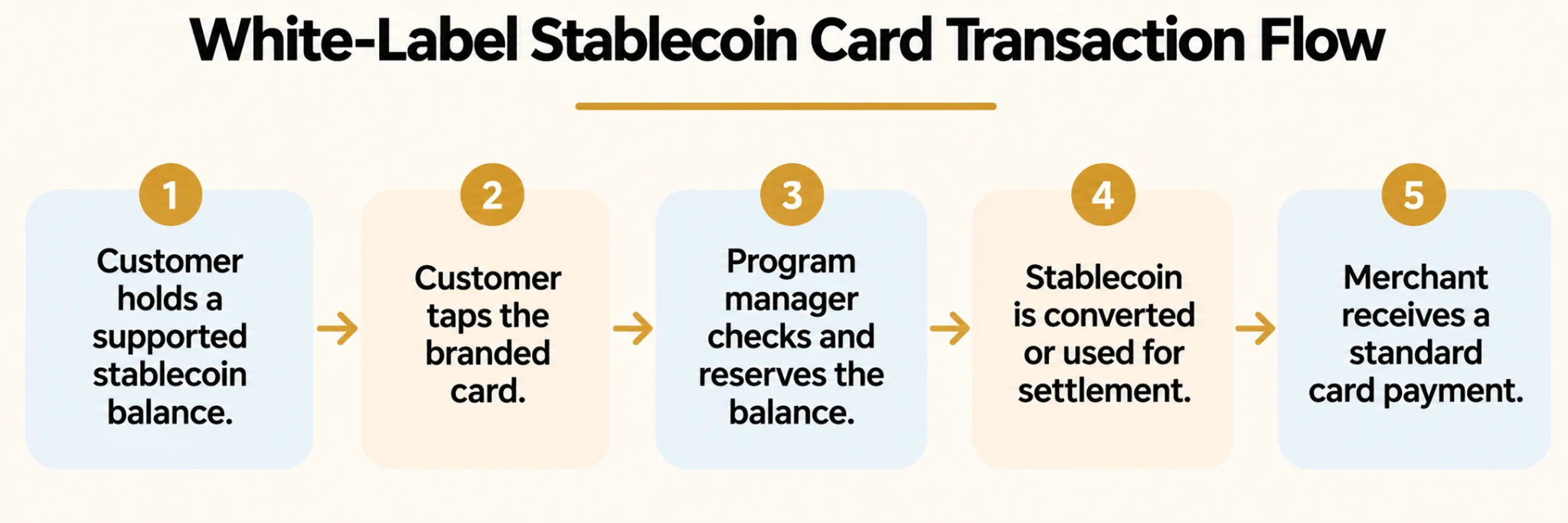
The payment process usually has five parts:
The merchant does not need a crypto wallet. The transaction travels through the usual card network.
Visa explains that a program manager can check a wallet through an API or smart contract. The stablecoin value is reserved and converted when required. Settlement may use banking rails or supported stablecoins between approved parties.
For more on the consumer process, read how to get a stablecoin-backed debit card.
Who Is Involved in the Card Program?
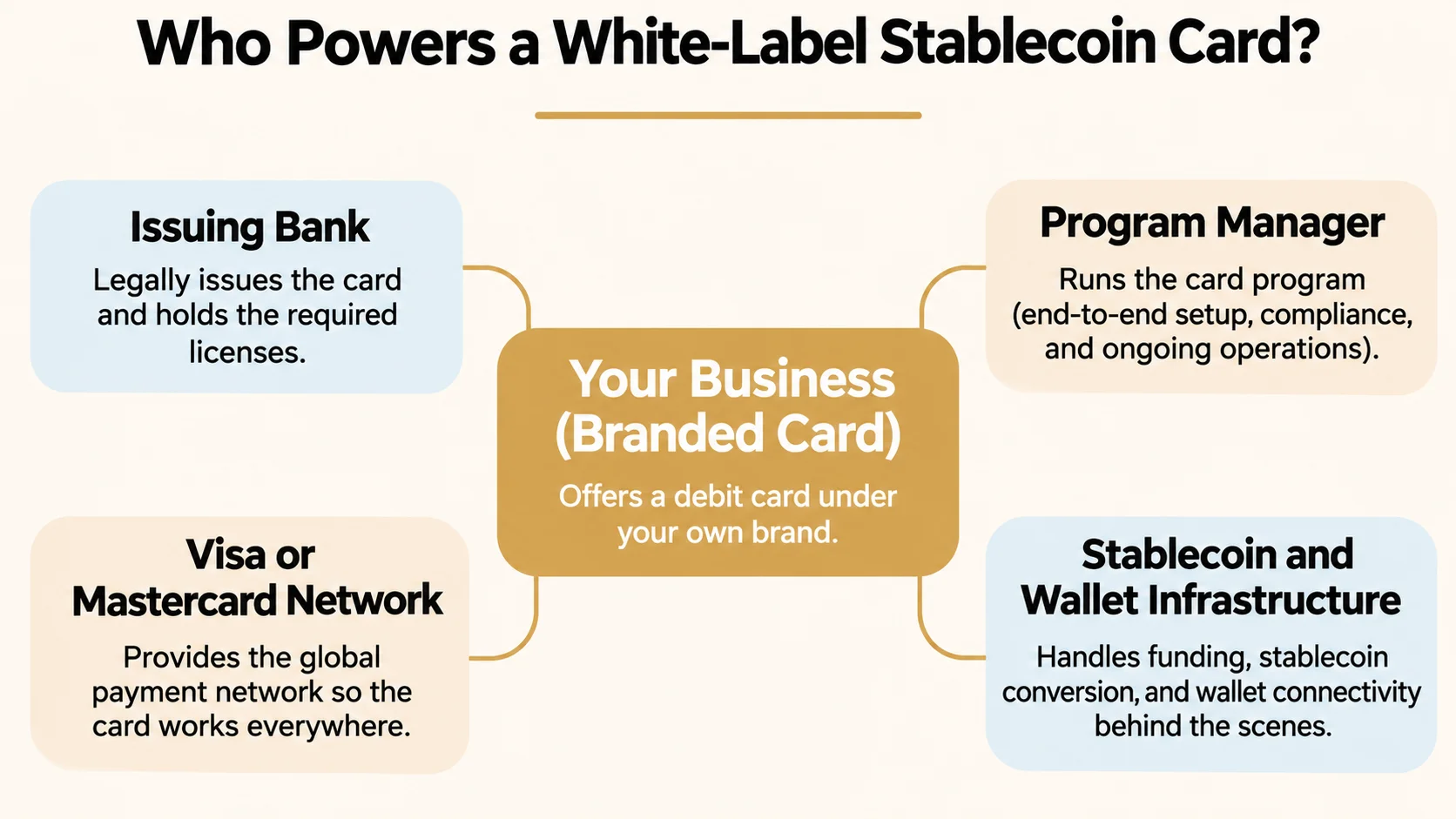
A branded card can involve several companies.
The branded business
This is the fintech, wallet or digital savings platform whose name appears on the product. It designs the customer experience and app integration.
The issuing bank
The bank legally issues and approves the card program. Card terms and features remain subject to its approval.
The program manager
The program manager coordinates processing, disputes, compliance support, fraud controls and customer service on the bank’s behalf.
The payment network
Visa or Mastercard carries the transaction between the program and merchant. This lets the card work beyond merchants that directly accept stablecoins.
The wallet and stablecoin provider
This system holds or connects to the stablecoin balance through custodial, non-custodial or just-in-time funding.
One company may perform several roles, but the business should still know which party is responsible for each function.
Custodial vs. Non-Custodial Card Funding
The funding model determines who controls the stablecoins.
Custodial wallets
In a custodial setup, a provider controls the wallet keys and holds the balance. Recovery and integration may be simpler, but customers depend on the custodian.
Non-custodial wallets
In a non-custodial setup, the customer controls the keys. The program connects through an API, smart contract or another approved system.
Bridge supports custodial and eligible non-custodial wallets, allowing spending without a separate card preload.
Neither model removes stablecoin risk. The guide to stablecoin safety explains reserve, issuer and wallet risks.
What Can a Business Customize?
A business may customize both the card and app experience.
Options can include:
- Card name, colour and material
- Virtual and physical cards
- Free and paid membership tiers
- Cashback and reward rules
- Spending and withdrawal limits
- Merchant-category controls
- Foreign transaction settings
- Card freezes and replacements
The issuing bank, network and program manager may need to approve designs, pricing, rewards, communications and risk rules. Features should solve a real customer problem. Fast funding, clear fees and reliable support matter more than card material.
How Does a Business Launch a White-Label Stablecoin Card?
1. Define the customer and use case
Decide whether the card is for consumers, employees, travellers or contractors. This shapes markets, limits and funding.
2. Choose an infrastructure provider
Compare countries, banks, networks, stablecoins, wallet models and implementation timelines.
3. Secure the issuing and network relationships
The program needs an issuing bank and network approval. Visa requires non-financial and crypto businesses to complete its approval process.
4. Design the funding flow
Choose a custodial wallet, non-custodial wallet, yield-bearing balance or separate prepaid balance.
5. Complete compliance reviews
Assign identity checks, sanctions screening, transaction monitoring, fraud, disputes and complaints.
6. Build the branded experience
Integrate the card, design and controls into the app.
7. Test before launch
Test approvals, declines, refunds, holds, foreign exchange, lost cards and disputes.
How Do White-Label Card Programs Make Money?
Possible revenue sources include interchange from eligible purchases, membership fees, physical-card charges, foreign exchange fees and premium tiers.
Some providers allow custom transaction fees. A custom stablecoin may also generate reserve revenue, depending on its structure and applicable rules.
These revenues must be weighed against the costs of:
- Integration and setup
- Issuing and program management
- Physical-card production and delivery
- Fraud losses
- Disputes and chargebacks
- Compliance
- Wallet infrastructure
- Customer support
Inactive cards can create costs without meaningful transaction revenue.
What Are the Benefits for Businesses?
White-label infrastructure can reduce the time and partner relationships needed to launch. The business can focus on customers while established providers manage the issuing stack.
The card can keep users inside the company’s app instead of requiring separate exchange and bank transfers.
Possible benefits include retention, interchange revenue and greater control over the card experience.
Customers still need clear fees, reliable transactions and responsive support.
The guide to how stablecoins reduce transaction costs explains where blockchain-based payment routes may reduce friction.
How the PureFi Card Program Is Structured
PureFi’s planned stablecoin cards show how a branded program can divide responsibilities across several partners.
PureFi is the platform provider responsible for the branded app, card access and management experience.
Bridge Ventures LLC is the program manager responsible for managing and operating the card on behalf of the issuing bank.
Lead Bank will issue the Prepaid Debit Visa Card.
Visa will provide the payment network.
PureFi is not the issuing bank. Planned cards will spend directly from the available PureFi balance, while the merchant receives a standard Visa payment.
PureFi cards are still coming soon. The public page currently shows Basic, Gold and Obsidian. Pricing, final supported stablecoins, delivery times and mobile-wallet availability will be confirmed closer to launch.
The existing guide to debit cards and high-yield savings explains why card access and savings access are not always the same.
The Bottom Line
White-label stablecoin debit cards let businesses combine their brand and customer experience with existing card and stablecoin infrastructure. The business does not need to become a bank or build every payment rail itself.
The final product still depends on more than its design. The issuing relationship, wallet model, conversion process, compliance controls, fees, fraud systems and customer support must work together.
Businesses should understand exactly which partner handles each responsibility before presenting the card under their name.
Be first in line for a PureFi card
PureFi stablecoin Visa debit cards are coming soon. Download the PureFi app now and you will automatically be added to the list, with no separate form. When cards arrive, you will be able to order through the app and spend from your available PureFi balance wherever Visa debit is accepted.
The Prepaid Debit Visa Card is issued by Lead Bank under licence from Visa U.S.A. Inc. Bridge Ventures LLC is the program manager, and PureFi is the platform provider. Applicants must be 18 or older. Fees, eligibility and availability may vary. PureFi is not a bank, and PureFi balances are not FDIC insured or guaranteed by PureFi.