How to Open a High-Yield Savings Account
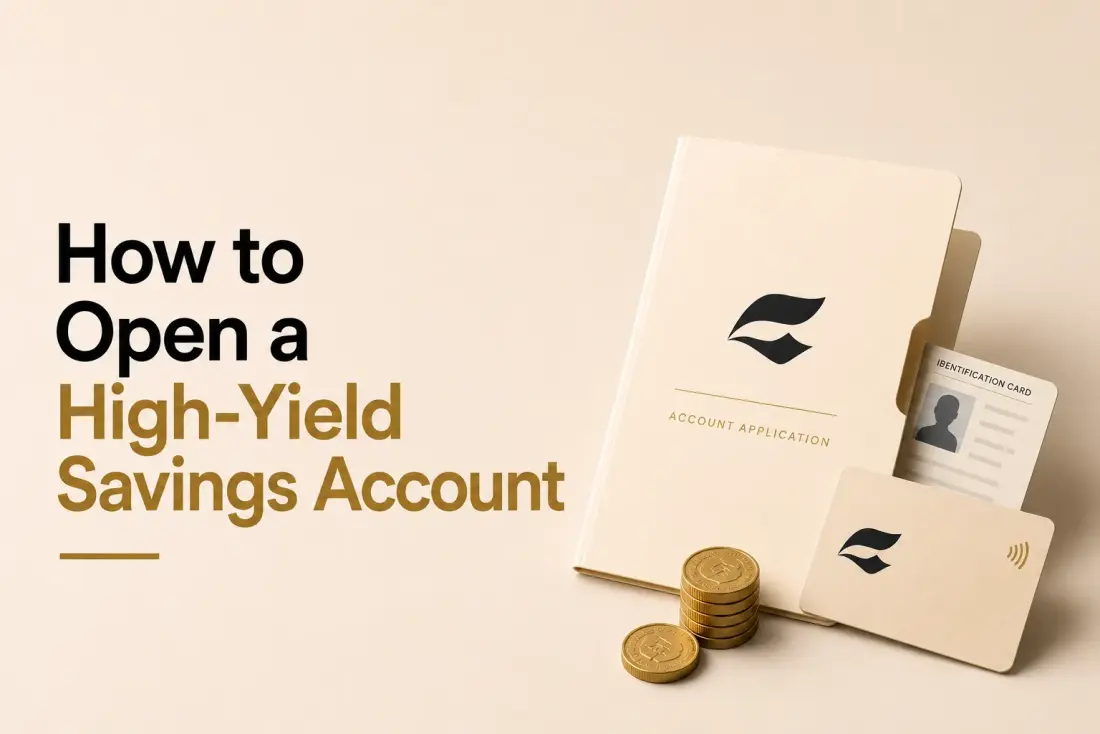
Opening a high-yield savings account online is usually straightforward. But before you fill in an application, check whether the account is available where you live, what documents you’ll need, and whether there’s a minimum opening deposit.
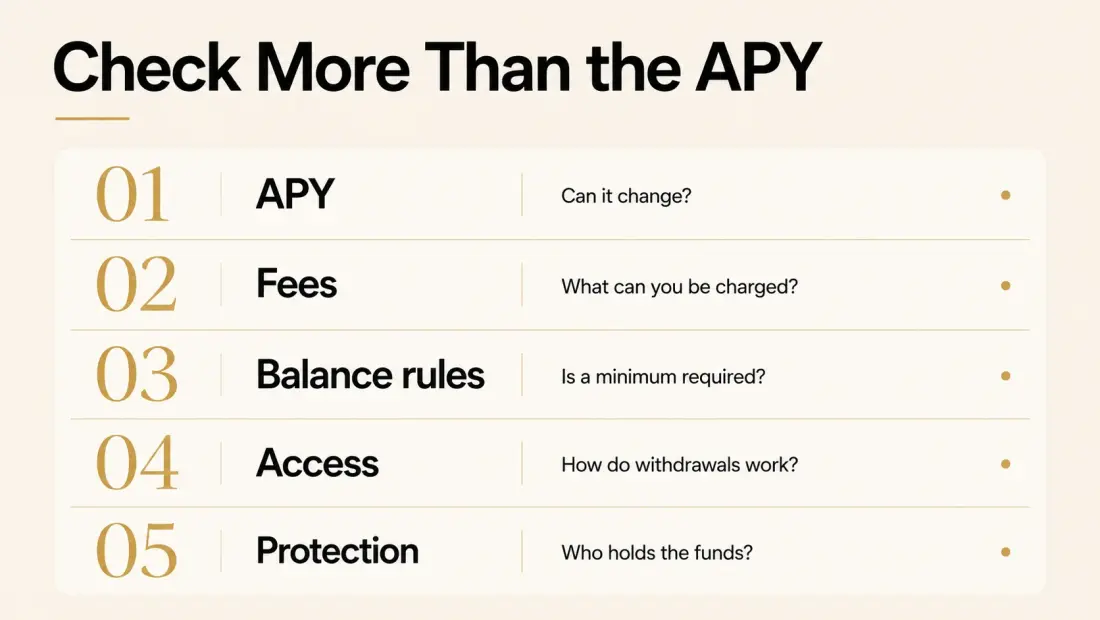
The APY is only one part of the decision. You should also look at monthly fees, withdrawal times, account limits, customer support, and the protection available if the provider fails. A high advertised rate won’t help much if fees reduce your earnings or you can’t access your money when you need it.
Most providers will ask you to verify your identity and connect a funding account. Preparing those details first can make the application much quicker.
Below, we’ll walk through the documents you’ll need, how to compare providers, and each step from application to first deposit.
What You Need Before You Apply
Start with eligibility. There is little point in comparing accounts you cannot open.
Providers commonly look at your age and where you live. Some accounts are open only to residents of one country. Others are limited to certain states or regions. You may also need a local tax number, phone number, or address.
Age rules vary too. Adults can usually apply on their own. A child or teenager may need a parent or guardian to open a joint or custodial account.
You will also need a way to fund the account. For an online savings account, that often means linking an account you already hold. Some providers accept a card or other payment method. Cash deposits are less common with online-only providers.
Check the opening deposit before you apply. It is not always the same as the minimum balance. One tells you how much you need on day one. The other tells you how much must stay in the account to qualify for the advertised APY or avoid a fee.
Documents You May Need
Banks and financial providers must confirm who is opening an account. In the United States, customer identification rules require banks to collect a customer’s name, date of birth, address, and identification number. The CFPB’s account-opening checklist gives a useful overview of the documents a provider might request.
Have these ready:
- A government-issued photo ID, such as a passport or driver’s licence
- Your residential address
- Proof of address, if requested
- Your tax or national identification number
- Your date of birth
- An active phone number and email address
- Details for the account or payment method you will use to add money
The exact list depends on the provider and your country. Some will verify everything electronically. Others may ask you to upload a clear photo of your ID, take a selfie, or provide a recent bill showing your address.
Make sure the details match. A shortened name on one document and a full legal name on another can slow down verification. The same can happen with an old address, an expired ID, or a blurry image.
How to Choose a Provider
The highest-rate online savings account isn’t necessarily the one that will leave you with the highest earnings. Look at the full account, not just the number at the top of the page.
Check the APY and its conditions
Find out whether the advertised APY applies to your whole balance. Some providers offer different rates for different balance levels. Others make the top rate available only if you deposit a set amount each month or meet another condition.
Most savings APYs are variable. The provider can change the rate after the account opens. A current APY helps you compare today’s options, but it does not tell you what the account will earn every year.
Read the fee schedule
Check for monthly account fees, transfer charges, inactivity fees, and fees for falling below a minimum balance. One regular charge can take a noticeable amount out of the yield on a smaller balance.
Check how withdrawals work
An account can have an attractive APY and still be a poor place for emergency savings if access is slow. Check transfer times, daily limits, and whether the provider lets you withdraw whenever you need to.
Confirm who holds the funds
If you are opening an account through an app, do not assume the app itself is a bank. Find the name of the institution that will hold the deposit.
In the United States, you can use the FDIC BankFind Suite to check whether a bank is FDIC insured. Eligible deposits are generally covered up to $250,000 per depositor, per insured bank, for each ownership category. Other countries have their own deposit protection schemes and limits.
Look at customer support
An online high yield savings account may not have a branch you can visit. Check whether help is available by phone, email, live chat, or only through an automated support centre. It is better to know this before a transfer goes missing or your account is locked.
A savings account with high yield should make the important terms easy to find. If the fee schedule, APY conditions, or protection details are vague, keep looking.
How to Open a High-Yield Savings Account Online
Once you have chosen a provider, the application often takes only a few minutes.
1. Go to the provider’s official website or app
Avoid links sent through unexpected emails, texts, or social media messages. Search for the provider yourself or use its verified app listing. Check the web address before entering personal information.
2. Choose the account
A provider may offer more than one savings product. Confirm that you are opening the account with the APY and terms you reviewed. Product names can look very similar.
3. Enter your details
Add your legal name, date of birth, address, contact information, and identification number. Use the same details shown on your documents.
4. Complete the identity check
You may need to upload an ID, take a selfie, enter a one-time code, or answer questions about your identity. These checks help the provider confirm the account belongs to a real person.
5. Read the account terms
Do not skip straight to the confirmation button. Check the APY, fees, minimum balance, withdrawal rules, and how the provider can change the terms. U.S. rules require electronic account disclosures to be provided before an online deposit account is opened.
6. Add your first deposit
Link your funding account or choose another supported method. Enter the amount carefully and check how long the transfer should take. A new link may require a small test payment or an extra security check.
7. Check that the account is earning
Once the deposit arrives, confirm the balance, current APY, and any conditions needed to earn the full yield. Save a copy of the terms and your opening confirmation for your records.
Why an Application Can Be Delayed or Rejected
An application does not always go through immediately. Sometimes the provider needs more information. In other cases, the applicant does not meet the account rules.
Common reasons include:
- An expired, damaged, or unclear identity document
- A name or address that does not match the application
- An unsupported country, state, or region
- An age or residency requirement that is not met
- A tax or identification number that cannot be verified
- A frozen credit or identity file that blocks a check
- An existing unpaid balance with a bank
- A suspected fraud or security issue
- A funding account held in a different name
If the provider asks for another document, follow the instructions in the official app or website. Do not send identity documents to an unverified email address.
If the account is declined, ask why. The CFPB explains that banks and credit unions use different account-opening policies. A rejection from one institution does not always mean every provider will reject you.
How Opening a PureFi Account Is Different
PureFi offers an interest-free way to save and earn, but it is not a bank. It is a financial technology company, and it does not hold customer deposits.
The setup has four main steps:
- Create your PureFi account. Sign up through the app.
- Verify your identity. Complete the secure identity check to unlock funding and real-estate purchases.
- Add dollars. Your balance sits in a self-custodial wallet that only you control. PureFi operates with USDC, USDT, and other U.S. dollar stablecoins.
- Choose your homes. Start with a suggested mix or select individual properties. You review and sign each purchase, and the one-time fee appears before you confirm.
Your money buys shares of real homes with tenants. Each home is bought outright, professionally managed, and supported by legal documents you can read in the app. Your shares sit in an account in your name and are not pooled with another customer’s shares.
Projected earnings come from rent and changes in home values. Nothing is lent out. PureFi projects up to 6% APY from real estate, but the figure is variable and not guaranteed. Your shares can lose value.
PureFi balances and property shares are not bank deposits. They do not have FDIC or government deposit protection. This is why you should compare the source of the yield and the risk, not only the APY.
Frequently Asked Questions
Can I open a high-yield savings account online?
Yes. Many banks and financial providers accept online applications. You will normally need to provide personal details, verify your identity, accept the account terms, and choose a funding method.
How much money do I need to open one?
It depends on the provider. Some accounts have no opening minimum. Others require a set first deposit. Check whether the provider also has a separate minimum balance for earning the full APY or avoiding fees.
Does opening an account affect my credit score?
Opening a savings account does not usually involve a hard credit check. A provider can still check your identity or banking history. Read its application notice if you want to know which checks it performs.
How long does approval take?
Some accounts open in minutes. An application can take longer when documents need manual review or the provider cannot verify your details automatically.
Can a nonresident open an online savings account?
Sometimes. Each provider sets its own residency, identification, and tax requirements. Check eligibility before starting the application. Do not assume that an online account is open worldwide.
Can I open more than one high-yield savings account?
Usually, yes. People sometimes use separate accounts for different goals. Before opening several, consider how minimum balances, fees, transfer times, and deposit protection apply across them.

Start Earning From Real Homes
With PureFi, your projected earnings come from shares of real homes with tenants. Choose your properties from your phone, review the documents, and see every fee before you confirm.
Learn more about how PureFi can help you own real estate shares or download the app to get started today.