How Does a High-Yield Savings Account Work?
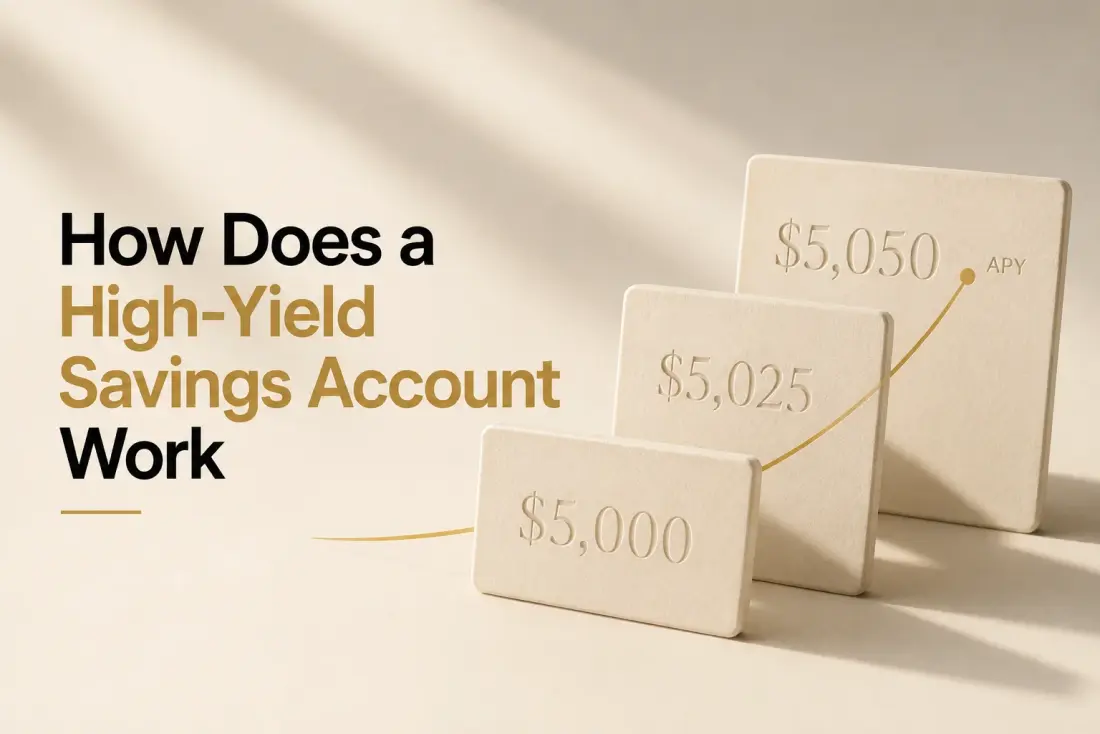
A high-yield savings account applies an annual percentage yield, or APY, to the money you keep in the account. The provider calculates your earnings, adds them to your balance, and then uses the new balance for future calculations.
Once earnings are added, they can start earning too. This is called compounding. Over time, it can help the account grow faster than one that pays a lower APY.
The account does not need any daily work from you. You can add money when you want, leave it there, and withdraw it under the provider’s rules. But the APY can change, fees can reduce your earnings, and different accounts add earnings on different schedules.
This guide explains how providers apply APY, how compounding works, and what can change the amount that reaches your balance.
How Is Yield Applied to Your Balance?
The provider starts with the money in your account. It then uses the account’s current rate to calculate how much you have earned for a certain period.
Many providers calculate earnings daily, even if they only add them to the balance once a month. Others use a monthly or average daily balance. The account terms should explain which method applies.
Your balance can change during the month. If you add money, there is more available to earn. If you make a withdrawal, future calculations start from a lower amount. This means two people with the same APY will not always receive the same earnings. The timing of their deposits and withdrawals also matters.
What Does APY Mean?
APY shows what an account could earn over one year when compounding is included. It makes different accounts easier to compare because providers must present the return in a standard annual form.
The Consumer Financial Protection Bureau defines APY as a percentage that reflects the total amount paid on an account based on the rate and how often earnings compound over a 365-day period.
APY is not the same as a promise about the dollars you will receive. Your actual earnings depend on your balance, how long the money stays in the account, fees, withdrawals, and any changes to the APY.
When comparing an online high-yield savings account, use the APY rather than a basic rate shown on its own. APY gives you a more complete view because compounding is already included.
How Does Compounding Work?
Compounding means you earn on both your original deposit and the earnings already added to the account.
The process looks like this:
- You add money to the account.
- The provider calculates your earnings.
- Those earnings are added to your balance.
- The next calculation uses the larger balance.
The cycle continues as long as money remains in the account and the account continues to earn. Compounding does not create sudden growth. At first, the difference can be small. It becomes more noticeable when money stays in the account for longer and you continue adding to the balance.
The compounding schedule can be daily, monthly, quarterly, or another period. A more frequent schedule can add earnings to the balance sooner. However, if two accounts show the same APY, that annual figure already reflects their different compounding schedules.
Can the APY Change?
Yes. Most savings accounts have a variable APY. The provider can raise or lower it after the account opens.
Changes in the wider rate environment can affect what banks and other providers offer. A provider can also change its APY because of its own funding needs, costs, or product strategy. This is why the highest rate online savings account today may not stay at the top. A promotional APY can also end after a set period or apply only when you meet certain conditions.
U.S. account disclosure rules require providers to state when a rate is variable and explain how it is determined. The CFPB’s account disclosure rules also require information about APY, minimum balances, fees, and other account terms.
Read the conditions before you open an account. Check again after the account is active. Providers normally show the current APY in the app, on the website, or on your account statement.
What Affects How Much You Earn?
The advertised APY is only one part of the calculation. Several account details affect what you actually keep.
Your balance
A larger balance has more money earning at the current APY. Regular deposits can also increase future earnings because each new deposit joins the amount used in later calculations.
Time in the account
Money only earns while it remains in the account. Frequent withdrawals leave less available for the next calculation.
The current APY
A higher APY can produce more earnings, but it can change. Do not plan several years of growth using one variable rate as if it were fixed.
Compounding
Earnings that stay in the account join the balance. If you withdraw them as soon as they arrive, they no longer contribute to future compounding.
Fees
Monthly or balance-related fees come out of the account. On a smaller balance, a regular fee can remove a large part of what the account earns.
Balance conditions
Some providers use different APYs for different balance levels. Others require a minimum balance or regular deposit to qualify for the advertised APY.
Taxes
Savings earnings can be taxable, depending on the country and your circumstances. Tax rules also vary by product. Speak to a qualified tax professional if you need advice about your own position.
A saving account with high yield should explain these conditions clearly. If you cannot tell which APY applies or what fees can be charged, the headline rate is not enough information.

Frequently Asked Questions
How often are earnings added to a high-yield savings account?
It depends on the provider. An account may calculate earnings daily and add them monthly. Another may use a different schedule. Check the account terms for both the calculation method and the date earnings reach your balance.
Does the APY stay the same?
Usually not. Most savings APYs are variable. The provider can raise or lower the rate after you open the account.
Can fees reduce my earnings?
Yes. Monthly fees, transfer charges, or minimum-balance fees can reduce what remains in the account. Compare the fee schedule with the APY before choosing a provider.
Can I withdraw money while it is earning?
Most savings accounts allow withdrawals, but the provider can set transfer times, limits, or fees. Once money leaves the account, it no longer contributes to future earnings.
Is an online high-yield savings account protected?
It can be, but protection depends on the institution holding the funds and the type of account. Verify the bank or credit union and check the coverage rules that apply in your country.
Can I open a high-yield savings account online?
Yes. Many providers accept online applications. You will normally need to meet the eligibility rules, verify your identity, accept the account terms, and add money through a supported funding method.
Know What Is Producing the Yield
A high-yield savings account works by applying an APY to your balance and adding the earnings back to the account. When those earnings stay there, compounding allows them to contribute to future growth.
The process is simple, but the result is not fixed. APYs change. Deposits and withdrawals change the balance. Fees reduce what you keep. Account conditions can also decide whether you receive the advertised APY.
Before choosing an account, check the source of the yield, how it is calculated, when it reaches your balance, and what protection applies. Those details tell you more than the largest number on the page.
Put Your Dollars Into Something Real
With PureFi, your projected earnings come from shares of real homes with tenants. Choose your properties from your phone, review the documents, and see every fee before you confirm.
Learn more about how PureFi can help you own real estate shares or download the app to get started today.