High-Yield Savings Accounts With No Monthly Fees
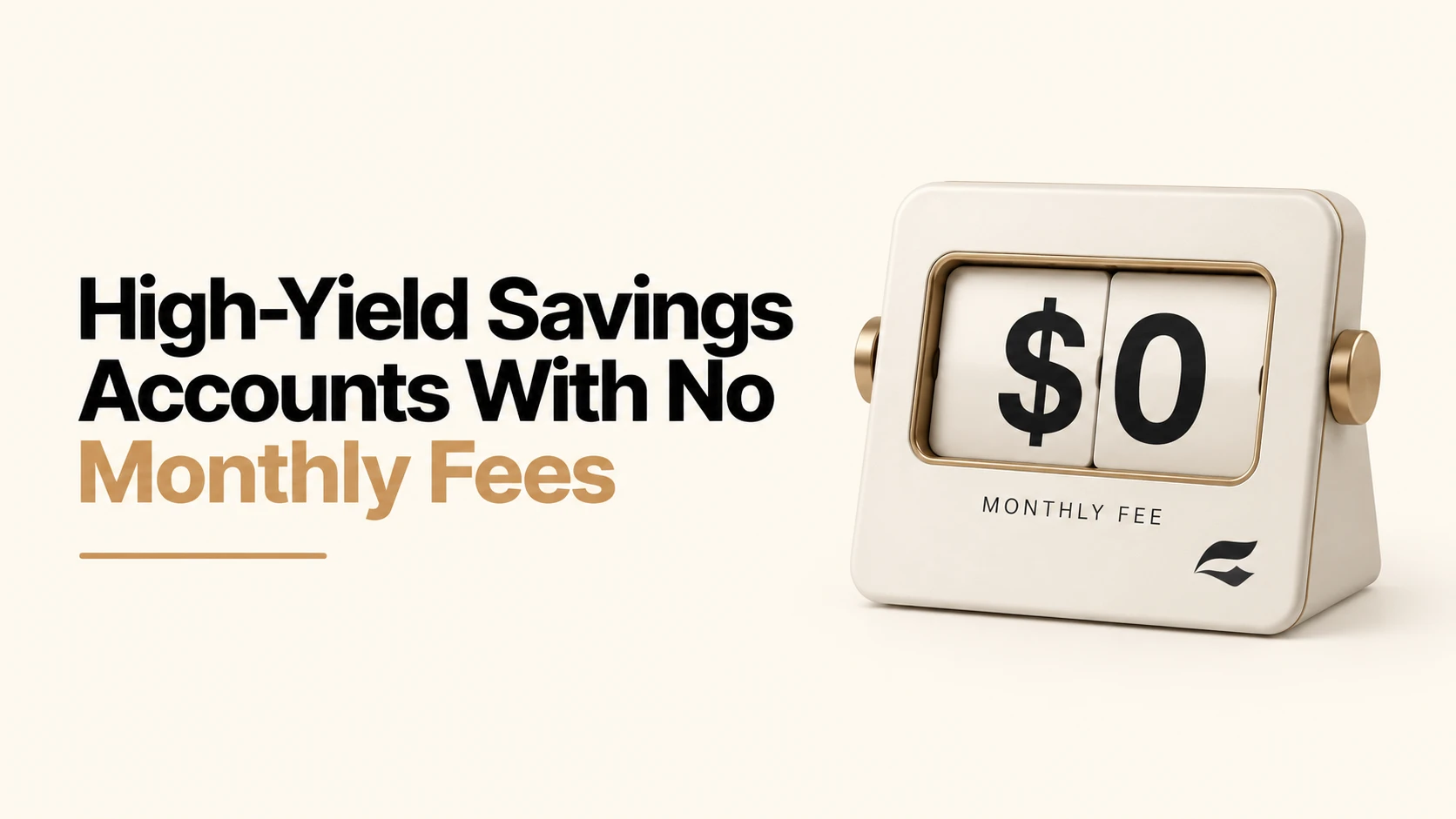
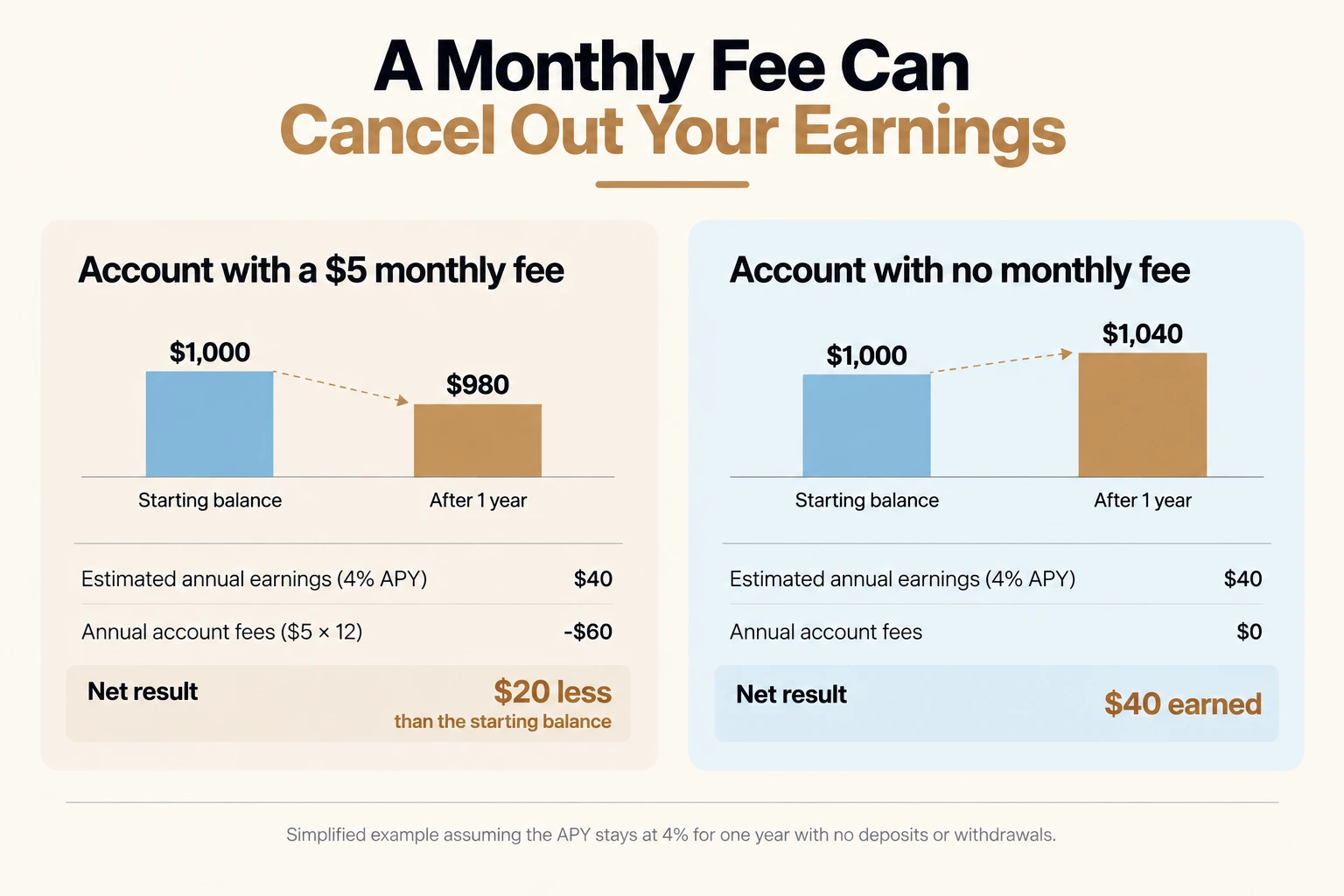
A monthly fee can cancel out much of what a small savings balance earns. If an account charges $5 each month, you would pay $60 over a year before seeing any real benefit from its APY. This is why many people look for a high yield savings account with no monthly fees.
These accounts let you keep more of your earnings, but the monthly maintenance fee is only one part of the comparison. The APY may change, the best rate may require certain deposits, and other transactions may still cost money. You also need to check how quickly you can withdraw funds and what protects your balance.
Conventional bank accounts generate earnings on cash deposits and may carry FDIC protection within applicable limits. Other digital platforms may use assets such as rental property and offer a different type of protection.
What Is a No-Monthly-Fee High-Yield Savings Account?
A no-fee high-yield savings account pays a higher APY than many standard savings accounts without charging a recurring maintenance fee. You are not charged simply for keeping the account open.
Many of these accounts are offered online. A bank or financial technology company can serve customers through a website or app without operating a large branch network. Lower operating costs can make it easier to offer a competitive APY without a monthly charge.
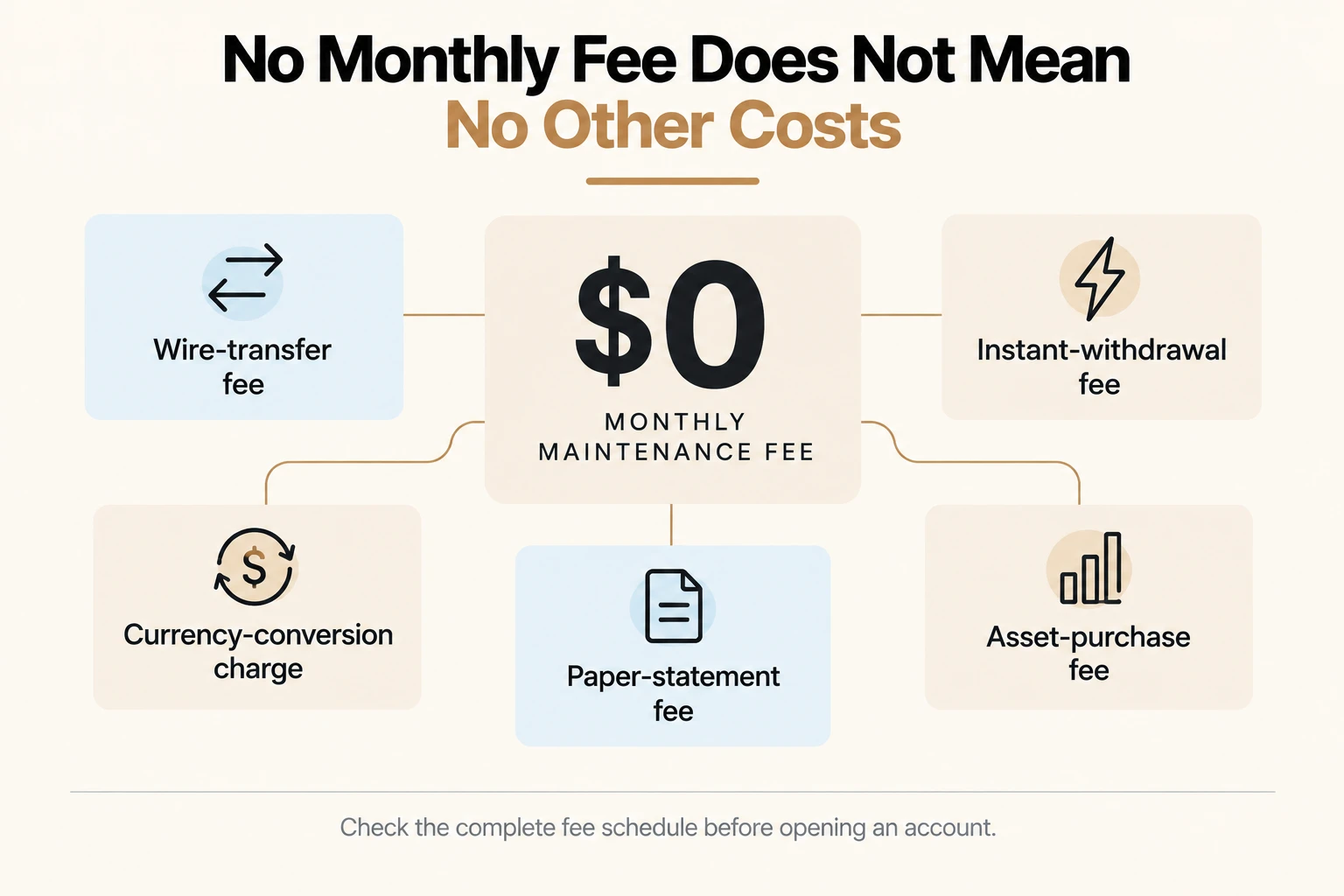
“No monthly fee” does not always mean the account is completely free. A provider may still charge for a wire transfer, currency conversion, instant withdrawal, returned payment, paper statement, or optional service. An account connected to real estate or another asset may also charge a purchase or transaction fee.
The provider should disclose these costs before you open or use the account. Check the complete fee schedule instead of relying only on the headline claim.
How Do No-Fee High-Yield Savings Accounts Work?
A no-monthly-fee account works much like any other savings account. The main difference is that the provider does not deduct a recurring maintenance charge from your balance. You still need to open the account, verify your identity, add money, and follow any conditions attached to the advertised APY.
Open and Verify Your Account
Most providers let you apply through their website or mobile app. The application usually asks for your name, date of birth, address, contact information, and tax details.
You may also need to upload a government-issued identity document and complete a facial check. These steps help the provider confirm your identity and meet financial regulations. Approval may be immediate, although some applications require a manual review.
Add Money and Begin Earning
Once approved, you connect a funding source and make your first deposit. Depending on the provider, you may be able to use a bank transfer, ACH transfer, debit card, wire, or mobile check deposit.
Some accounts begin calculating earnings when the transfer is requested. Others wait until the funds arrive and clear. A deposit may appear in your balance before it becomes available for withdrawal.
The account earns according to its current APY and calculation schedule. The APY is usually variable, so it can rise or fall after the account is opened. Some providers also require a certain balance, payroll deposit, or monthly contribution to unlock their highest rate.
Manage and Access Your Savings
You can normally view your balance, schedule contributions, and request withdrawals through an online savings app. Access methods vary by provider. One account may include a debit card or connected checking account, while another may require a transfer to an external bank before the money can be spent.
The source of the earnings can also differ. A conventional bank savings account earns through a bank deposit. A non-bank digital savings platform may connect earnings to property or another asset. This can affect the account’s protection, withdrawal process, and risk of loss. Check how the account works before adding money.
Why Do Some High-Yield Accounts Have No Monthly Fee?
Online providers generally have fewer physical costs than traditional banks with large branch networks. They may not need to maintain as many buildings, in-person service desks, or cash-handling systems. This can help them provide an account without a recurring maintenance fee.
Providers can also earn money through other products and services. These may include:
- Card services
- Wire transfers
- Currency conversion
- Expedited withdrawals
- International transfers
- Partner services
- Asset-purchase fees
- Lending or investment products
Some providers require regular deposits or a minimum balance to qualify for their best APY. That gives the provider a more stable source of funds even if it does not charge a monthly fee.
Others use a promotional rate to attract new customers. Once the promotion ends, the account moves to its standard variable APY. The account may still have no monthly fee, but its future earnings could be lower.
This is why a free high-yield savings account should be evaluated based on its full terms. The missing maintenance fee is useful, but it does not tell you how the entire account works.
What Features Should You Compare?
APY and Qualification Rules
Start with the standard APY rather than the largest number on the page. A provider may advertise an APY that is available only to new customers, certain balances, or people who receive payroll deposits. Check what happens if you do not meet those conditions. The account may pay a lower base rate.
Ask these questions:
- Is the displayed APY standard or promotional?
- How long does the promotion last?
- Is a regular deposit required?
- Does the APY apply to the full balance?
- Is there a maximum balance for the advertised rate?
- What rate applies when the conditions are not met?
The APY can change even when there is no promotion. Compare it regularly, but do not transfer your savings every time another provider offers a small temporary increase.
Minimum Opening Deposit
A no-monthly-fee account can still require money upfront.
Some providers let you open an account with $0. Others require $100, $500, or more. The minimum may be needed only to activate the account, or it may need to remain in the account to receive the advertised APY.
Look for three separate requirements:
- Minimum amount needed to open the account
- Minimum amount needed to avoid a fee
- Minimum amount needed to earn the displayed APY
A no-minimum-balance high-yield savings account may be easier for someone starting with a small amount. A higher opening deposit may not be a problem for someone transferring an existing emergency fund.
Other Account Fees
Read the fee schedule before adding money. A missing monthly charge does not remove every possible cost.
Check for:
- Outgoing wire-transfer fees
- Instant-transfer charges
- Currency-conversion costs
- Returned-payment fees
- Paper-statement fees
- Replacement-card fees
- Account-closure charges
- Asset-purchase or transaction fees
Think about how you expect to use the account. A wire fee may not matter if you plan to use free bank transfers. A currency-conversion charge matters more if you regularly add or withdraw money in different currencies.
PureFi, for example, does not charge a monthly account fee. Its real-estate page states that a one-time fee is shown before a property-share purchase is confirmed. That is different from a maintenance fee, but it still belongs in the total cost.
Access to Funds
A high APY is less useful if accessing your money is slow or difficult. Check how withdrawals work and how long they usually take. Some providers offer same-day transfers under certain conditions. Others take several business days. Weekends, public holidays, security reviews, and deposit holds can add more time.
Look at the available access methods:
- Transfer to an external bank
- Transfer to a connected checking account
- Debit-card purchase
- ATM withdrawal
- Wire transfer
- Mobile wallet transfer
- Sale of an underlying asset
If the account is meant for emergencies, test a small withdrawal after opening it. This helps you understand the real process before you need the money urgently.
When earnings are connected to property or another asset, a withdrawal may require the asset to be sold. The amount received can depend on its current market value.
Account Protection
Protection should be checked separately from APY and security features. Eligible deposits at an FDIC-member bank receive protection within the applicable limits and ownership categories. Eligible credit-union deposits may receive similar coverage through the NCUA.
A non-bank digital savings platform may use private insurance, licensed partners, or self-custodial wallets. These arrangements do not automatically provide the same protection as FDIC or NCUA coverage.
Also separate account security from protection against financial loss. Features such as encryption, identity checks, fraud monitoring, Face ID, and two-factor authentication help prevent unauthorized access. They do not stop an investment or property share from losing value.
Before opening an account, confirm:
- Who legally holds the money
- Whether the balance is a bank deposit
- What type of insurance applies
- What the insurance covers
- Whether the principal can lose value
- What happens if the provider or a partner fails
Mobile and Online Features
A high-yield savings app should make routine account management easy. Useful features may include:
- Automatic weekly or monthly transfers
- Separate savings goals or buckets
- Balance and transaction alerts
- Biometric login
- Two-factor authentication
- Mobile check deposit
- Downloadable statements
- Beneficiary management
- Live chat or phone support
Do not assume every online provider offers the same access. Some have full-service banking apps, while others focus only on deposits and transfers. Read recent app information and confirm that the features you need are available in your country.
Does PureFi Charge a Monthly Fee?
PureFi is an online high-yield savings account. It does not charge a monthly account fee or require a minimum balance.
The account offers up to 6% projected APY. Unlike a conventional bank savings account, its earnings come from income-producing real estate. Users can purchase shares of rented homes, and their portion of the rental earnings goes into their PureFi balance. Returns can also change with property values.
Put your dollars into something real
With PureFi, your projected earnings come from shares of real homes with tenants. Choose your properties from your phone, review the documents, and see every fee before you confirm.
Learn more about how PureFi can help you own real estate shares or download the app to get started today.
Up to 6% APY is projected, variable and not guaranteed. Property shares can lose value. PureFi is not a bank, and its balances and real estate shares are not covered by FDIC insurance or another government deposit scheme.