Do You Pay Taxes on a High-Yield Savings Account?

Yes. In the United States, the earnings added to a high-yield savings account are generally taxable. This is usually true whether you withdraw the money, move it to another account, or leave it where it is.
You do not pay tax simply because you deposited your own money. Tax normally applies to the amount the account earned during the tax year.
The basic rule is straightforward, but the paperwork can be less obvious. In this article, we explain what Form 1099-INT shows, what to do if you do not receive one, how joint accounts are handled, and why earnings through PureFi may receive different tax treatment.
Are high-yield savings earnings taxable?
For most U.S. taxpayers, earnings from a high-yield savings account are treated as ordinary taxable income. The provider usually adds the earnings to your account throughout the year. The total credited during that tax year is the amount that may need to be reported.
This applies to both an online high-yield savings account and a savings account opened at a physical branch. The tax rule does not change just because the provider operates online or offers a higher annual percentage yield.
For example, if you start the year with money you already earned and place it in a savings account, that original balance is not taxed again merely because it sits in the account. Only the new earnings credited by the provider are relevant to this part of your tax return.
What is Form 1099-INT?
Form 1099-INT is a U.S. tax statement that reports certain earnings paid by a bank or other provider. It normally shows the amount credited to you during the calendar year, along with details such as federal tax withheld, if any.
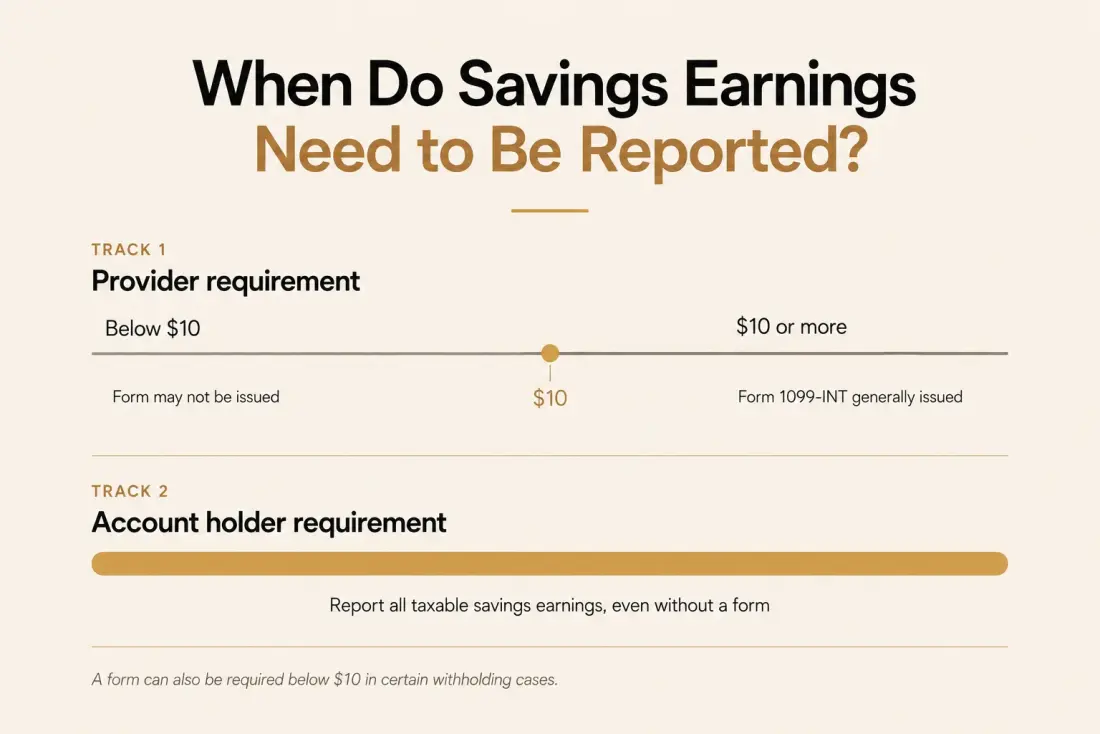
Under current IRS rules, a provider generally issues this form when it paid at least $10 in reportable earnings. A form may also be required in some cases involving withholding, even when the amount paid is lower.
You will usually receive the form early in the following year. It may arrive by post, but many online providers place it in the tax documents section of their app or website.
Before filing, compare the form with your year-end account statement. Check your name, taxpayer identification number, account details, and the amount reported. Contact the provider if something appears incorrect.
What if you do not receive a tax form?
The $10 threshold is a rule for when a provider generally has to issue Form 1099-INT. It is not an exemption for the account holder. The IRS states that taxable earnings still need to be reported even when you do not receive the form. This can happen when the amount is small, your contact details are out of date, or the form is available online and you did not see the notice.
Review your account statements to find the total credited during the tax year. If you expected a form, also check the provider’s app, website, and secure messages. Ask the provider for help if the amount is unclear.
How much do you report?
In most cases, you report the full taxable amount credited to the account during the calendar year. It does not matter whether you spent the earnings or left them in the account to keep earning.
This means the amount you report may not match the amount you withdrew. Withdrawals can include both your original savings and the earnings added by the provider. Form 1099-INT and your year-end statement are better records for tax reporting than your withdrawal history.
If you hold several accounts, review each one. A person might have an online savings account for emergency funds, another account for bills, and a separate saving account with high yield for longer-term cash. The reportable total can include earnings from all of them, even if no single account paid enough to send a form.
Where do you report the earnings?
Tax software usually asks whether you received Form 1099-INT and guides you through the relevant fields. For a standard U.S. individual return, taxable savings earnings are generally included on Form 1040. Some taxpayers also need to complete Schedule B.
The form you need can depend on the total amount, the type of earnings, whether any of the money belongs to someone else, and whether you have accounts outside the United States.
Keep copies of:
- Form 1099-INT from each provider
- year-end account statements
- records of any tax withheld
- corrected forms or messages from the provider
- documents showing how earnings from a joint account are divided
These records make it easier to check your return and answer questions later.
How are joint savings accounts taxed?
Tax reporting for a joint account depends on who owns the money and who receives the tax form. A provider may send one Form 1099-INT under the taxpayer identification number of the person listed first on the account.
That does not always mean the first person should report all the earnings as their own. If part of the amount belongs to another account holder, special nominee-reporting rules may apply. The IRS provides an exception for amounts belonging to a spouse, but other joint arrangements can require additional forms and entries.
Do not divide the amount based only on the names shown on the account. Ownership, contributions, and the account holders’ agreement can matter. A qualified tax professional can help when the form does not match the way the money is actually owned.
Do state and local taxes apply?
Federal reporting is only one part of the picture. State and local treatment depends on where you live and the rules that apply there.
Some states do not charge individual income tax. Others may include savings earnings in taxable income or apply their own adjustments. If you moved during the year, earned money while living in different states, or file in more than one state, the answer may be more complicated.
Check the guidance from the relevant state tax authority rather than assuming the federal rule is the full answer.
What if you live outside the United States?
Tax rules vary widely by country. Your obligations can depend on your residence, citizenship, the country where the provider is based, and whether a tax treaty applies.
A country may use different names for savings earnings and different rules for when they are reported. It may also require you to disclose an overseas account even when little or no tax is due.
Form 1099-INT is a U.S. form. Receiving one does not, by itself, explain every obligation you may have in another country. If you live abroad, hold accounts across borders, or send savings between countries, use local guidance or speak with a tax professional familiar with international reporting.
Does choosing a higher-yield account change the tax rule?
No. Choosing the highest rate online savings account you can find does not create a separate tax category. A higher yield may produce more earnings, which may increase the amount you need to report, but the general federal treatment remains the same.
Compare accounts on more than the advertised rate. Look at fees, withdrawal rules, minimum-balance requirements, rate changes, provider protection, and tax documents. If you plan to open a high-yield savings account online, confirm where the provider makes annual statements available before you deposit money.
Frequently Asked Questions
Do I pay tax if I leave the earnings in the account?
Generally, yes. U.S. tax treatment normally depends on when the earnings were credited and available to you, not whether you withdrew them.
Do I have to report less than $10?
Generally, yes. A provider may not have to send Form 1099-INT when the total is below the usual reporting threshold, but taxable earnings still need to be included on your return.
Does an online account have different tax rules?
No. An online provider generally follows the same federal reporting principles as a provider with physical branches. Your location, the provider’s legal status, and the type of account can still affect other obligations.
Are account-opening bonuses taxable?
They can be. The treatment and form may depend on how the bonus was earned and how the provider reports it. Review the tax statement and the offer terms, and ask the provider or a tax professional if the classification is unclear.
Will PureFi send the same form as a bank?
Do not assume it will. PureFi earnings come from shares in real homes, not from a bank deposit. The documents that apply may differ by user, transaction, ownership structure, and country.
Keep clear records of what you earn
For a conventional high-yield savings account, U.S. account earnings are generally taxable even when they remain in the account. Review Form 1099-INT, check it against your statements, and report taxable amounts even if no form arrives.
PureFi works differently. It gives you access to shares of real, income-producing homes, with projected earnings tied to rent and changes in property value. Understand the source of the earnings and keep the related records before preparing your return.
Tax rules depend on your location and personal circumstances. This article provides general information, not individual tax advice.
Put Your Dollars Into Something Real
With PureFi, your projected earnings come from shares of real homes with tenants. Choose your properties from your phone, review the documents, and see every fee before you confirm.
Learn more about how PureFi can help you own real estate shares or download the app to get started today.