
What Is a Micro Savings Account and How Does It Work?
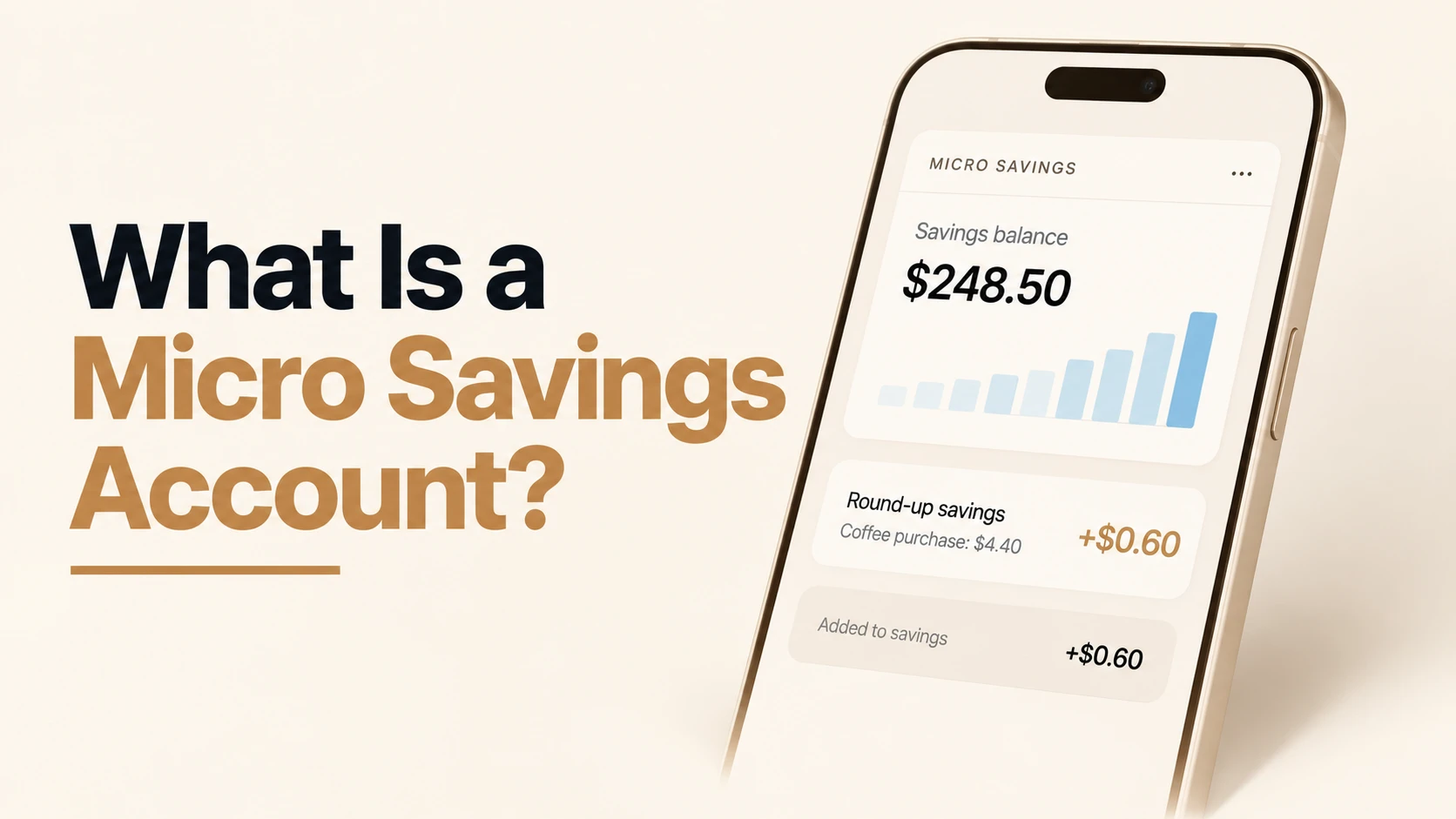
A micro savings account is designed for people who want to save small amounts at a time. It may have no opening deposit or require only a small balance. Customers can add money when it is available instead of committing to a large monthly contribution. These accounts are often managed through banks, credit unions, microfinance institutions, mobile wallets, or financial apps.
However, “micro savings account” is a broad description rather than one standardized product. Deposit methods, fees, APY, access, and account protection depend on the provider and country.
How Does a Micro Savings Account Work?
A micro savings account lets customers build a balance through small, flexible deposits. Someone might add $2 after making a purchase, transfer $5 each week, or direct a small part of every paycheck into the account.
There is usually no requirement to deposit the same amount every month. This makes the account more practical for people with irregular income or limited money available after essential expenses.
Making Small Deposits
Deposits may be made through:
- Transfers from another bank account
- Split direct deposits
- Mobile wallets
- Cash agents
- Automatic recurring transfers
Not every provider supports every method. Cash-agent networks and mobile money services are more common in markets where access to physical bank branches is limited.
The World Bank has examined how neighborhood cash-handling outlets and mobile services can make small deposits more accessible. These channels reduce the need to travel to a traditional branch whenever a customer wants to save.
Building the Balance Over Time
The account grows mainly through new deposits. If the provider offers an APY, earnings can add to the balance as well.
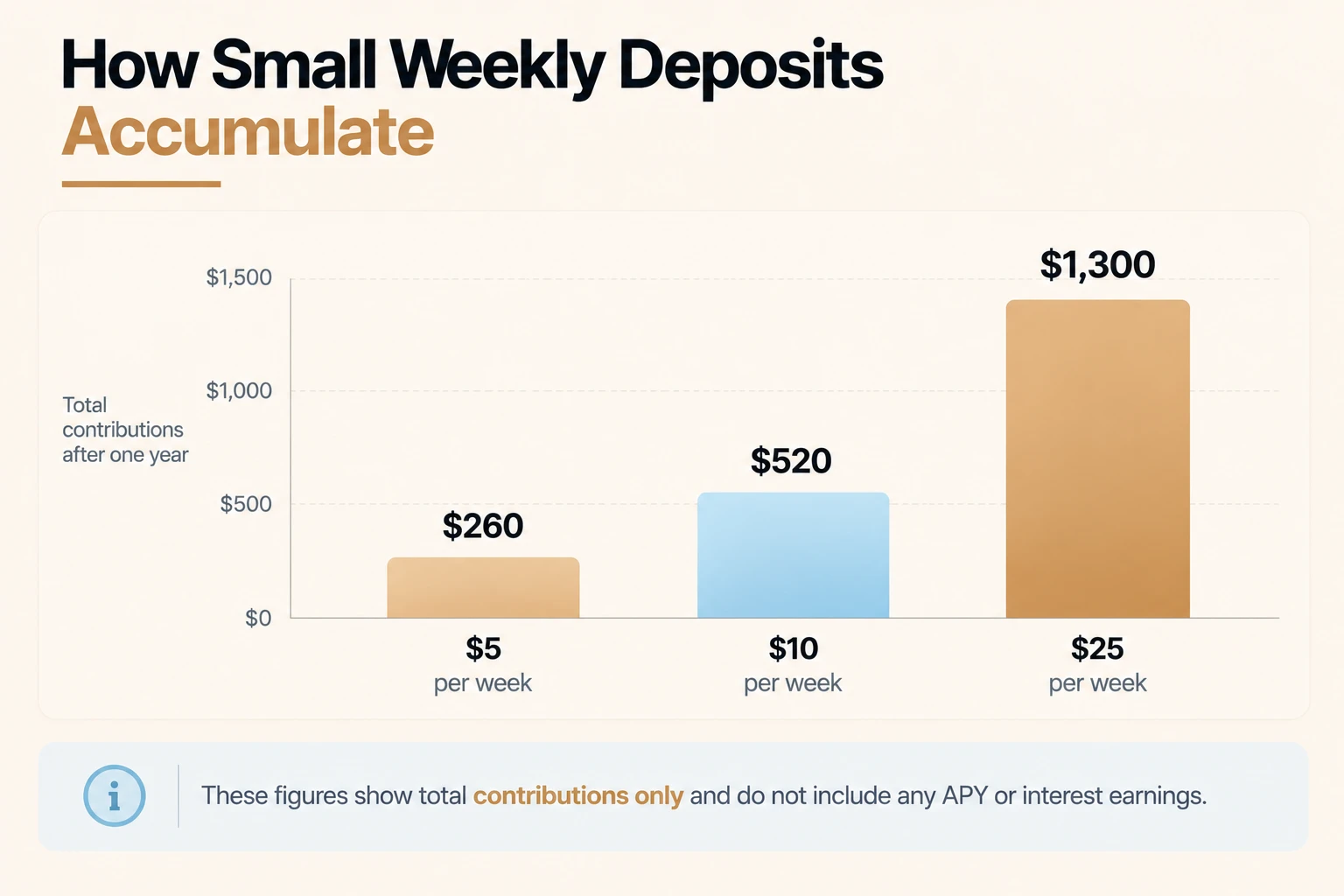
Regular deposits do not need to be large to accumulate. Saving $5 each week creates $260 in contributions over one year. Increasing that amount to $10 a week produces $520 before including any account earnings.
A digital savings platform may automate these transfers and show progress through a mobile dashboard. Customers should still confirm where the money is held and whether the provider itself is a bank.
Common Micro Savings Account Features
Micro savings products vary, but they often share several features intended to make saving more accessible.
Low Opening Requirements
Some accounts can be opened with no initial deposit. Others require only a small amount.
The FDIC’s Model Safe Accounts initiative tested electronic accounts designed to be safe and affordable for underserved customers. Its model suggested a monthly minimum balance of $5 for a basic savings account. The amount was part of a template rather than a requirement for every bank, but it shows how low-balance accounts can be structured.
Flexible Contributions
Customers can usually deposit different amounts at different times. This suits people whose income changes from week to week.
The provider may also offer automated transfers. The CFPB notes that putting even small amounts into savings regularly and making the process automatic can help customers build a balance.
Mobile Access
A mobile-first account may let customers deposit, transfer, and check their balance without visiting a branch. An online savings app can also send alerts when money enters or leaves the account.
Digital access has become an important part of formal saving. The World Bank reported that wider use of mobile financial services contributed to increased formal saving across developing economies.
Low-Cost Structure
Micro savings accounts are often designed for small balances, so recurring charges can make the product impractical. A monthly fee of only a few dollars could remove a large part of the balance.
Customers should still check for transfer charges, cash-agent fees, dormancy fees, and minimum-balance rules. “Micro” does not automatically mean free.
What Are the Potential Benefits of Micro Saving?
The main benefit is accessibility. Someone does not need to wait until they have a large amount before beginning.
Small Deposits Can Fit Variable Income
A fixed monthly target may be difficult for people whose income changes. Micro saving allows them to add money when it is available.
This approach can be useful for freelancers, hourly workers, seasonal workers, and people paid through informal or irregular channels.
Saved Money Remains Separate
Moving small amounts out of a spending balance can reduce the chance that they will be used for routine purchases.
Even when the balance is modest, this separation can help create money for transport, school costs, medical expenses, or another planned need.
Mobile Access Can Reduce Physical Barriers
A customer may be able to open and manage an account without traveling to a branch. This is particularly relevant in rural areas or locations with limited banking infrastructure.
Mobile access does not remove every barrier. Customers still need a supported device, network access, and a reliable way to add or withdraw money.
Account Records Improve Visibility

A formal account creates a record of deposits and withdrawals. Customers can see how frequently they save and whether the balance is moving toward its intended target.
Can a Micro Savings Account Offer a High APY?
A micro savings account is defined by its small-deposit structure, not its APY. Some providers may offer a competitive rate, while others provide a very low yield. This means a micro savings account is not automatically a high-yield digital savings account.
Balance caps may also apply. A provider could offer its highest APY on the first portion of the balance and apply a lower APY above that amount. Another provider may require a linked account or regular deposits.
For a small balance, regular contributions usually have a greater effect than a minor difference in APY. An additional $5 deposit produces an immediate $5 increase. A small APY improvement affects the balance more gradually.
However, fees can quickly offset those gains. Customers should compare the APY with every charge that could apply to deposits, withdrawals, or account maintenance.
Micro Savings Account vs Regular Savings Account
Both products hold money and allow additional deposits, but they may target different customer needs.
| Feature | Micro Savings Account | Regular Savings Account | | Opening deposit | Usually low or none | Varies | | Contribution size | Designed for small deposits | Any supported amount | | Deposit schedule | Flexible | Flexible | | Access | Often mobile-first | Mobile, online, ATM, or branch | | APY | Provider-specific | Provider-specific | | Main purpose | Building a balance gradually | General saving |
Our guide to adding money to a traditional savings account regularly explains how recurring deposits can increase the balance over time.
Micro Savings Account vs Growth Savings Account
Micro savings and growth savings can overlap, but the names emphasize different features. A micro savings account focuses on accessibility. It is intended to work with small opening balances and small ongoing deposits.
A growth savings account is a provider-defined product name. It may emphasize a competitive APY, balance tiers, automated deposits, or another growth-related feature.
One account could meet both descriptions. For example, a provider might offer a growth savings product with no minimum deposit and automated $5 transfers. The terms matter more than the product name.
Read What Is a Growth Savings Account? for a closer look at that structure.
Is a Micro Savings Account Suitable for Emergency Savings?
A micro savings account can be a practical starting point for an emergency reserve. Small deposits can gradually create money for unexpected travel, urgent repairs, medical costs, or a temporary loss of income.
Access is important. Customers should check how long withdrawals take and whether the provider charges for transfers or cash-agent use.
An account may be less suitable when withdrawals are slow or expensive. Emergency money should be available within a reasonable time.
A micro savings account can also be used alongside other account types. Our guide to the types of savings accounts you may need explains how different accounts can support different goals.
How to Build a Balance With Small Deposits
A simple schedule shows how small deposits accumulate before any APY is added:
- $5 per week becomes $260 after one year.
- $10 per week becomes $520.
- $25 per week becomes $1,300.
The main factor is consistency. If weekly saving is difficult, an automatic transfer can be scheduled for payday or another date when money normally enters the account.
Some people may prefer saving toward a specific expense. For example, small weekly deposits can be placed in a holiday savings account rather than mixed with general savings.
A useful high-yield savings app should make recurring deposits easy to adjust. It should also show every fee, the current APY, and how long withdrawals take.
Put your dollars into something real
With PureFi, your projected earnings come from shares of real homes with tenants. Choose your properties from your phone, review the documents, and see every fee before you confirm.
Learn more about how PureFi can help you own real estate shares or download the app to get started today.
Up to 6% APY is projected, variable, and not guaranteed. Property shares can lose value. PureFi is not a bank, and its balances and real estate shares are not covered by FDIC insurance or another government deposit scheme.


