Are High-Yield Savings Accounts Free?
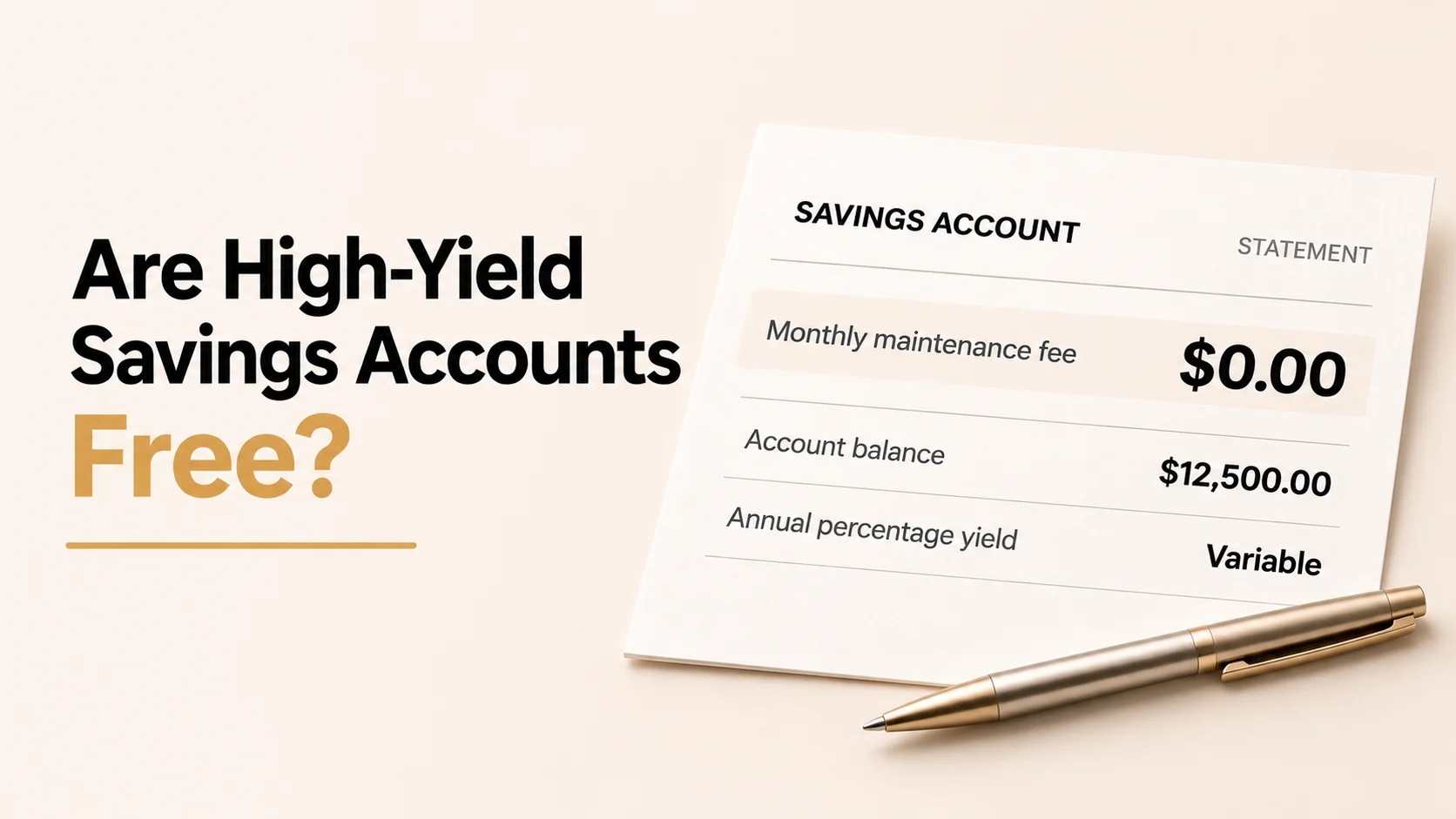
Many high-yield savings accounts have no monthly maintenance fee. That does not always make them completely free. A provider may charge for wire transfers, paper statements, excessive withdrawals, dormant accounts or optional instant transfers. The advertised APY may also require a minimum balance or recurring deposit.
The safest way to compare accounts is to look beyond the phrase “no monthly fee.” Check what it costs to open, hold, fund and withdraw from the account. A small fee can cancel out a surprising amount of your yearly earnings, especially when the balance is low.
What Does “Free” Mean for a High-Yield Savings Account?
A free high-yield savings account normally means you are not charged simply for keeping the account open. It may include:
- No monthly maintenance fee
- No minimum balance needed to avoid a fee
- No charge for standard ACH transfers
- No account-opening fee
These are separate features. An account can have no monthly fee but still require $500 to open. Another may have no opening minimum but charge for outgoing wires or paper statements.
The Consumer Financial Protection Bureau explains that banks and credit unions may charge monthly service fees. They must disclose the fee and the conditions for avoiding it when the account is opened.
Which Fees Can a High-Yield Savings Account Charge?
Monthly maintenance fees
This is a recurring charge for having the account. Some providers waive it when you keep a certain balance, receive direct deposits or link another account.
A $5 monthly fee costs $60 a year. A $10 monthly fee costs $120. That matters when the account holds only a few thousand dollars.
Minimum-balance fees
“Minimum balance” can mean three different things:
- The amount needed to open the account
- The amount needed to earn the advertised APY
- The amount needed to avoid a monthly fee
Read which balance method the provider uses. A minimum daily balance must be maintained every day. An average daily balance can move above and below the threshold as long as the monthly average stays high enough.
Withdrawal fees
The Federal Reserve removed the federal six-transfer limit from savings accounts in 2020. However, banks are still allowed to set their own transaction limits and fees under the deposit agreement. The Federal Reserve’s savings-account guidance confirms that its rule neither requires nor prohibits a bank from charging for excess transfers.
The CFPB also notes that a provider may charge when a customer makes too many withdrawals, withdraws more than an account allows or falls below a required balance.
Transfer and wire fees
Standard ACH transfers are often free. Faster or less common methods may cost money. Check for charges on:
- Same-day ACH transfers
- Domestic and international wires
- Instant transfers to a debit card
- Transfers made with customer support
The fee matters only if you expect to use the service. A $25 outgoing wire fee is irrelevant if you always use free ACH, but expensive if you send one wire every month.
Other account charges
Some high-yield accounts charge for paper statements, returned deposits, stop payments, dormant balances or closing the account soon after opening. An online savings app may also charge for optional services even when its basic transfers are free.
How Much Can a Monthly Fee Cost You?
The break-even calculation is simple:
Break-even balance = yearly account fees ÷ APY
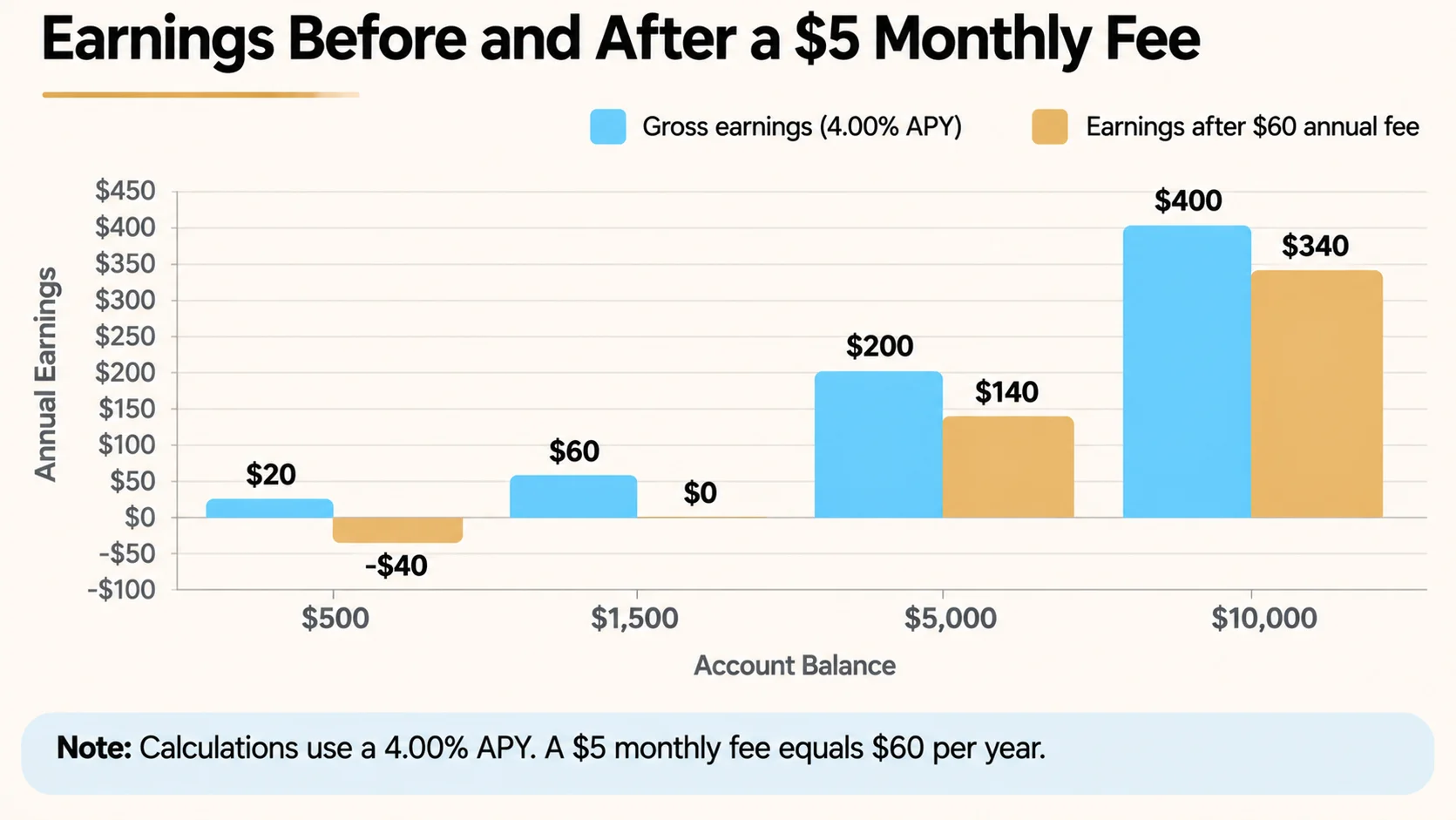
Suppose an account pays 4.00% APY and charges $5 each month.
| Balance | Approximate yearly earnings | Yearly fee | Amount left after fee |
|---|---|---|---|
| $500 | $20 | $60 | -$40 |
| $1,500 | $60 | $60 | $0 |
| $5,000 | $200 | $60 | $140 |
| $10,000 | $400 | $60 | $340 |
The account needs about $1,500 just to earn enough to cover the fee. This estimate assumes the APY stays at 4.00% for a full year and ignores tax. At a lower APY, the break-even balance rises.
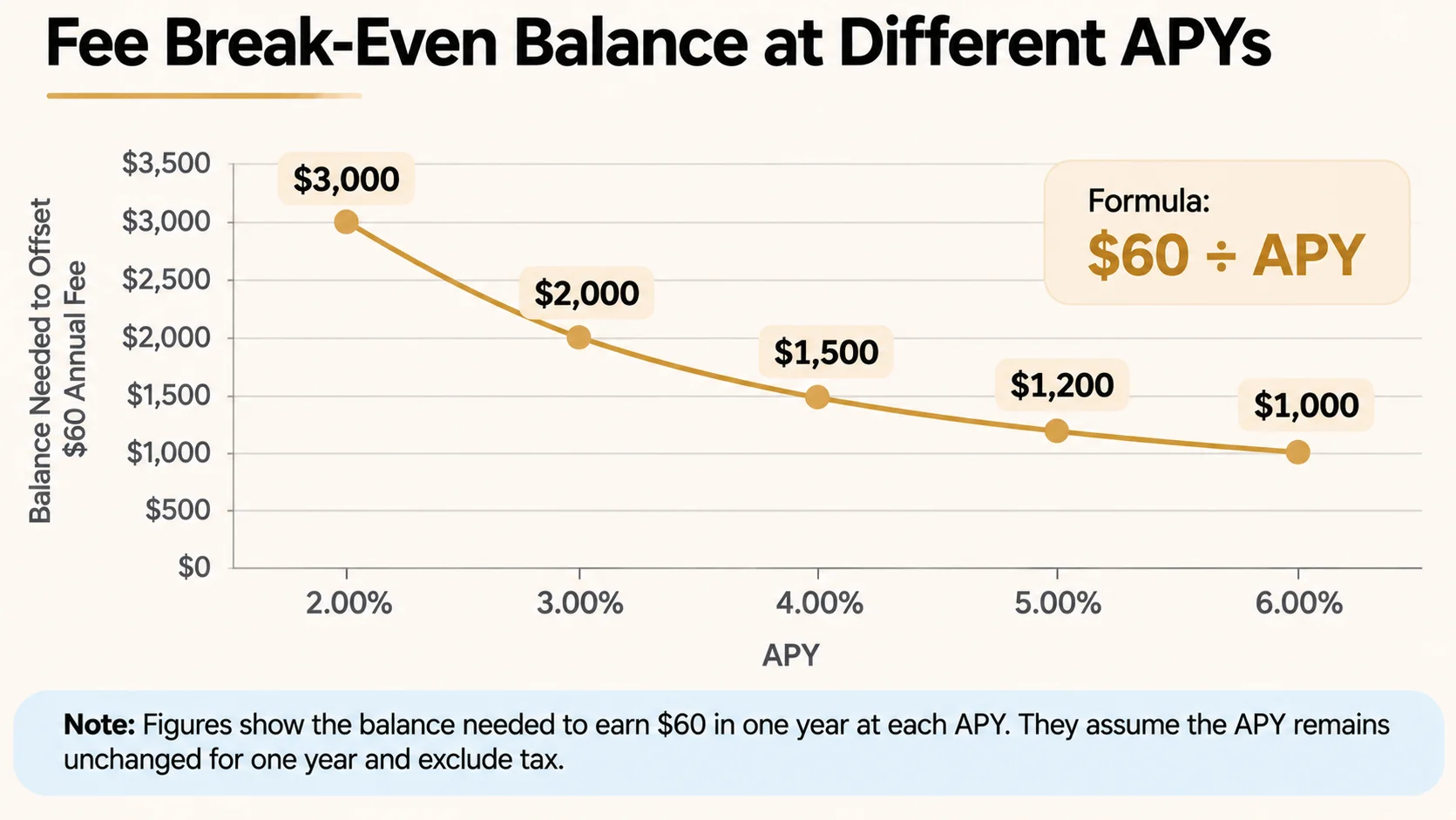
This is why a no-fee account at 3.80% can be better than a 4.00% account with a monthly charge. The guide to high-yield savings accounts with no monthly fees explains this trade-off in more detail.
How Can You Find an Account With No Fees?
Start with the Truth in Savings disclosure and the full fee schedule. The FDIC explains that this disclosure covers the APY, minimum-balance requirements, opening conditions and fees.
Search the documents for these terms: maintenance, minimum balance, withdrawal, wire, paper statement, dormant and closure. Then answer four questions:
- Can you earn the stated APY at your expected balance?
- Can you avoid the recurring fee without changing your normal behavior?
- Is your usual transfer method free?
- How quickly can you access the money?
An account is not a good fit if its fee waiver depends on a balance you may not maintain. Compare the full annual cost alongside the APY using this comparison of savings rates.
Are Online High-Yield Savings Accounts Usually Free?
Many online-only banks offer savings accounts without monthly maintenance charges. They operate without a large branch network and may use that lower overhead to offer a competitive APY.
That does not mean every digital savings platform is free. Some charge for paper statements, wires or expedited access. Others place conditions on their highest APY. Check the terms even when a high yield savings app leads with “zero fees.”
Access matters too. An online account may require a transfer to an external checking account before you can spend the money. Read Is a HYSA Liquid? and Advantages of Online-Only Savings Accounts before choosing an online savings app based only on price.
Does PureFi Charge a Monthly Fee?
PureFi does not charge a monthly account fee or require a minimum balance. PureFi is not a bank or a high yield digital savings account. PureFi provides access to fractional shares of real homes with tenants.
The one-time purchase fee is shown before a property-share order is confirmed. Earnings come from rent and changes in property value. Up to 6% APY is projected, variable and not guaranteed. Property shares can lose value, and PureFi balances and real estate shares are not FDIC insured.
That makes PureFi different from a no-fee bank savings account. Compare the underlying asset, access and protection- not only the projected percentage.
Put your dollars into something real
With PureFi, your projected earnings come from shares of real homes with tenants. Choose your properties from your phone, review the documents, and see every fee before you confirm.
Learn more about how PureFi can help you own real estate shares or download the app to get started today.
Up to 6% APY is projected, variable, and not guaranteed. Property shares can lose value. PureFi is not a bank, and its balances and real estate shares are not covered by FDIC insurance or another government deposit scheme.