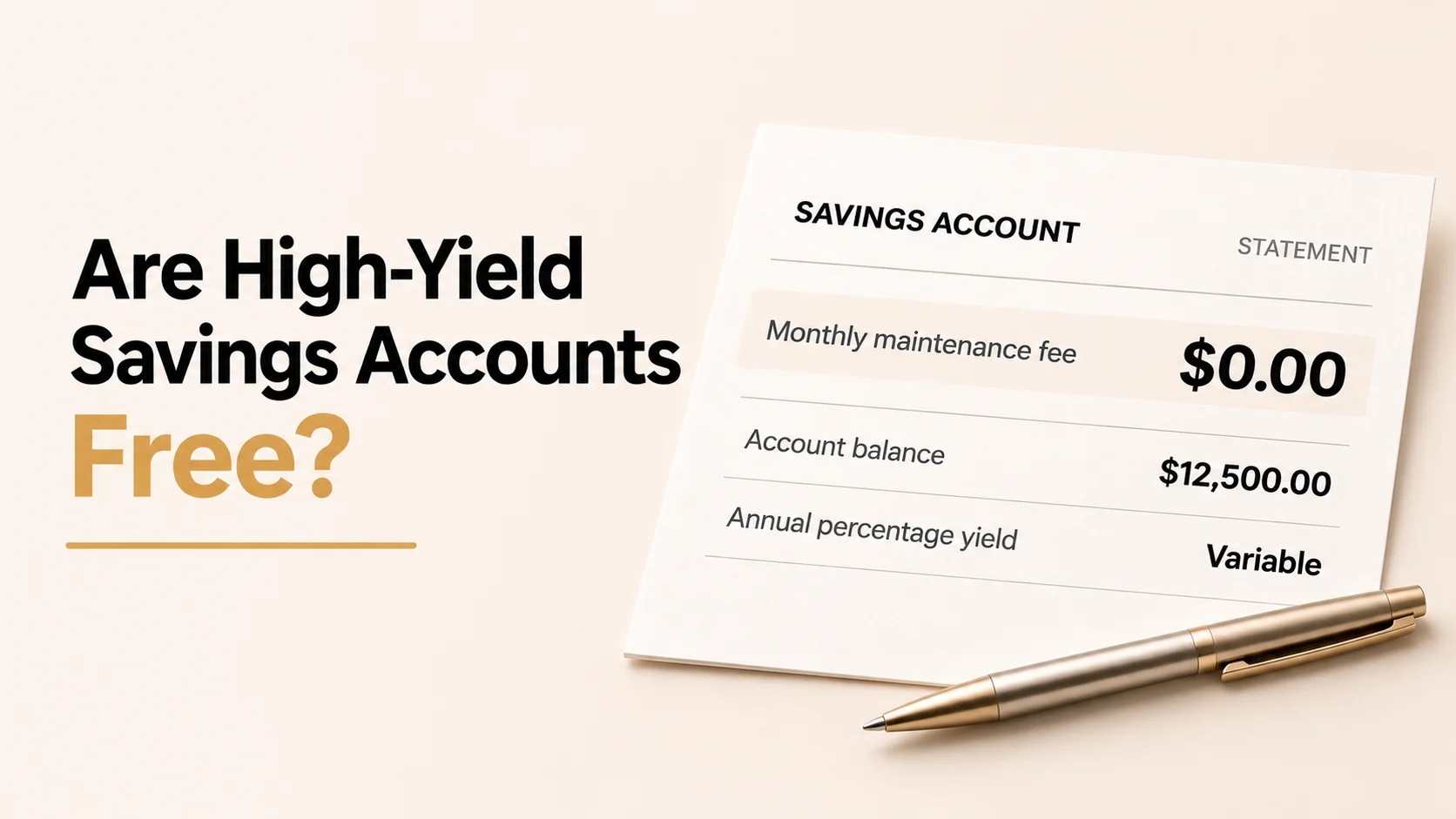
What Is a High-Interest Savings Account and How Does It Work?
A high-interest savings account is a deposit account offering a higher APY than a typical savings account. It is also commonly called a high-yield savings account. Like regular savings, it lets you deposit money, retain access, and earn on the balance. Before choosing one, compare more than the advertised APY. Fees, balance rules, transfer times, rate changes, and deposit protection all affect its value.
What Is a High-Interest Savings Account?
A high-interest savings account holds cash at a bank or credit union while paying a comparatively strong annual percentage yield. Many of these accounts are offered by online-first providers, although traditional banks and credit unions may offer them too.
“High-interest” is a marketing description, not a separate legal account category. No fixed APY qualifies an account for the term. A provider may use it when the APY exceeds the national average or its own standard savings yield.
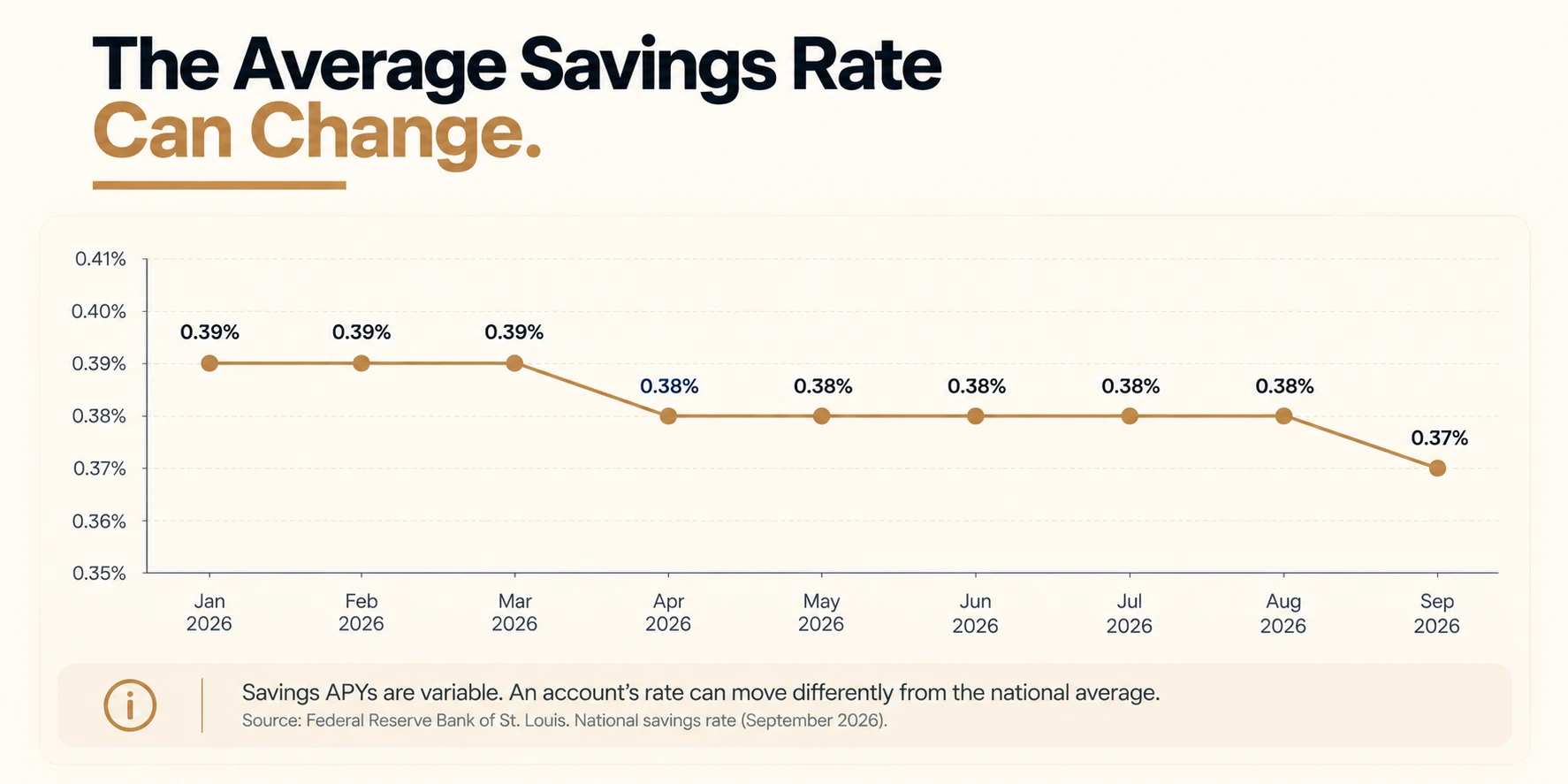
The FDIC reported a national savings rate of 0.37% for September 2026. High-yield offers can be several points higher, but the available APY depends on the provider, balance tier, location, and account conditions.
A bank savings account is different from an investment. Eligible money remains a deposit rather than buying property, stocks, or another asset. Its value does not move with an asset market, although the APY paid by the institution can rise or fall.
How Does a High-Interest Savings Account Work?
The process is similar to using a standard savings account, but the provider may operate primarily through a website or mobile app.
You Open and Fund the Account
After confirming eligibility, you complete an application and fund it through an ACH transfer, direct deposit, mobile check deposit, or incoming wire.
Some providers have no opening minimum. Others require a set deposit. That amount may differ from the balance needed for the highest APY or to avoid a fee.
The Provider Calculates Your Earnings
The institution applies its current rate to the eligible balance. Many accounts calculate earnings daily and credit them monthly, although schedules vary.
Credited earnings become part of the balance used for future calculations. This is compounding, and its effect becomes more noticeable over longer periods.
You Access the Money Through Supported Methods
Most online accounts use ACH transfers. Some also provide internal transfers, ATM access, debit cards, checks, or wires. A high APY does not guarantee instant withdrawals.
An external transfer may take several business days, particularly when an account is newly linked or a recent deposit is still on hold. The detailed guide to withdrawing from a high-yield savings account explains common methods, timing, and limits.
What Does APY Mean on a Savings Account?
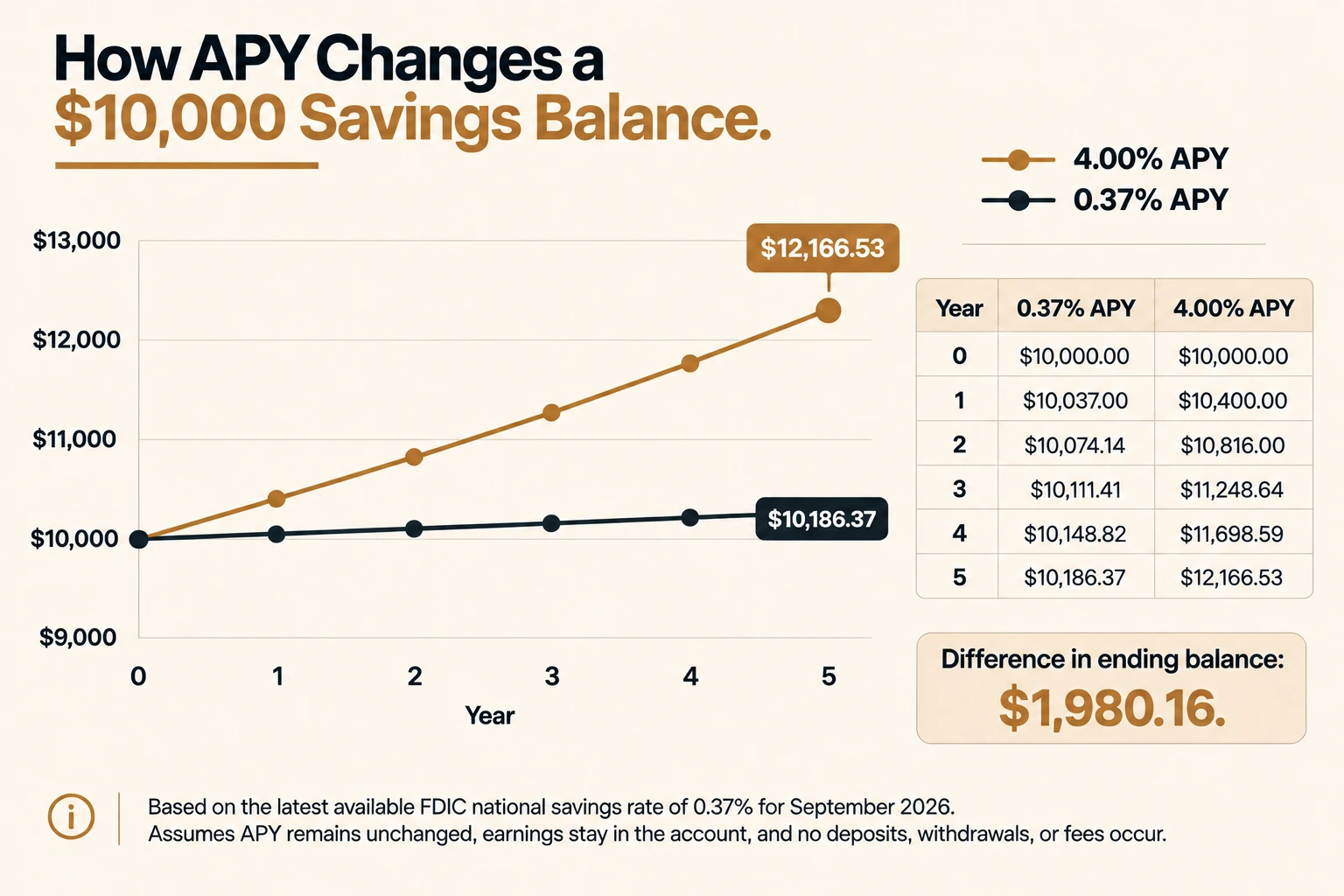
APY stands for annual percentage yield. It expresses how much an account could earn over one year when compounding is included. This makes it more useful for comparing savings accounts than looking at a basic rate alone.
For a quick one-year estimate, use:
Account balance × APY = estimated annual earnings
If an account offers 4.00% APY and the balance stays at $10,000 for a full year:
$10,000 × 0.04 = approximately $400
The estimate assumes an unchanged APY and balance with no fees. Deposits, withdrawals, tier changes, and APY changes affect actual earnings.
You do not need to calculate every compounding period when comparing products because APY already includes compounding. PureFi’s guide to APY on a savings account explains the calculation and assumptions in more detail.
Can the APY Change?
Yes. Most savings accounts have variable APYs. The provider can raise or lower the APY after the account opens.
Savings yields may respond to central-bank policy, general market conditions, competition for deposits, and the provider’s funding needs. The change may apply to both new and existing customers.
Promotional APYs may last only a few months before the standard APY applies. Tiered accounts may reserve the advertised figure for a particular balance range.
Check when the APY was updated, whether it is promotional, how long the promotion lasts, and what happens afterward. Do not plan long-term earnings around an opening figure that the provider can change.
High-Interest Savings vs Regular Savings
Both products hold bank deposits, but they may differ in yield, access, and account conditions.
| Feature | High-interest savings | Regular savings |
|---|---|---|
| Typical APY | Usually higher | Usually lower |
| Provider | Often online-first | Common at branch-based banks |
| Branch access | May be unavailable | More commonly available |
| Monthly fee | Often none, but varies | May apply |
| Minimum balance | May affect the APY or fees | May affect fees or eligibility |
| Cash access | Often depends on transfers | May include branch or ATM access |
| Deposit protection | Available at eligible insured institutions | Available at eligible insured institutions |
An online provider may offer a stronger APY without a large branch network. A traditional account may provide easier cash deposits, in-person support, or quicker internal transfers.
The better fit depends on the balance, access needs, and account conditions. PureFi’s guide to what makes a good savings rate provides more context for evaluating an advertised APY.
What Features Should You Compare?
The largest number in an advertisement should not make the decision on its own. Compare the conditions attached to it.
APY, Fees, and Balance Rules
Check whether the APY applies to the full balance or only a particular tier. Confirm any opening deposit, ongoing minimum, monthly fee, balance cap, and activity requirement. A high APY can provide little value when a monthly charge repeatedly reduces a small balance.
Promotional terms should identify who qualifies, when the offer ends, and which APY applies afterward. Check whether you can consistently meet any recurring-deposit requirement.
Access, App Features, and Support
A high-yield savings app should make it easy to view the current APY, link external accounts, track transfers, download statements, and contact support. Check transfer limits, deposit holds, processing times, and available withdrawal methods.
If you need branch access, cash deposits, or an ATM card, an online savings app may not provide everything you want. The guide on how to pick a high-yield savings account covers these tradeoffs in more detail.
Are High-Interest Savings Accounts Safe?
They can be a low-risk place to hold cash when the account is an eligible deposit at an insured institution. At an FDIC-insured US bank, deposits are generally protected up to $250,000 per depositor, per insured bank, for each ownership category. Federally insured credit unions provide comparable NCUA protection under their coverage rules.
Insurance applies if the insured institution fails. It does not guarantee the APY, cover every form of fraud, or protect balances above the limit.
Confirm the legal institution holding the money. A digital savings platform that is not a bank may use a partner bank, offer an investment, or follow another structure. App branding does not prove a balance is insured.
PureFi’s article on whether high-yield savings accounts are safe explains how to verify the institution and account protection.
The Federal Reserve removed the federal six-withdrawal limit from savings deposits in 2020. Banks and credit unions can still set their own transfer limits or fees, so the account agreement remains the best source for current withdrawal rules.
Put your dollars into something real
With PureFi, your projected earnings come from shares of real homes with tenants. Choose your properties from your phone, review the documents, and see every fee before you confirm.
Learn more about how PureFi can help you own real estate shares or download the app to get started today.
Up to 6% APY is projected, variable, and not guaranteed. Property shares can lose value. PureFi is not a bank, and its balances and real estate shares are not covered by FDIC insurance or another government deposit scheme.