Savings vs Investing: Risk, Returns and Time Frames Explained
Saving and investing are two different ways to use money you do not need today. Saving focuses on keeping the money available and protecting the balance. Investing means buying an asset that may produce income or rise in value. It can also lose value. The right choice depends on when you will need the money, how much risk you can accept, and what you want the money to do. This guide compares savings and investing by risk, returns, access, time frames, protection, and common uses. It also explains how our fractional real estate investment works.
Savings vs Investing at a Glance
| Feature | Saving | Investing |
|---|---|---|
| Main purpose | Preserve money and keep it available | Seek income or growth from an asset |
| Risk | Usually lower | Varies and can be high |
| Potential return | Usually lower and more predictable | Higher potential, but not guaranteed |
| Value changes | Deposit balance normally stays stable | Asset value can rise or fall |
| Access | Usually easier | The asset may need to be sold first |
| Time frame | Short-term and near-term goals | Usually longer-term goals |
| Federal protection | May apply to eligible deposits | Does not protect against investment losses |
| Examples | Savings accounts, money market accounts, CDs | Stocks, bonds, funds, and real estate |
Inflation can reduce what cash can buy. Investment results depend on the asset, fees, time frame, and market conditions.
What Does Saving Mean?
Saving means holding money for later without normal market price changes. Common products include savings accounts, money market deposit accounts, CDs, and holiday accounts.
A high-yield digital savings account may pay a variable APY while keeping the deposited amount stable under the account terms. A high-yield savings app or online savings app may also support automatic deposits and transfers.
Savings accounts are often used for:
- Emergency costs
- Regular bills
- Travel planned within the next year
- Taxes
- A near-term purchase
- Money that must remain easy to reach
Eligible bank deposits may receive federal protection. The FDIC standard limit is $250,000 per depositor, per insured bank, for each ownership category.
What Does Investing Mean?
Investing means buying an asset with the expectation that it may produce income or become more valuable. Common investments include stocks, bonds, funds, ETFs, REITs, direct property, and fractional real estate shares.
An investment can move below its purchase price. Income can also change or stop. No projection removes that risk.
The asset matters. Stocks represent company ownership, funds hold groups of assets, and real estate can provide exposure to rent and property values.
Our guide to how investing works explains these structures in more detail.
Risk and Potential Returns
Savings products generally provide lower but more predictable earnings. The main risks include fees, changing APYs, fraud, balances above insurance limits, and inflation.
Investments carry asset risk. The value can fall because of company results, market conditions, property costs, economic changes, or investor demand. Some investments are also difficult to sell.
Investor.gov explains that financial products differ in how safe they are, how quickly they may grow, and how easily owners can access their money.
Higher potential returns normally come with a greater chance of loss. A high advertised projection should not be treated as a promise.
Access to Your Money
Savings accounts usually offer direct withdrawals or transfers. Providers can still set transfer limits, holds, or fees. Investments must normally be sold first. Publicly traded assets may sell quickly. Private assets and property may use a slower process.
Liquidity risk means you may not find a buyer when you want to sell. It can also mean accepting a lower price to exit. The Investor.gov liquidity guide explains this risk.
Do not place bill money or emergency cash into an asset only because the platform has a simple app. Easy account access is not the same as guaranteed investment liquidity.
Short-Term vs Long-Term Goals
Time frame is one of the clearest ways to separate saving from investing. Savings may work better when the money is needed within months or a few years. The balance is easier to plan around, even if the APY changes.
Investing may be considered for goals with a longer time frame. More time can provide room to recover from short-term price changes. Recovery is not guaranteed.
Investor.gov’s asset-allocation guidance states that investors with longer time horizons may be more comfortable with volatile assets. People with shorter time frames may prefer less volatility.
Our guide to whether savings accounts work for long-term goals explains how APY and inflation affect cash over time.
Protection and Account Structure
Eligible savings deposits at an insured bank or credit union can receive federal protection within the legal limits. This protection applies if the institution fails. It does not guarantee that the account APY will remain the same.
Investments do not receive protection against falling values. Security controls may protect an account from unauthorised access. They cannot stop a stock, fund, or property share from losing value.
Before investing, identify:
- The asset you will own
- Where the income may come from
- How the asset is valued
- Which fees apply
- How and when it can be sold
- What happens if the platform closes
- Which legal documents are available
Should You Save Before You Invest?
Money needed for expenses and emergencies should remain accessible. This reduces the chance of selling an investment at a loss to cover a bill.
A simple order is:
- Cover normal expenses.
- Keep a cash buffer for unexpected costs.
- Review expensive debt.
- Separate short-term and long-term goals.
- Invest only money that can accept changes in value.
Base your emergency target on expenses, income stability, dependants, and access to other funds.
Can You Save and Invest at the Same Time?
Yes. The two actions can support different goals. You might send part of each paycheck to savings for short-term needs and invest a separate amount for a longer goal. A digital savings platform can help manage cash, while an investment account holds assets that may rise or fall.
The amounts do not need to stay fixed. You can adjust them when your income, expenses, or goals change.
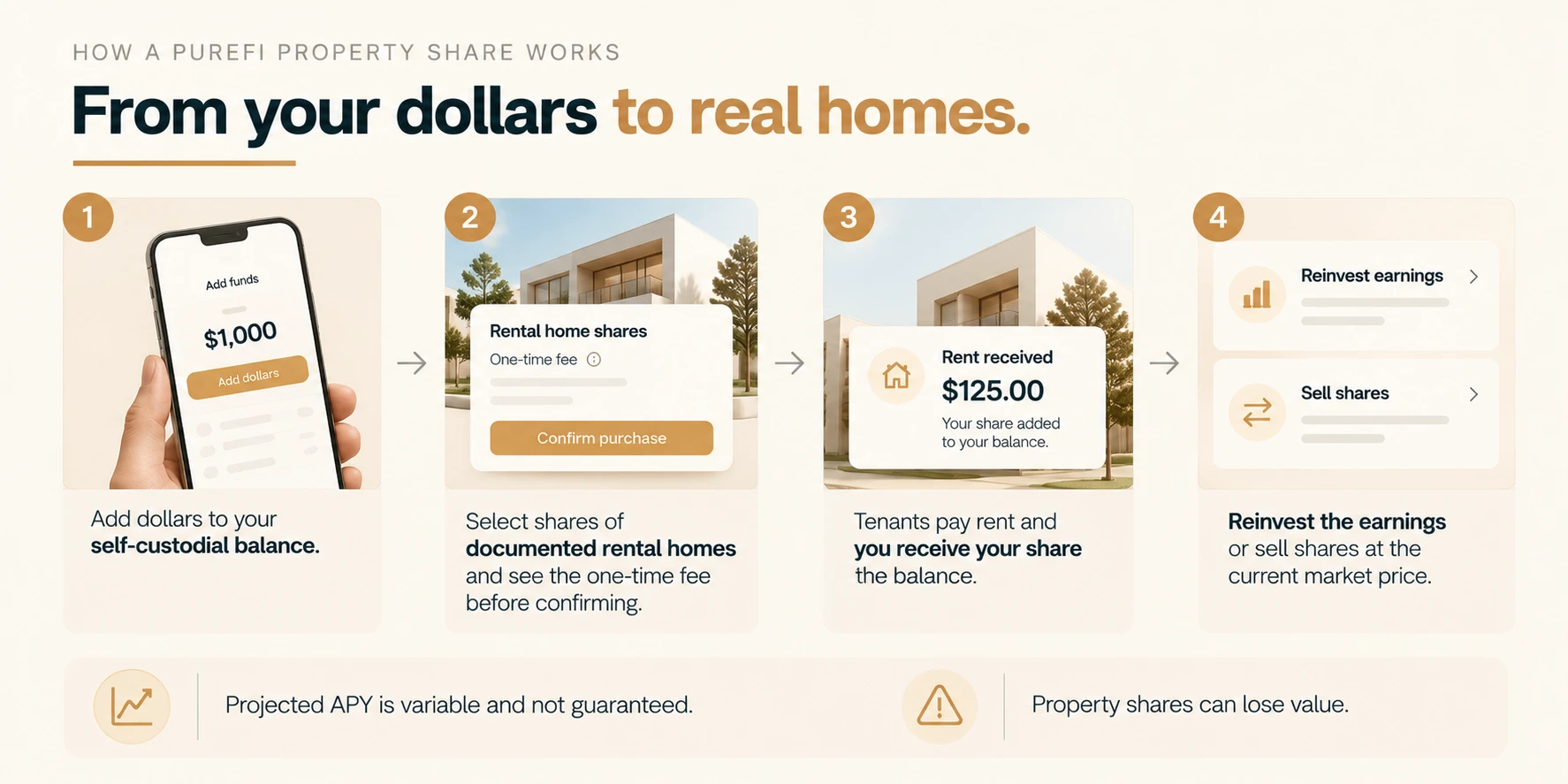
How Our Real Estate Investment Works
We are a high-yield investment platform that provides access to fractional shares of individual rented homes. We are not a bank or a high-yield digital savings account.
You Buy Shares of Real Homes
Each available property is a rented home bought outright and professionally managed. You can choose homes or begin with a suggested mix.
Shares of each chosen home sit in an account in your name. We do not pool your property shares with another user’s shares.
Before buying, you can review the title deed, lease agreement, and inspection report.
Returns Come From Rent and Property Value
When tenants pay rent, your share is added to your balance. You can take those earnings out or use them to buy more property shares.
The value of each share also moves with the home. It can rise or fall. We project up to 6% APY based on current rent and home values. That figure is variable and not guaranteed.
Nothing is lent out to produce the projected return. Our transparency page explains where the earnings come from.
Fees and Selling
We do not charge a monthly account fee. Each property-share purchase has a one-time fee. The amount appears on the order before you confirm.
There is no fixed lock-up. Shares sell at the current market price, and the proceeds return to your balance. The market price may be lower than the amount you paid.
Self-Custody and Protection
Your balance sits in a self-custodial wallet controlled by you. We cannot move it without your approval. Property shares sit in an account in your name.
We use measures such as encryption, identity verification, two-factor authentication, and fraud monitoring. Our security page explains these controls.
Security and investment performance are different. These controls do not prevent property shares from losing value.
We are not a bank. Balances and real estate shares are not FDIC insured, not insured by another government agency, and not guaranteed by us.
Savings Account vs PureFi
| Feature | Bank savings account | PureFi |
|---|---|---|
| What you hold | Cash deposit | Fractional shares of rented homes |
| Return source | Bank APY | Rent and changes in property value |
| Value changes | Deposit balance normally stays stable | Share value can rise or fall |
| Access | Transfer or withdrawal | Property shares must be sold |
| Fees | Depend on the bank | One-time purchase fee; no monthly fee |
| Protection | Eligible deposits may be federally insured | No FDIC or government deposit protection |
| Documents | Account agreement | Property and legal documents |
| Better suited for | Short-term cash needs | Money that can accept investment risk |
Who Might Consider PureFi?
Our platform may suit someone who wants exposure to individual rental homes without managing an entire property. The person must accept variable rent, changing property values, and possible losses.
PureFi is not designed to replace emergency savings or money needed for near-term bills. Read our guide to real estate investing before deciding whether property shares match your goal.
Put your dollars into something real
With PureFi, your projected earnings come from shares of real homes with tenants. Choose your properties from your phone, review the documents, and see every fee before you confirm.
Learn more about how PureFi can help you own real estate shares or download the app to get started today.
Up to 6% APY is projected, variable, and not guaranteed. Property shares can lose value. PureFi is not a bank, and its balances and real estate shares are not covered by FDIC insurance or another government deposit scheme.