
Holiday Savings Accounts: How They Work and What to Compare

Holiday savings accounts help you put money aside for gifts, travel, food, events, and other seasonal costs. You usually add money throughout the year and receive the balance before the holiday shopping period begins. Some accounts transfer the money automatically in October or November. Others let you withdraw during a set window. Early access may trigger a fee or close the account. These rules can make saving easier, but they also reduce flexibility. Before opening an account, compare the APY, deposit options, payout date, withdrawal rules, fees, and federal protection.
What Is a Holiday Savings Account?
A holiday savings account is a goal-based deposit account. It is also called a holiday club or Christmas club account. Credit unions commonly offer these products, although some banks may provide similar accounts.
The account keeps seasonal spending money separate and may limit access until a set date.
The Consumer Financial Protection Bureau includes club accounts within its definition of consumer asset accounts in certain situations. Account terms still vary by institution.
A holiday account is not credit. You save your own money before spending it.
How Do Holiday Savings Accounts Work?
Most holiday accounts follow a simple cycle.
- You open the account at a bank or credit union.
- You choose how much to add each week or month.
- You make manual deposits or schedule automatic transfers.
- The balance stays in the account during the savings period.
- The provider releases or transfers the money before the holidays.
Some accounts repeat the cycle automatically. The CFPB has specific disclosure rules for certain club accounts that renew and continue scheduled transfers into a new club period. You can review those rules in Regulation DD.
Payout dates vary. Check when the transfer occurs, whether it is automatic, and where the money goes.
How Much Should You Deposit?
Start with the amount you expect to spend. Include gifts, travel, meals, decorations, events, delivery fees, and other planned costs. Then subtract any money already saved.
Divide the remaining target by the number of deposits you can make.
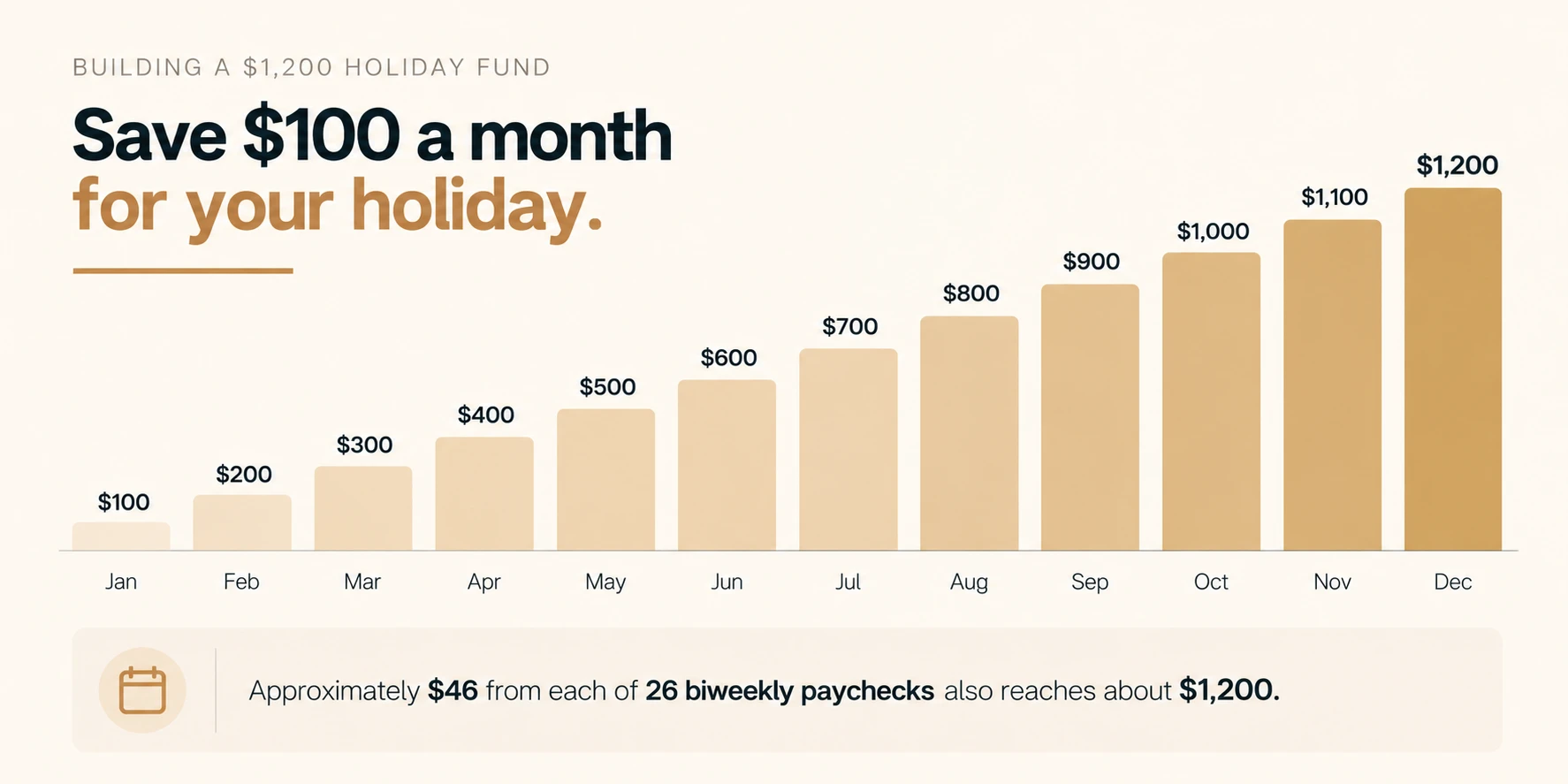
For example:
- Holiday target: $1,200
- Saving period: 12 months
- Monthly deposit: $100
If you are paid every two weeks, you could save about $46 from each of 26 paychecks to reach roughly the same target.
Use an amount that works with normal bills and emergency savings. Do not set transfers that cause overdrafts.
Our guide to adding money to a savings account regularly explains how repeat deposits affect the balance.
Withdrawal and Payout Rules
Withdrawal rules are the most important feature to check. A holiday account may look like a standard savings account in the app, but access can be more restricted.
Some providers charge an early-withdrawal fee. Others require you to take out the full balance. An early withdrawal may also close the account or stop further deposits until the next club period.
Current provider rules show how much the structure can vary:
- American First Credit Union allows fee-free withdrawals from November 1 through December 31. It lists a $10 fee outside that period.
- InTouch Credit Union states that a withdrawal before October 31 must be for the full balance. A fee may apply, and the member cannot add more money until November 1.
- HOPE Credit Union transfers funds on October 31 and lists a $10 fee for early disbursement.
These are examples. Read the current fee schedule and account agreement before opening.
If flexible access matters, compare these terms with a standard account. Our guide to withdrawing from a high-yield savings account covers the main access questions.
Do Holiday Savings Accounts Pay a Yield?
Some holiday accounts pay an APY or credit-union dividend. Others pay very little and focus on the deposit schedule instead.
The APY may be lower than the rate on a high yield digital savings account. That does not always make the holiday account a poor choice. A fixed payout date and early-access fee may help someone who finds it difficult to leave savings untouched.
Compare the amount you expect to earn with any fees. A $10 early-withdrawal charge can remove much of the annual yield on a small balance.
The CFPB’s account disclosure rules require covered institutions to disclose items such as the APY, minimum balance rules, fees, transaction limits, and early-withdrawal penalties when applicable.
Benefits of a Holiday Savings Account
It Separates Holiday Money
Keeping the balance outside your checking account makes it easier to see what is available for seasonal costs. Normal purchases do not reduce the holiday balance.
It Supports Automatic Saving
Weekly or monthly transfers can turn one large goal into smaller deposits. You do not need to remember to move money every time.
It Can Reduce Credit Use
Saving before the holiday season gives you money to spend without placing every purchase on a card. This can reduce the amount carried into the next year.
It Creates a Clear Deadline
The payout date gives the account a defined purpose. You know when the money is expected to arrive and can plan purchases around that date.
Possible Drawbacks
The same structure that supports saving can reduce flexibility.
- The APY may be lower than other savings products.
- Early access may trigger a fee.
- Partial withdrawals may not be allowed.
- The provider may control the payout date.
- Credit-union membership may be required.
- Automatic renewal may continue transfers into another club period.
If you need the money for an unexpected expense, a standard savings account may be easier to use. Keep emergency savings separate from the holiday balance.
Holiday Savings Account vs Regular Savings Account
| Feature | Holiday savings account | Regular savings account |
|---|---|---|
| Main purpose | Seasonal spending | General savings goals |
| Deposit schedule | Often weekly or monthly | Flexible |
| Payout | Often automatic on a set date | No scheduled payout |
| Early access | May involve a fee or full withdrawal | Usually more flexible |
| APY | Varies and may be modest | Varies by provider |
| Renewal | May restart automatically | Usually stays open |
| Best use | A defined holiday budget | Emergency funds and wider goals |
A high-yield savings app may offer a stronger APY and fewer withdrawal limits. An online savings app may also let you create a named holiday goal without opening a separate club account.
The tradeoff is discipline. A regular account makes the money easier to reach. A holiday account may make it harder to spend early.
Are Holiday Savings Accounts Federally Protected?
Protection depends on the institution offering the account. Eligible deposits at an FDIC-insured bank receive coverage within the legal limits. The FDIC standard amount is $250,000 per depositor, per insured bank, for each ownership category.
Eligible member accounts at a federally insured credit union receive similar protection through the National Credit Union Share Insurance Fund. The NCUA provides a Share Insurance Estimator and information about how coverage applies.
Do not assume every app or financial company is a bank or credit union. Confirm the institution holding the funds and check its insurance status.

Who Might Use a Holiday Savings Account?
A holiday account may work well if you want a separate seasonal budget and do not expect to need the money early. It can also help if a fixed payout date makes it easier to stay on track.
It may be less useful when you already save consistently in a high-APY account or need flexible withdrawals. In that case, a regular account with an automatic monthly transfer may do the same job with fewer restrictions.
What Should You Compare Before Opening One?
Check the following details:
- APY or dividend rate
- Minimum opening deposit
- Required deposit schedule
- Monthly maintenance fee
- Early-withdrawal fee
- Partial withdrawal rules
- Payout date and method
- Automatic renewal terms
- Federal deposit or share insurance
- Membership requirements
A digital savings platform may make deposits and progress easier to track. The account terms still matter more than the design of the app.
Our guide to high-yield savings accounts with no monthly fees explains how to compare other charges.
Put your dollars into something real
With PureFi, your projected earnings come from shares of real homes with tenants. Choose your properties from your phone, review the documents, and see every fee before you confirm.
Learn more about how PureFi can help you own real estate shares or download the app to get started today.
Up to 6% APY is projected, variable, and not guaranteed. Property shares can lose value. PureFi is not a bank, and its balances and real estate shares are not covered by FDIC insurance or another government deposit scheme.


