High-Yield Savings Account for College Students
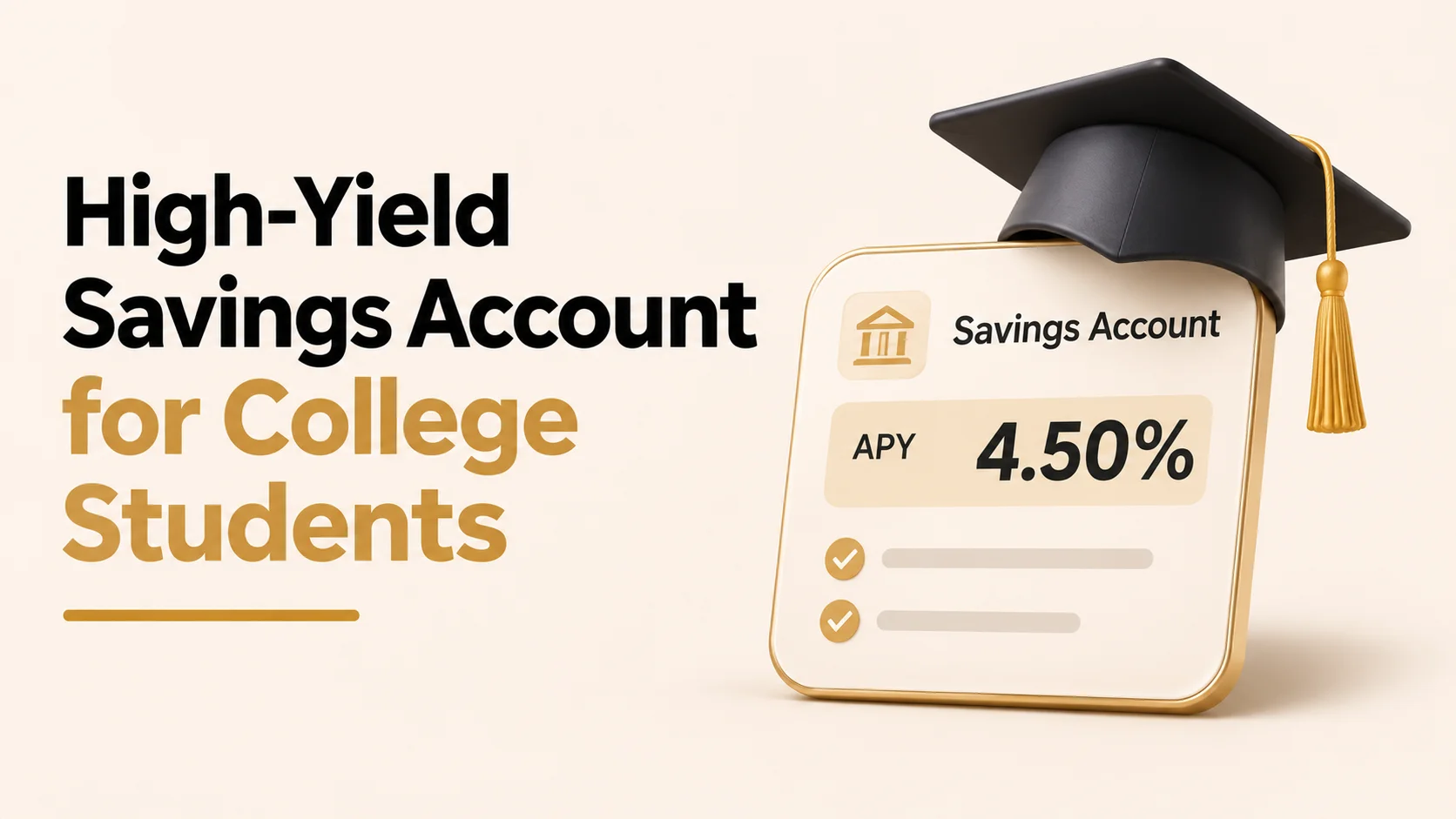
A high-yield savings account can help a college student keep emergency money separate while earning more than many basic savings accounts. It can also hold money for textbooks, travel, rental deposits or another expense that is months away.
You do not necessarily need an account labelled “student savings.” A standard no-fee HYSA may offer a stronger APY and better digital tools.
The headline rate should not be the only factor. Students should also compare fees, balance requirements, transfer speed, eligibility and deposit protection. An account is only useful if it fits an irregular student income and provides reliable access when the money is needed.
Can College Students Open a HYSA?
College students can normally apply for a high-yield savings account if they meet the provider’s general eligibility requirements.
You may need to:
- Be at least 18 to open an individual account
- Live in a supported state or country
- Provide a residential address
- Supply a Social Security number or accepted ITIN
- Complete identity verification
- Make the minimum opening deposit, if required
Students under 18 may need a parent, guardian or another adult to open a custodial or joint account. The exact age rule depends on the provider and applicable state law.
A regular HYSA normally does not require proof that you are enrolled in college. Proof of student status is more likely when the provider offers a product with student-specific benefits.
Our guide toopening a high-yield savings account explains the general application process.
What Documents May a Student Need?
Banks must collect enough information to verify the identity of anyone opening an account. A student may be asked for:
- Full legal name
- Date of birth
- Residential address
- Social Security number or ITIN
- Driver’s licence, state ID or passport
- Phone number and email address
- Details of the account used for initial funding
TheOffice of the Comptroller of the Currency explains that a bank must obtain a name, date of birth, address and identification number. It must then verify the information through documents or another approved method.
An online bank may ask you to upload photographs of your identification. It may also send a code to your phone or email.
If the system cannot verify a campus or recently changed address, you may need to provide a lease, utility bill or another document showing where you live.
What Should Students Compare?
A good student HYSA should work with a limited or irregular income. An APY that requires a large balance or monthly payroll deposit may not be practical.
Monthly and transaction fees
A $5 monthly fee equals $60 a year. That can remove a large part of the earnings from a small student balance.
Look for an account without a monthly maintenance fee. Then check for less obvious charges, including:
- Outgoing wire fees
- Expedited-transfer fees
- ATM charges
- Paper-statement fees
- Stop-payment fees
- Early-account-closure fees
“No monthly fee” does not mean every service is free. Our guide tohigh-yield savings accounts with no monthly fees explains what else to check.
Minimum deposits and balances
Some providers allow an account to be opened with no initial deposit. Others require $25, $100 or more.
Check whether a minimum balance is required to avoid fees or receive the advertised APY. A college student may struggle to maintain a high threshold during months with tuition, rent or fewer working hours.
APY conditions
The highest advertised rate may require:
- A qualifying direct deposit
- A recurring monthly contribution
- A linked checking account
- A certain balance range
- New money from another institution
Choose conditions you can meet naturally. Missing a requirement may move the account to a much lower APY.
Access to money
Many online HYSAs require you to transfer money to checking before spending it. The transfer could take one or more business days.
Check the normal delivery time, transfer limits, weekend processing and security-review rules. If the account will hold emergency money, access matters as much as the APY.
Deposit protection
Eligible savings deposits at an FDIC-insured bank are automatically insured within applicable limits and ownership categories. Federally insured credit unions provide similar protection through the NCUA.
Verify the institution rather than assuming an online savings app is itself a bank. TheFDIC BankFind Suite can confirm whether a bank is insured.
Mobile account tools
Useful features can include:
- Automatic transfers
- Savings goals or buckets
- Balance alerts
- Mobile check deposit
- Clear pending-transaction labels
- Easy access to statements
An online-only account may provide a better app and higher APY, but it may not accept cash deposits. Read about theadvantages of online-only savings accounts before deciding.
What Can a College Student Use the Account For?
A HYSA works best for money that should remain available but is not needed for daily spending.
Possible uses include:
- Emergency medical or travel costs
- Textbooks and course materials
- A rental or utility deposit
- Tuition or fees due in a future term
- A laptop or phone replacement
- Moving expenses
- Costs between jobs or internships
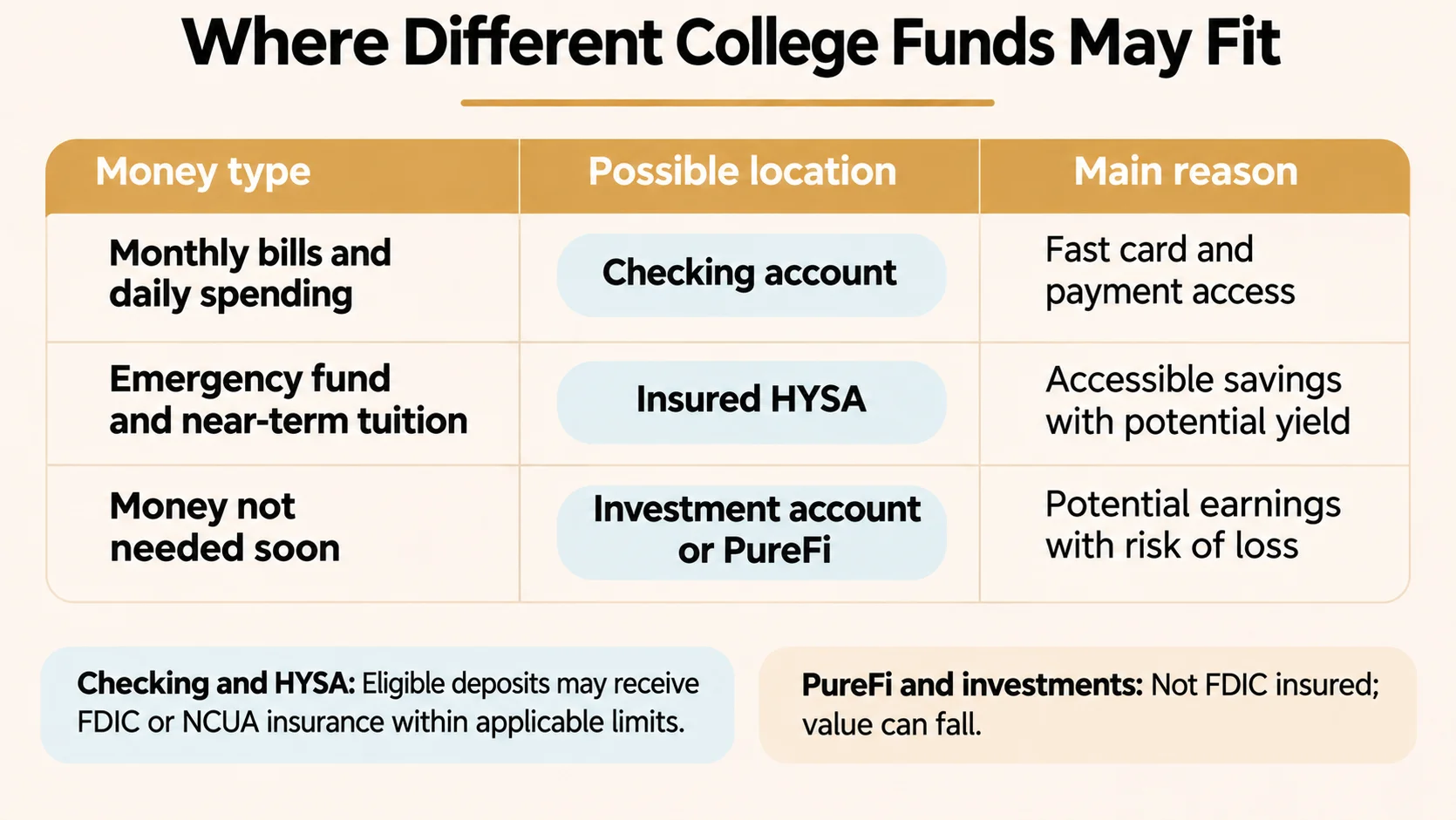
Money needed for current rent, food, transport and bills may belong in checking. Checking accounts are designed for regular payments, debit-card spending and cash withdrawals.
A separate HYSA can make it harder to spend money reserved for a specific purpose. However, the transfer process should not be so slow that an emergency fund becomes difficult to use.
OurHYSA versus checking account comparison explains how the two account types can work together.
How Can Students Add Money Regularly?
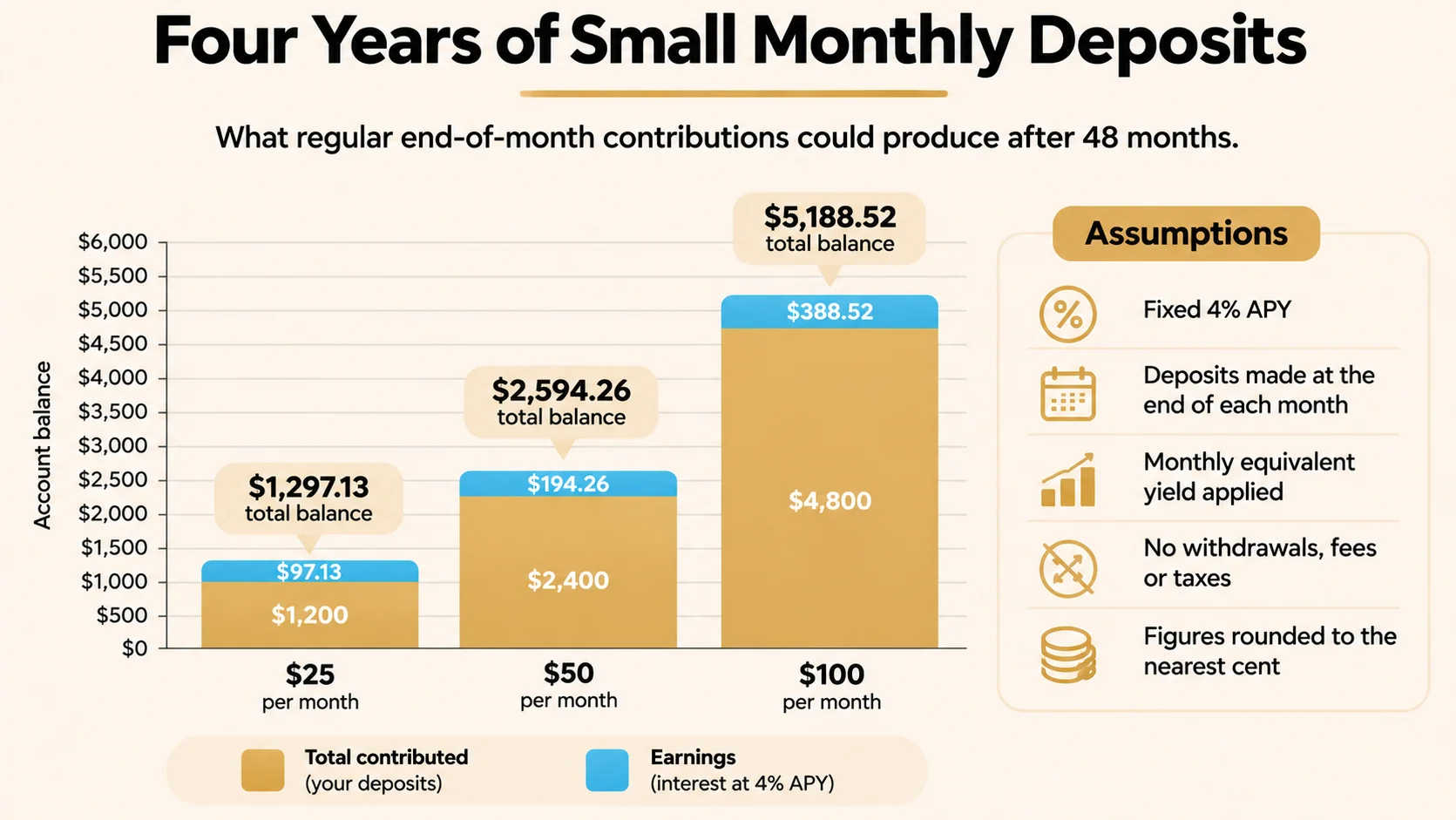
A student does not need a large opening balance to begin saving. Regular contributions can matter more than the starting amount.
Options include:
- Sending part of each paycheck to savings
- Scheduling a transfer after payday
- Saving a percentage of freelance income
- Moving part of a tax refund or gift
- Saving money left from a financial-aid refund
Be careful with financial-aid money. Funds needed for tuition, books, housing and living costs should remain accessible. Do not place them somewhere with investment risk or long withdrawal delays.
If the HYSA accepts payroll deposits, a split direct deposit can be useful. Checking receives the amount needed for bills, while a fixed amount or percentage goes to savings.
ReadCan You Direct Deposit Into a High-Yield Savings Account? for setup considerations.
Does a Student HYSA Build Credit?
A savings account does not normally build a credit score. You are depositing your own money rather than borrowing from a lender.
Deposits, withdrawals and savings earnings are not normally reported to the major credit bureaus as credit activity. Closing the account in good standing also does not usually affect the age of your credit history.
Savings can still help indirectly. An emergency fund may prevent a missed credit-card payment or reduce the need to borrow for an unexpected expense.
Our guide towhether a savings account builds credit explains the distinction.
Where Does PureFi Fit for College Students?
PureFi may suit an adult college student who has money beyond immediate tuition, rent, and emergency needs. The student must understand that property shares can rise or fall in value.
Money needed during the semester should not be placed in an investment simply because its projected APY is higher. A market loss or change in sale value could affect the amount available when tuition or rent is due.
PureFi’s projected earnings come from tenant rent and possible changes in property value. Up to 6% APY is projected, variable and not guaranteed.
Students should separate money by purpose:
- Checking for current spending
- An insured HYSA for emergencies and near-term goals
- Investments for money that can accept risk and remain invested
Put your dollars into something real
With PureFi, your projected earnings come from shares of real homes with tenants. Choose your properties from your phone, review the documents, and see every fee before you confirm.
Learn more about how PureFi can help youown real estate shares ordownload the app to get started today.
Up to 6% APY is projected, variable, and not guaranteed. Property shares can lose value. PureFi is not a bank, and its balances and real estate shares are not covered by FDIC insurance or another government deposit scheme.