Difference Between a Savings and Current Bank Account Explained
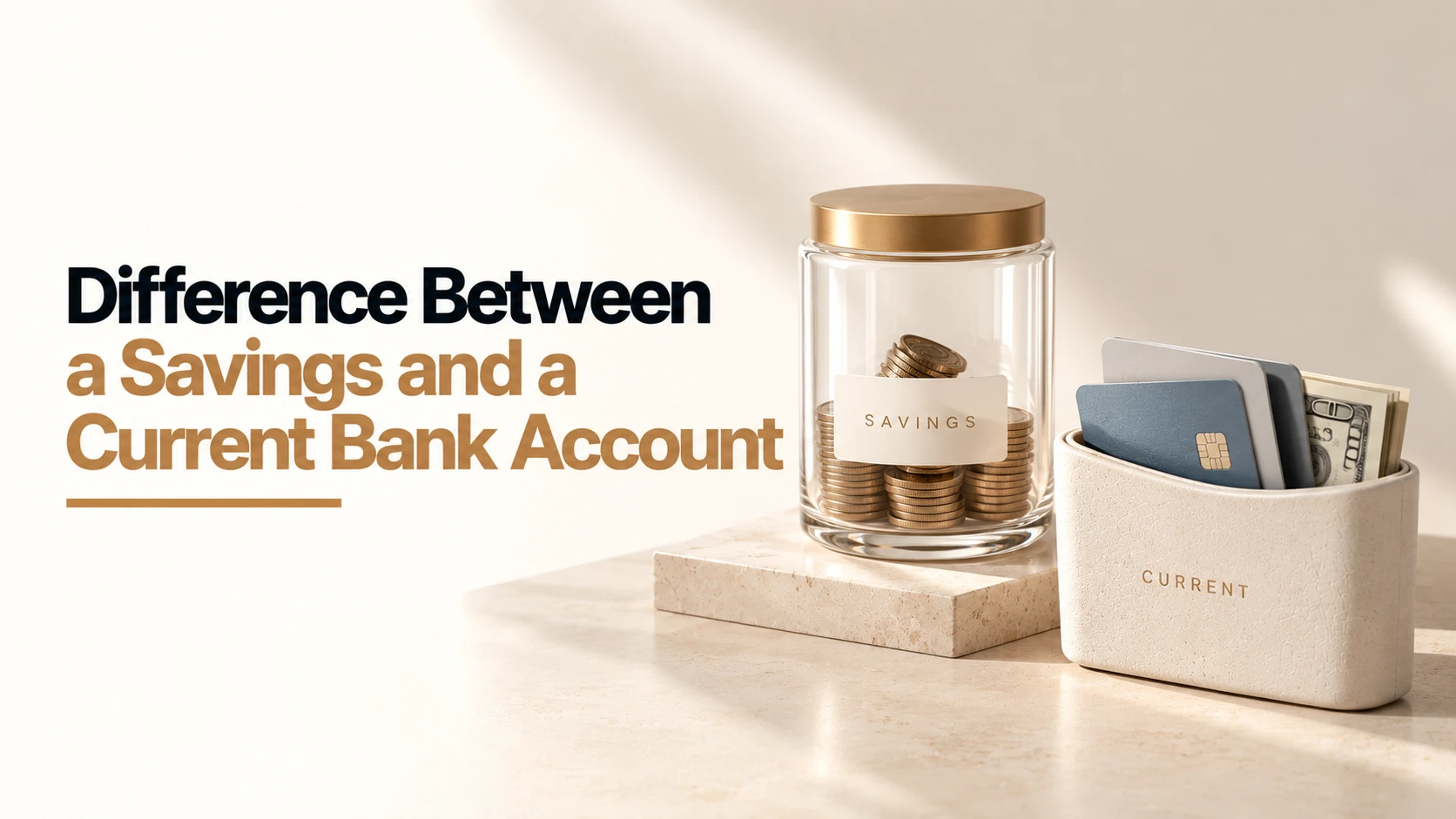
A savings account and a current account handle different parts of your finances. A current account is built for regular payments. You can receive your salary, pay bills, use a debit card, and withdraw cash. A savings account is built for money you want to hold and grow. It usually pays a higher APY but may offer fewer payment features. In the United States, a current account is normally called a checking account. This guide compares the two account types by purpose, access, transactions, fees, earnings, and federal protection.
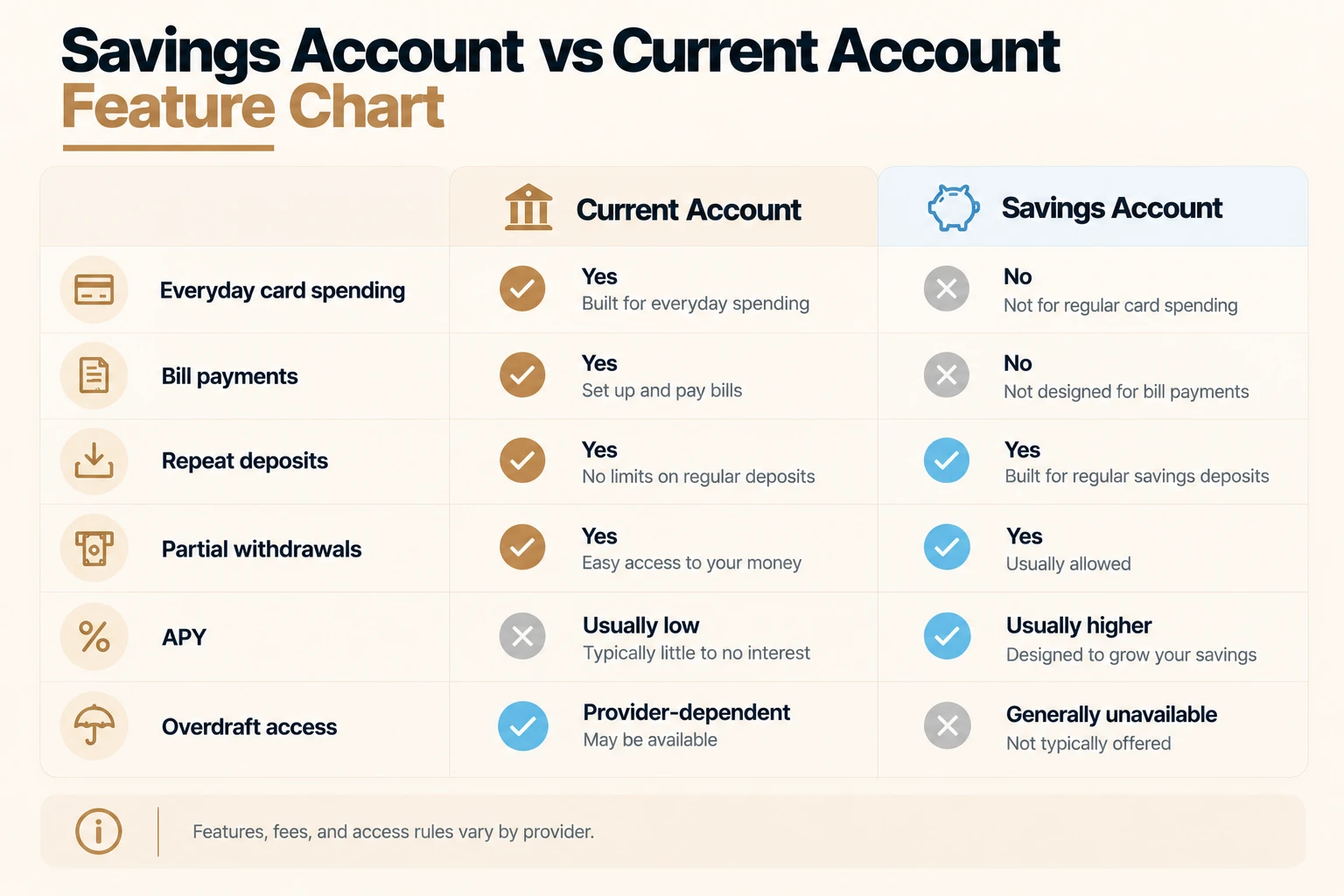
Savings Account vs Current Account at a Glance
| Feature | Savings account | Current account |
|---|---|---|
| Main purpose | Holding and growing money | Managing daily payments |
| Common US name | Savings account | Checking account |
| APY | Usually higher | Often low or 0%, although some accounts pay more |
| Debit card | Not always included | Usually included |
| Bill payments | Limited or unavailable | A standard feature |
| Direct deposits | Sometimes supported | Commonly supported |
| Withdrawals | May be subject to provider rules | Built for frequent use |
| Overdraft access | Uncommon | May be offered |
| Best use | Emergency funds and savings goals | Salary, bills, purchases, and transfers |
What Is a Savings Account?
A savings account is a deposit account for money you do not plan to spend every day. You can add funds, keep a balance, and earn a variable APY.
The APY can change. A high-yield digital savings account may pay more than a standard savings account, but the rate is not the only feature to check.
Common Savings Account Features
- A variable APY
- Online or mobile transfers
- Repeat deposits
- Partial withdrawals
- Possible minimum balance rules
- Possible monthly fees
- Federal protection for eligible deposits at insured institutions
Some savings accounts come with an ATM card. Many do not include a debit card for everyday purchases. You may need to move money to a linked current or checking account before spending it.
Banks can set their own withdrawal or transfer rules. Our guide to withdrawing from a high-yield savings account explains what to review.
What Is a Current Bank Account?
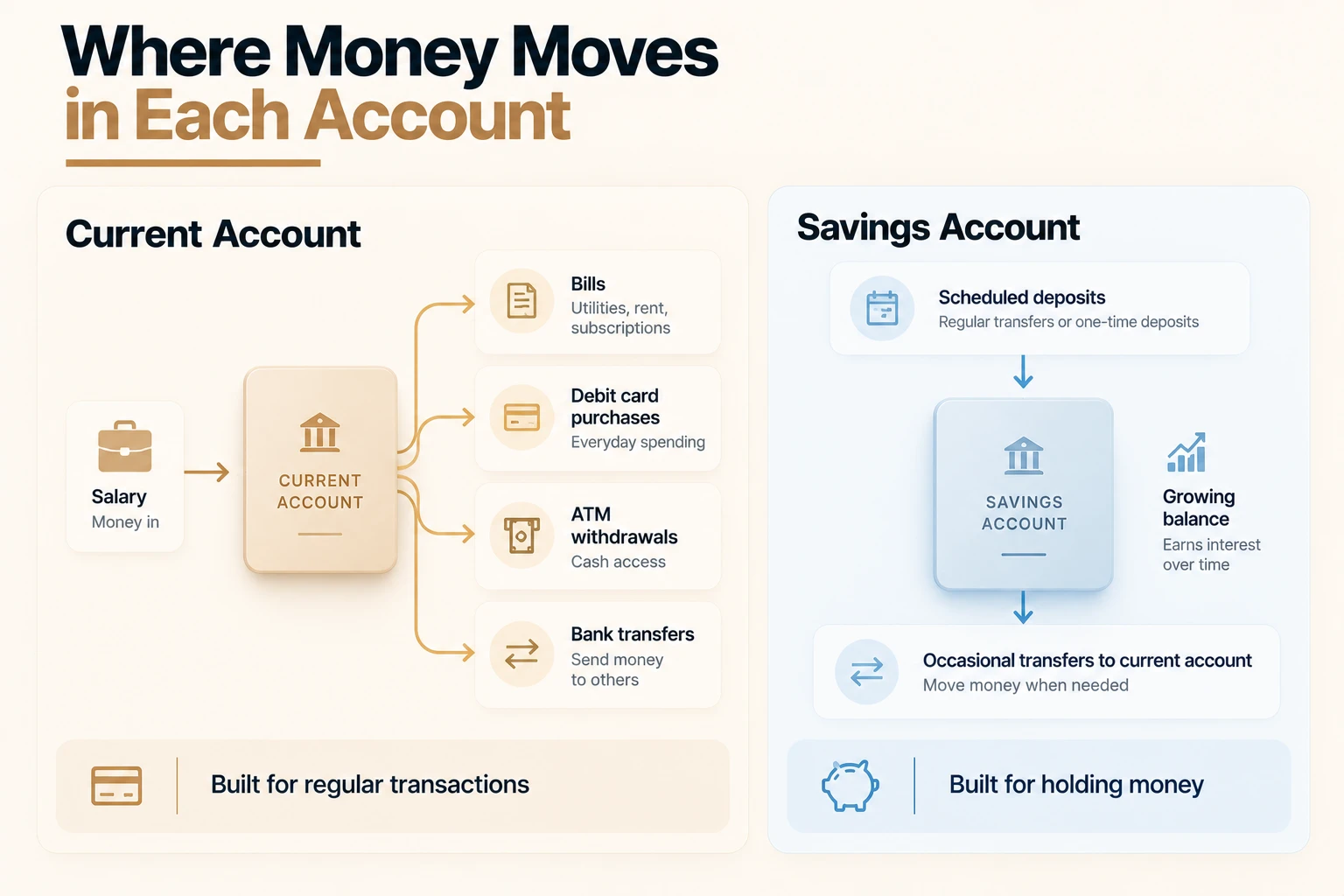
A current account is an everyday transaction account. It lets you receive payments and send money to businesses or other people. Employers can pay wages into it. You can also use it for regular bills, card purchases, ATM withdrawals, and transfers.
In the US, banks normally use the term checking account. In the UK and several other markets, current account is the common term. Both are built for frequent transactions.
Common Current Account Features
- A debit card
- Direct deposit
- Online bill payments
- ATM access
- Bank transfers
- Recurring payments
- Mobile and online banking
- Optional overdraft services
Some current accounts pay an APY. These products may require a certain number of card purchases, direct deposits, or other monthly activity. Read our guide to high-yield checking accounts for more detail.
How Their Purposes Differ
Use a current account for money that moves during the month. This includes wages, bills, groceries, and card payments.
Use a savings account for money that has a later purpose. This might include an emergency fund, a tax payment, a large purchase, or another short-term goal.
Keeping these jobs separate makes each balance easier to understand. Many people use both accounts.
Transactions and Access to Money
A current account supports card payments, deposits, cash withdrawals, and bills without an extra transfer.
A savings account gives you access to your balance, but that access may be less direct. The provider may require an electronic transfer to a linked account. It may not provide a debit card or checks. Transfers can also take one or more business days.
US federal rules no longer require a six-per-month limit on certain savings withdrawals. Providers can still apply their own limits or fees.
If quick access matters, check:
- How long outbound transfers take
- Whether ATM access is available
- Whether there is a daily transfer limit
- Whether the provider charges for wires
- Whether new deposits are placed on hold
APY and Account Earnings
Savings accounts usually pay a higher APY because they are designed to hold balances. Current accounts focus on payments and access. Many pay no yield at all.
Some current accounts offer a competitive APY when you meet monthly requirements. The advertised APY may only apply up to a set balance.
A high-yield savings app may have fewer activity requirements, but its APY is normally variable.
Compare the full earning structure:
- The advertised APY
- The balance that qualifies
- Monthly activity requirements
- The APY paid when requirements are missed
- Account fees that reduce earnings
For a closer comparison, see our guide to high-yield savings accounts vs checking accounts.
Fees and Minimum Balance Rules
A current account may charge maintenance, ATM, wire, or overdraft fees. Some banks waive the monthly fee after a qualifying deposit or balance.
A savings account may also have a monthly fee. An online savings app may remove it, but transfer or closing costs can still apply.
Compare costs based on how you will use the account. A strong APY has less value when you cannot meet the minimum balance.
Our guide to high-yield savings accounts with no monthly fees covers the other costs worth checking.
How Overdrafts Work
An overdraft happens when a payment takes the current account below zero and the bank covers the transaction. The provider may charge a fee. It may also decline the payment instead.
Some banks let you link savings as backup. If the current account is short, the bank transfers money from savings. A fee may apply.
Different rules can apply to debit purchases, ATM withdrawals, checks, and electronic payments. An overdraft is a shortfall that you must repay.
Savings accounts do not normally provide overdraft spending. You usually cannot make a card payment directly from the account in the first place.
Are Both Accounts Federally Protected?
Eligible current, checking, and savings accounts at an FDIC-insured bank receive FDIC protection. The standard limit is $250,000 per depositor, per insured bank, for each ownership category.
Eligible accounts at a federally insured credit union receive similar protection through the NCUA.
The limit does not apply separately to every account. Balances in the same ownership category at one bank are normally added together.
Confirm that the institution is insured. Then check the account ownership type and your total deposits at that institution.
Which Account Is Better for Everyday Banking?
A current account is usually the better option for daily banking. It supports the tools needed to receive and spend money.
Choose one when you need:
- Salary or benefit deposits
- Debit card purchases
- Regular bill payments
- ATM withdrawals
- Frequent bank transfers
- Recurring payments
Compare fees, ATM access, overdraft rules, and transfer tools before opening one.
Which Account Is Better for Saving?
A savings account is usually better for money that does not need to move every day. It keeps savings separate and may pay a higher APY.
Look for a competitive APY, clear withdrawal rules, and reliable transfers. A digital savings platform or online savings app can also support automatic deposits.
You can normally add money more than once. Read how regular savings deposits work before setting up a transfer schedule.
Can You Use Both Accounts Together?
Yes. This is often the simplest setup. Send your salary to the current account. Use it for bills and normal spending. Set an automatic transfer to savings after each payday. The savings balance then stays separate from the money needed during the month.
Keep enough in the current account for upcoming payments and a small buffer. Move the rest according to your savings plan.
Check transfer times before relying on savings as a backup. Money may not arrive in the current account immediately.
Put your dollars into something real
With PureFi, your projected earnings come from shares of real homes with tenants. Choose your properties from your phone, review the documents, and see every fee before you confirm.
Learn more about how PureFi can help you own real estate shares or download the app to get started today.
Up to 6% APY is projected, variable, and not guaranteed. Property shares can lose value. PureFi is not a bank, and its balances and real estate shares are not covered by FDIC insurance or another government deposit scheme.