Can You Spend Money From a Savings Account?
Yes, you can access and spend money held in a savings account. The process depends on the account. You may need to transfer money to checking, withdraw cash, or use an ATM or debit card provided by the bank.
Savings accounts are not normally designed for frequent purchases. Some providers restrict certain transfers, charge transaction fees or take several business days to move money to another bank. Checking the available access methods before you need the funds can help you avoid a delayed payment or an unexpected charge.
Can You Pay for Purchases Directly From a Savings Account?
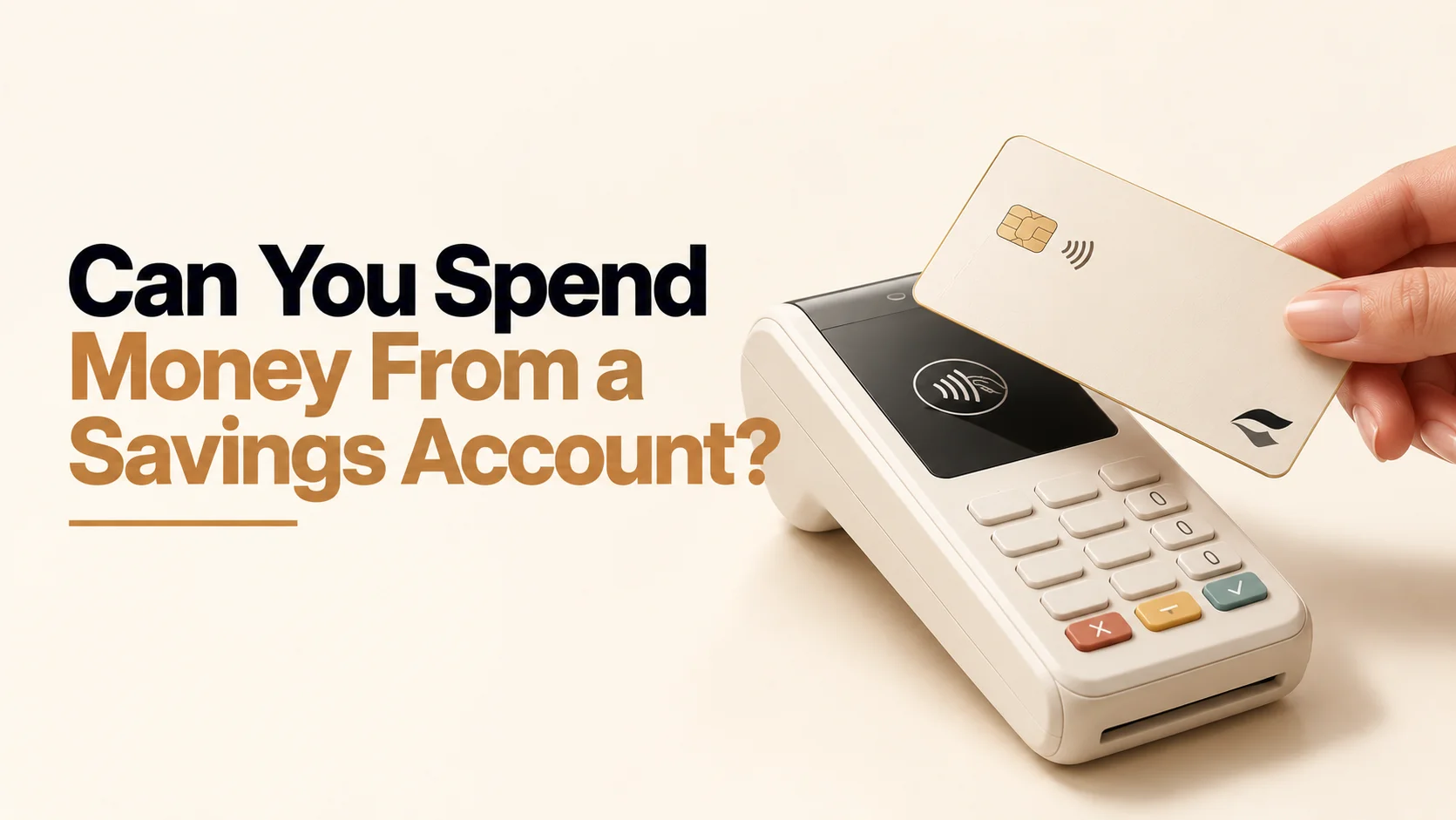
Sometimes, but direct spending is less common than it is with a checking account. Most checking accounts support debit-card purchases, checks, bill payments and regular withdrawals. A savings account is generally structured for holding money and earning a yield.
Some savings accounts include an ATM card. This can let you withdraw cash, but an ATM-only card may not work for purchases in a store or online. Other providers issue a debit card that can be used for both ATM withdrawals and payments.
Many online and high-yield accounts provide no card at all. In that case, you usually transfer the amount to a linked checking account before spending it.
Our guide to checking and savings accounts explains why their payment features differ.
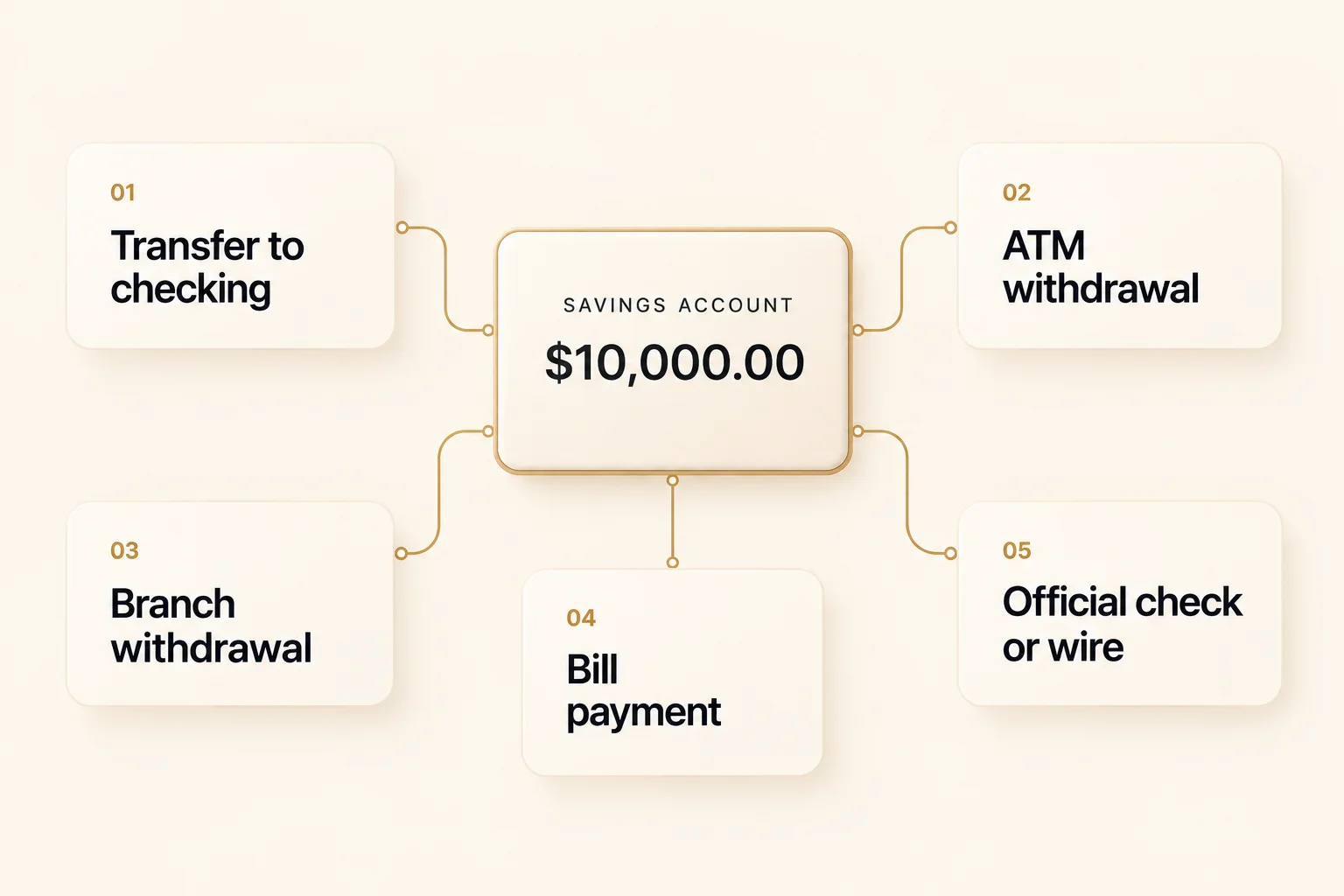
How Can You Access Money in a Savings Account?
The available method affects how quickly the money arrives and whether a fee applies.
Transfer Money to a Checking Account
Transferring savings to checking is one of the most common ways to access the funds. Once the transfer is complete, you can use the checking account’s debit card, checks or bill-payment features.
Transfers between accounts at the same bank may appear immediately. A transfer to another institution through the Automated Clearing House network can take one or more business days. Cutoff times, weekends, holidays and security reviews may extend the timing.
Some banks let you link only one external account. Others allow several. New links may require identity checks or verification through small test deposits before the first transfer can be completed.
Withdraw Cash at an ATM
If the savings account includes an ATM or debit card, you may be able to withdraw cash directly. Check whether the ATM belongs to the provider’s network. An out-of-network machine may charge a fee, and the account provider may impose another charge.
Daily ATM limits can also restrict how much you receive in one day. The limit may apply even when your account balance is higher.
An ATM card and a debit card are not always the same. An ATM-only card may support cash withdrawals and balance checks without allowing retail purchases. Our guide to debit cards with high-yield savings accounts explains the distinction.
Withdraw Money at a Branch
At a physical branch, you may be able to withdraw with a teller. Identification is normally required, and large cash withdrawals may need advance notice. Online-only customers generally rely on transfers or cards.
Request a Check, Wire or Official Payment
Some institutions can send a wire, issue an official check or provide checks with selected products. These services are not standard and may carry fees. Money market accounts are more likely than ordinary savings accounts to include checks or a debit card.
Can You Pay Bills From a Savings Account?
Some providers allow bill payments or electronic debits from savings. You may be able to use the account and routing numbers or set up a payment online. Other banks reject third-party debits or exclude savings from bill pay. A returned payment can lead to a late charge.
A safer approach is often to transfer the required amount to checking before the due date. The same caution applies to payment apps: an app may accept savings as a funding source, but the bank can still restrict or delay the transaction.
Do Savings Accounts Still Have a Six-Withdrawal Limit?
There is no longer a universal federal rule limiting every savings account to six convenient withdrawals or transfers per month.
In April 2020, the Federal Reserve amended Regulation D and deleted the former limit. Banks could offer unlimited convenient transfers, but they did not have to change their own agreements.
This means the provider’s current terms matter. A bank or credit union may still:
- Set its own monthly transaction limit
- Charge a fee after a stated number of withdrawals
- Restrict particular transfer or payment methods
- Convert or close an account after repeated excess activity if its agreement permits it
The Consumer Financial Protection Bureau notes that institutions can charge for excessive or large withdrawals and balances below a required minimum. Review the current fee schedule.
For access rules specific to higher-yield accounts, read Can You Withdraw From a High-Yield Savings Account?.
How Long Does It Take to Move Savings?
Timing depends on the withdrawal method and both institutions involved.
An internal transfer at the same bank may be immediate. An external electronic transfer commonly takes one to three business days. New deposits may remain unavailable while they clear.
ATM withdrawals provide cash immediately but have daily limits. Wires may arrive faster than standard transfers but can carry a fee and cutoff time.
Confirm the linked account and delivery time before a payment is due, especially with an online savings app that has no branch or card access.
What Fees Can Apply When You Access Savings?
A no-monthly-fee account can still charge for particular services. Possible costs include:
- Excess transaction fees under the provider’s policy
- Out-of-network ATM fees
- Wire-transfer fees
- Official-check charges
- Minimum-balance fees
- Returned-payment fees
- Early-withdrawal penalties on CDs, which are different from ordinary savings accounts
The provider should disclose its fees and transaction restrictions. Review the account agreement and current fee schedule, since these terms can change.
Does Spending Reduce Your Savings Earnings?
Yes. A withdrawal leaves less money available to earn.
If an account holds $10,000 and you withdraw $2,000, future earnings generally use the remaining balance. With tiered APYs, the withdrawal may also move the account into another tier.
The cost can therefore include a transaction fee and the future earnings no longer produced by the withdrawn amount.
Should You Spend From Savings or Transfer to Checking?
Checking is usually better for regular spending. It commonly includes a debit card, bill pay, checks and faster access to cash. Savings is better suited to money that does not need to move every day.
Transferring only the amount required can also make account activity easier to track. It separates the purchase from the rest of the balance and reduces the chance that a recurring merchant debit will continue drawing from savings.
A high-yield digital savings account can still be useful for an emergency fund or short-term reserve. Before opening one, compare its APY with its transfer times, card access, linked-account rules and withdrawal fees. The high-yield savings account versus checking account comparison covers these tradeoffs.

Can You Spend Money From a High-Yield Savings Account?
Yes. A high-yield account does not normally lock the balance for a fixed term. You can generally move or withdraw the funds using the methods supported by the provider.
Access is the main difference. A high-yield savings app may include a card, while another requires an external transfer. Some providers also hold new deposits or permit only one linked account.
Do not confuse savings with a CD or investment. A CD can penalize early access. A high yield investment platform may require an asset sale, and its value can change. These products have different access and protections.
The Bottom Line
You can spend money from a savings account, but you may not be able to use the account directly at checkout. The most common method is to transfer the amount to checking and spend it from there. ATM withdrawals, branch withdrawals, cards, checks and bill payments depend on the provider.
The old federal six-transfer cap no longer applies universally, but banks can still set their own limits and fees. Check the account terms, processing time and payment method before moving money.
Put Your Dollars Into Something Real
With PureFi, your projected earnings come from shares of real homes with tenants. Choose your properties from your phone, review the documents, and see every fee before you confirm.
Learn more about how PureFi can help you own real estate shares or download the app to get started today.
Up to 6% APY is projected, variable, and not guaranteed. Property shares can lose value. PureFi is not a bank, and its balances and real estate shares are not covered by FDIC insurance or another government deposit scheme.