Can You Direct Deposit Into a High-Yield Savings Account?
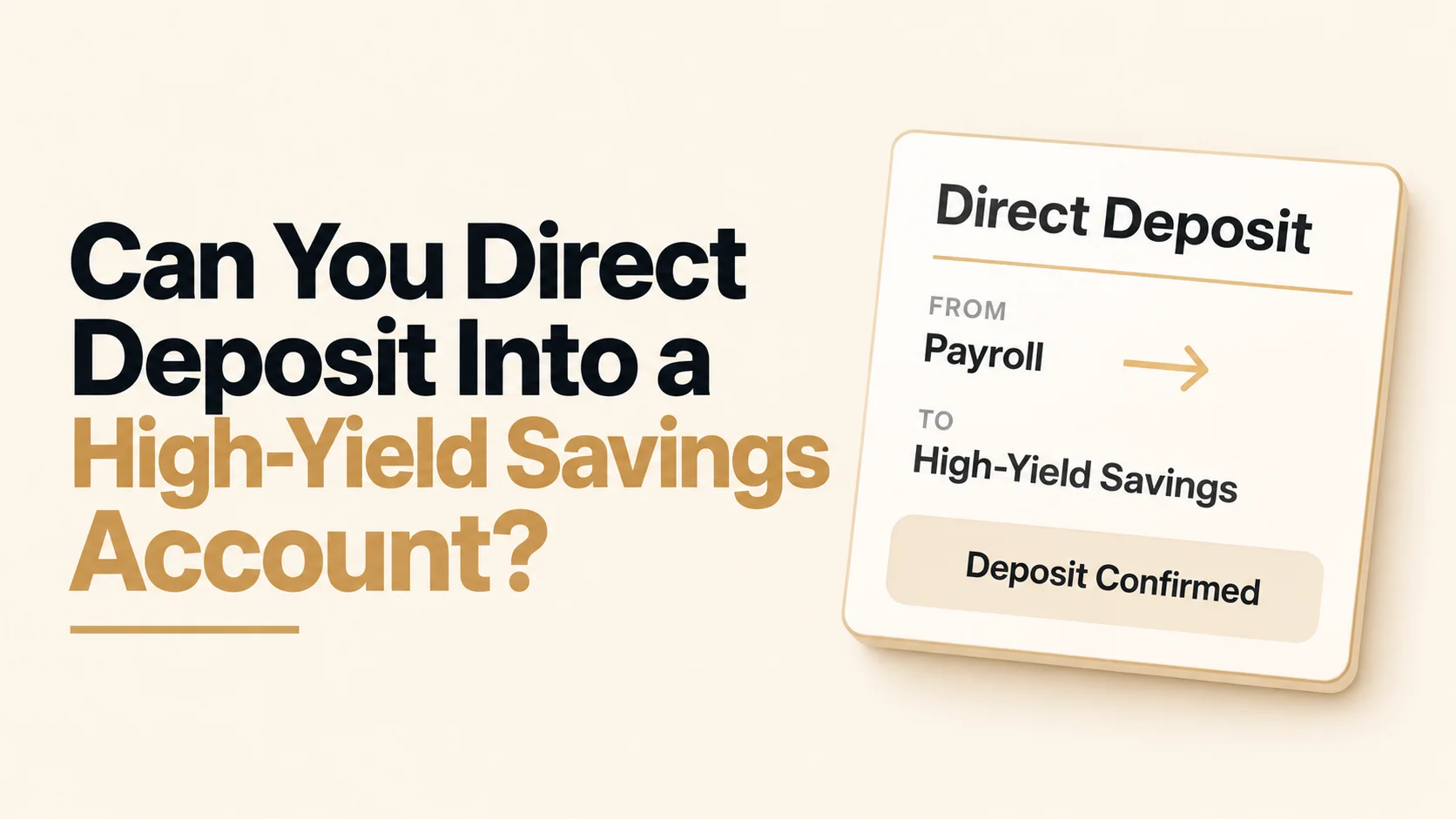
Yes, many high-yield savings accounts accept direct deposits. You can send all or part of a paycheck to the account when the provider supports incoming payroll payments and gives you valid ACH routing and account numbers.
The employer’s payroll system must also allow deposits into a savings account. Some systems support several accounts, while others only send the full payment to one destination.
Direct deposit can make saving more consistent. It does not necessarily give you a way to spend from the HYSA, so you may still need checking for bills and everyday purchases.
How Does Direct Deposit Into a HYSA Work?
Direct deposit is an electronic payment sent by an employer, government agency, pension administrator, or another payer.
For a paycheck, the process generally follows this route:
- Employer
- Payroll processor
- ACH network
- High-yield savings account
You provide the payer with your account information and authorize the deposit. The payroll processor then sends the amount according to the employer’s pay schedule.
The CFPB’s Regulation E rules state that a financial institution receiving a qualifying preauthorized transfer must credit the payment as of the date the funds are received. That does not mean every bank must make payroll deposits available before payday. Early access is a provider feature rather than a universal requirement.
Direct deposit differs from a manual bank transfer. With direct deposit, the employer or another payer starts the transaction. With a bank transfer, you request the movement of money yourself.
This difference can matter when an account requires qualifying direct deposits for its highest APY. A transfer from another account in your name may not meet that requirement.
What Do You Need to Set Up Direct Deposit?
You will normally need the following details:
- Bank or credit-union name
- ACH routing number
- Savings account number
- Account type marked as “savings”
- Account holder’s legal name
- Amount or percentage to be deposited
The employer may also request a voided check, direct-deposit form, or account-verification letter.
Many online HYSAs do not issue personal checks. In that case, look for a downloadable direct-deposit form inside the provider’s website or high yield savings app. Some providers also let customers generate a letter confirming the routing number, account number, and account ownership.
Use the account details displayed inside the official app or website. Do not copy banking information from an unexpected email, text message, or search advertisement.
The name used by payroll should match the name registered on the account. A difference in the account number, routing number, account type, or ownership details can cause a delay or returned payment.
If you have not opened the account yet, our guide to opening a high-yield savings account covers the application and identity-verification process.
How to Set Up Direct Deposit Into a HYSA
The exact screens and forms vary by employer, but the setup usually follows these steps.
1. Confirm That the HYSA Accepts Payroll Deposits
Check the account page, disclosure, or support centre. Look for direct deposit, ACH credits, payroll deposits, or incoming electronic payments.
Having a routing number does not automatically mean the provider accepts every type of incoming transfer. Some financial apps provide account details for limited uses.
2. Find the Correct Routing and Account Numbers
Sign in to the provider’s official website or online savings app. Copy the ACH routing number and savings account number carefully. A bank may use one routing number for ACH transactions and another for wire transfers. Payroll normally requires the ACH number.
Do not use a debit-card number. A card number and bank account number serve different purposes.
3. Open the Payroll Form or Portal
Look for a section called direct deposit, payment elections, bank accounts, payroll preferences, or payment methods. If the employer does not offer an online portal, request a form from payroll or human resources.
4. Select Savings as the Account Type
Payroll systems commonly ask whether the account is checking or savings. Select savings when adding the HYSA. Choosing the wrong account type can lead to a failed or delayed payment, even when the numbers are correct.
5. Choose How Much to Deposit
Depending on the payroll system, you may be able to send the full paycheck, a fixed amount, or a percentage into savings. If you add several accounts, the system may ask which one should receive the remaining balance after the fixed deposits have been made.
6. Submit the Instruction
Review every digit before confirming. Payroll changes may take one or two pay cycles to become active. Do not close the old account or remove the previous payment method until the first deposit reaches the new HYSA successfully.
7. Check the First Payment
On payday, confirm that the correct amount arrived and appears in the available balance. If the transaction is pending, check the provider’s availability policy before trying to withdraw or transfer it.
Can You Split a Paycheck Between Checking and Savings?
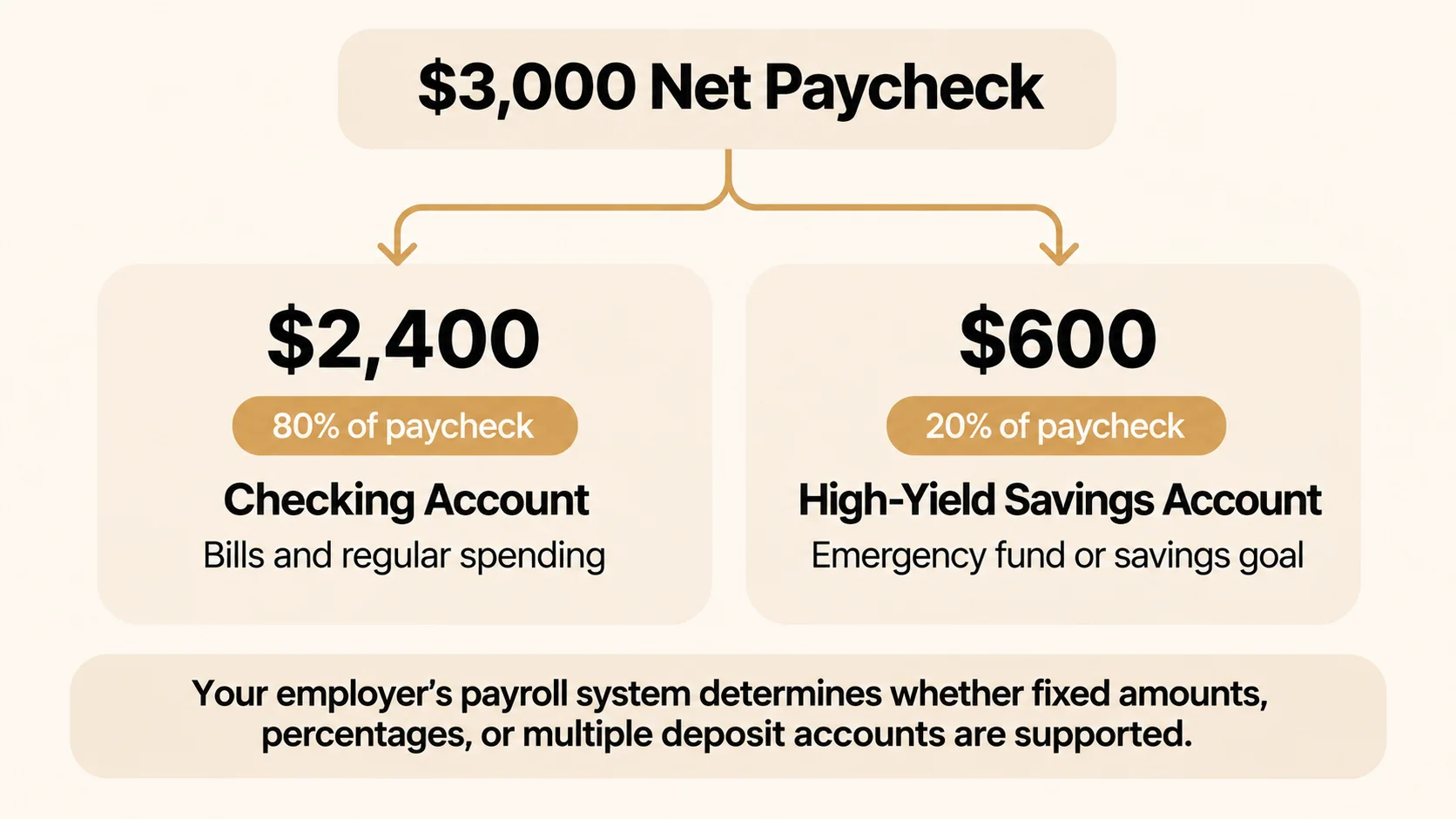
Many employers let workers divide a paycheck between two or more accounts. This is called split direct deposit.
A simple arrangement could look like this:
Net paycheck: $3,000
Amount sent to checking: $2,400
Amount sent to HYSA: $600
Checking receives 80% for bills and regular spending. Savings receives 20% for an emergency fund or another goal.
The payroll system may offer several ways to create the split. You could send a fixed amount to savings and place the remainder in checking. You might also divide the paycheck by percentage.
A fixed savings amount provides consistency. A percentage can work better when income changes from one pay period to another.
The employer decides how many accounts can be added and which allocation methods are available. Some payroll systems support several accounts. Others only allow one primary account and one secondary deposit.
Keeping spending and savings separate can make the monthly budget easier to follow. Our HYSA versus checking account comparison explains the different jobs each account handles.
How Long Does Direct Deposit Take?
Once the instruction is active, a paycheck should normally arrive on the scheduled payday. Some providers make eligible payroll deposits available earlier, but early access is not guaranteed.
The first deposit may take longer because the employer needs time to update its payroll file. A change submitted shortly before the payroll cut-off may not apply until the following pay period.
Some employers also send a small test transaction before directing the full payment to the new account.
If the first paycheck does not arrive, check the following:
- Whether payroll approved the change
- Which pay cycle uses the new instructions
- Whether the account and routing numbers are correct
- Whether “savings” was selected as the account type
- Whether the bank returned or rejected the payment
Ask the employer to confirm where the payment was sent before asking the bank to trace it. The payroll team can normally see whether the transaction was issued, rejected, or returned.
Does Direct Deposit Affect the APY?
Direct deposit does not automatically change an account’s APY. Some high-yield savings accounts pay the same APY regardless of how money reaches the account. Others require qualifying payroll deposits or a stated amount of new money each month to provide the highest rate.
Read the qualification terms carefully. Check what counts as a direct deposit, how much must arrive, and which evaluation period the provider uses.
A transfer from your own checking account may not qualify. Card refunds, payment-app transfers, mobile check deposits, or person-to-person payments may also be excluded. If the requirement is missed, the provider may apply a lower APY for that statement period.
Even when direct deposit does not unlock a higher rate, regular contributions can increase earnings by building the balance. Our guide to adding money to a savings account regularly explains the effect.
To estimate how a larger balance could change the result, read How Much Does a High-Yield Savings Account Earn?.
Can You Pay Bills From the Same HYSA?
Accepting payroll deposits does not mean the account supports everyday payments. The HYSA may not include a debit card, checks, online bill pay, or direct third-party debits. You may need to transfer money to checking before paying rent, utilities, subscriptions, or card balances.
Sending the entire paycheck to savings can therefore add an unnecessary step. A split deposit is often more practical because checking receives the amount needed for regular expenses.
Ahigh-yield checking account may provide direct deposits, debit-card payments, checks, and bill pay in one account. Its highest APY may come with transaction or deposit requirements.
Why Might a Direct Deposit Fail?
Incorrect account information is the most common issue. One wrong digit can send the payment back to the payroll provider. A deposit may also fail when the customer selects checking instead of savings, the provider does not accept payroll payments, or the account has been closed or restricted.
The bank may need additional time when the account is new or ownership information does not match the payroll record.
Do not repeatedly change the instruction while the payment is being traced. Confirm the transaction status with payroll first. Then contact the savings provider with the deposit date, amount, and any reference information supplied by the employer.
Is Direct Deposit a Good Way to Build Savings?
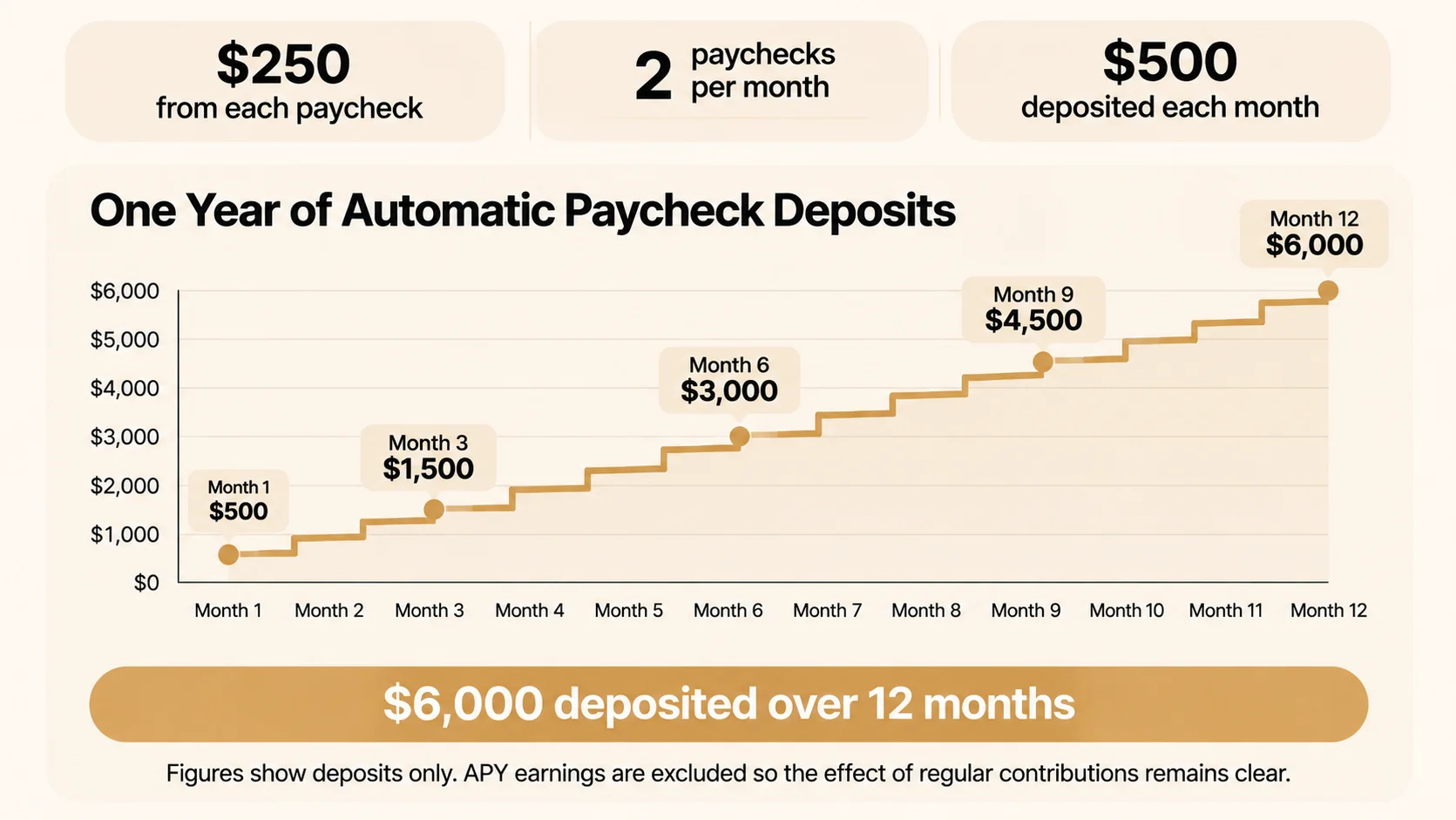
Direct deposit can make saving less dependent on a monthly decision. The money reaches the HYSA before the entire paycheck becomes available for normal spending. A fixed amount may work well for predictable income. A percentage can adjust automatically when pay changes.
Make sure the checking allocation still covers bills, card payments, and regular withdrawals. Savings should not leave the spending account short. A reliable digital savings platform should display the deposit, current APY, available balance, and any pending transaction clearly.
Can You Direct Deposit a Paycheck Into PureFi?
We are not a bank or conventional HYSA. We do not currently provide traditional payroll direct deposit into an insured savings account.
Users fund their self-custodial wallets through the supported methods available in their jurisdiction. PureFi is a high yield investment platform that provides access to property shares, not a payroll account.
Put your dollars into something real
With PureFi, your projected earnings come from shares of real homes with tenants. Choose your properties from your phone, review the documents, and see every fee before you confirm.
Learn more about how PureFi can help you own real estate shares or download the app to get started today.
Up to 6% APY is projected, variable, and not guaranteed. Property shares can lose value. PureFi is not a bank, and its balances and real estate shares are not covered by FDIC insurance or another government deposit scheme.