No-Penalty CD vs Savings Account: Rates, Access and Terms
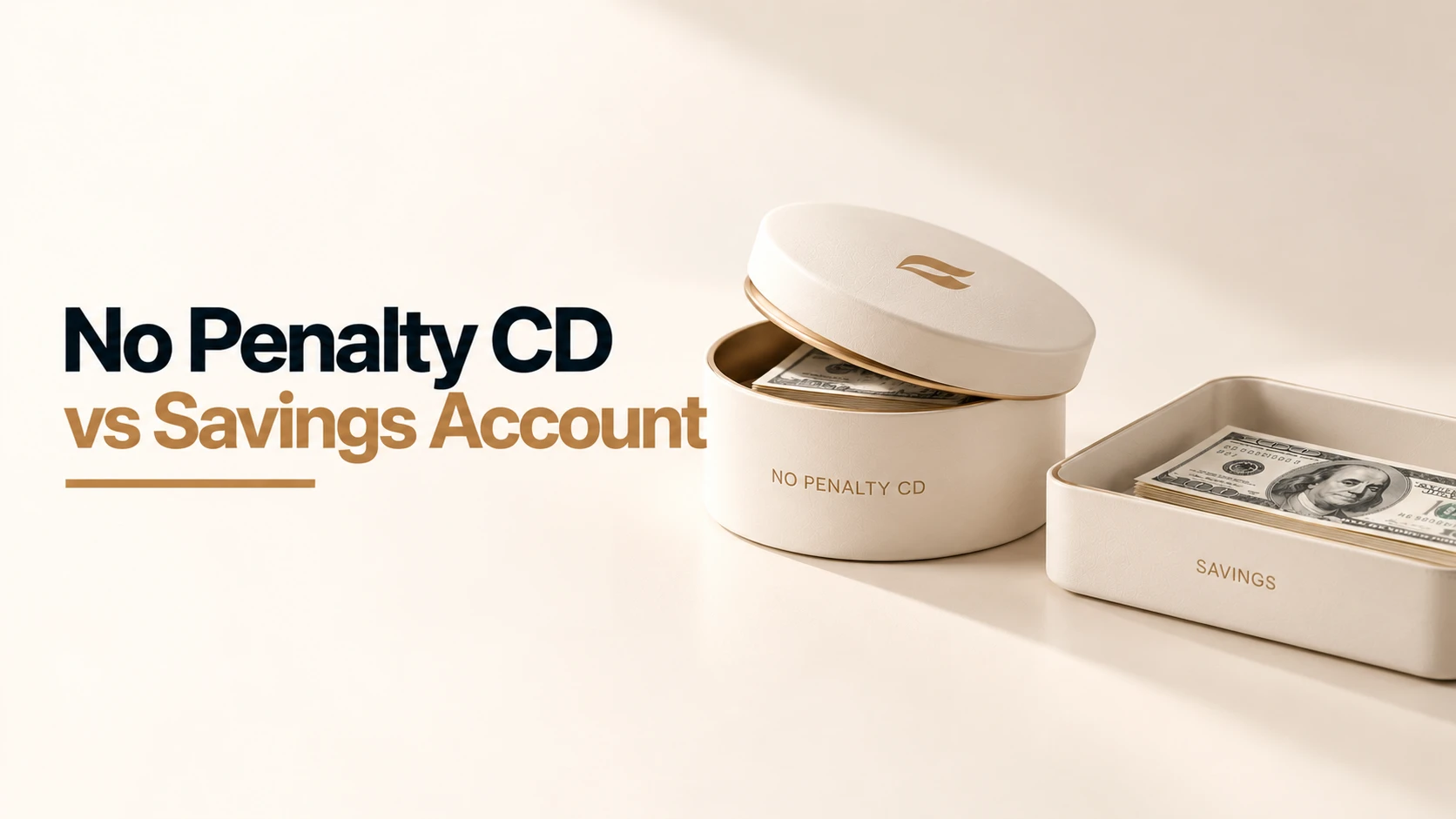
A no-penalty CD and a savings account can both hold money you do not need for daily spending. The main difference is how they handle time and access. A no-penalty CD normally locks in an APY for a set term. It lets you take the money out early without the usual early withdrawal charge. A savings account has no maturity date and allows more regular transfers. Its APY can change at any time. This guide compares rates, access, terms, fees, deposit rules, and federal protection so you can choose the better place for your money.
No-Penalty CD vs Savings Account at a Glance
| Feature | No-penalty CD | Savings account |
|---|---|---|
| APY | Usually fixed for the term | Usually variable |
| Term | Set period, such as 7 or 11 months | No fixed term |
| Early access | Allowed after an initial waiting period | Usually available after funds clear |
| Partial withdrawals | Often not allowed | Usually allowed |
| Additional deposits | Often not allowed after opening | Usually allowed |
| Maturity date | Yes | No |
| Best use | Money you can leave alone for a known period | Emergency funds and money you may need soon |
What Is a No-Penalty CD?
A no-penalty certificate of deposit is a bank account with a set term. The bank fixes the APY when you open it. That APY stays in place until the CD reaches maturity.
The key feature is early access. A standard CD usually charges a fee when you withdraw before maturity. A no-penalty CD removes that charge after a short waiting period.
The account still has limits. Many providers require a full withdrawal if you close the CD early. Partial withdrawals may not be available. You may also be unable to add money after opening.
If you want a wider comparison, see how a CD differs from a savings account.
What Is a Savings Account?
A savings account holds cash while paying a variable APY. It has no maturity date. You can keep adding money and take out part of the balance when needed.
The APY can rise or fall. You can usually make repeat deposits and withdraw part of the balance. The provider may still set transfer limits, fees, or balance requirements.
Federal rules no longer require banks to cap certain savings transfers at six per month. A bank can still set its own limits or fees. Check the provider’s current rules before moving money.
A strong online savings app can make transfers and balance checks easy. But app design does not replace the account terms. Review the APY, fees, minimum balance, transfer speed, and withdrawal rules.
Which Account Has the Better APY?
There is no fixed winner. Rates change across providers and products. A no-penalty CD can protect you from a rate cut during its term. A savings account may start at the same APY and then move up or down.
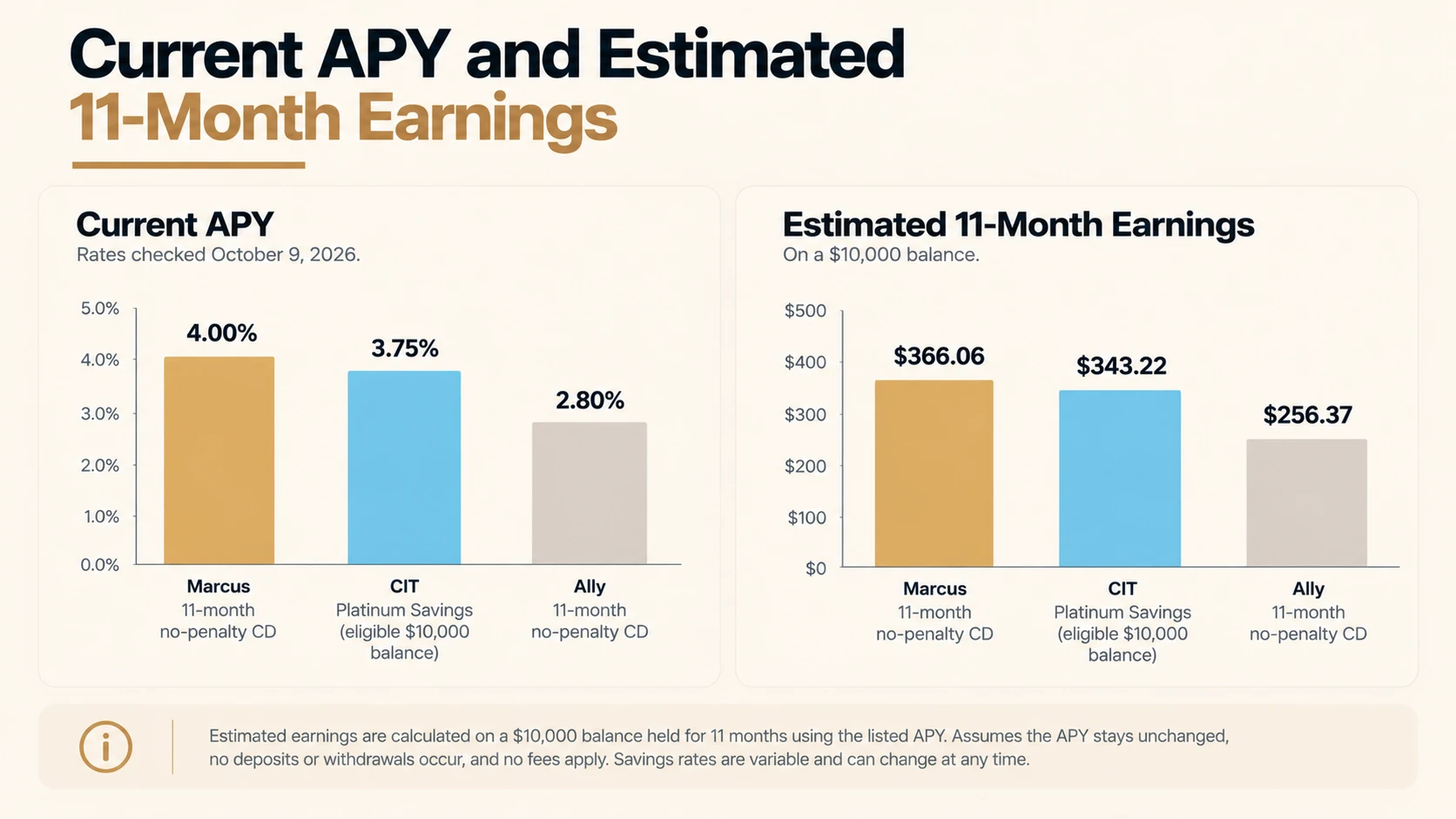
Standard CDs may pay more because access is more restricted. A no-penalty CD can also pay less than a strong savings offer. Here are three current examples checked on October 9, 2026:
| Product | APY | Minimum | Main access rule |
|---|---|---|---|
| Marcus 11-month no-penalty CD | 4.00% | $500 | Full withdrawal after 7 days |
| Ally 11-month no-penalty CD | 2.80% | $0 | Full withdrawal after the first 6 days |
| CIT Platinum Savings | 3.75% on eligible balances | $100 to open | APY shown for balances of $5,000 or more |
The product label alone is not enough. Compare the live APY and terms before opening.
You can also read what a good APY for a CD looks like before comparing offers.
How Easy Is It to Access Your Money?
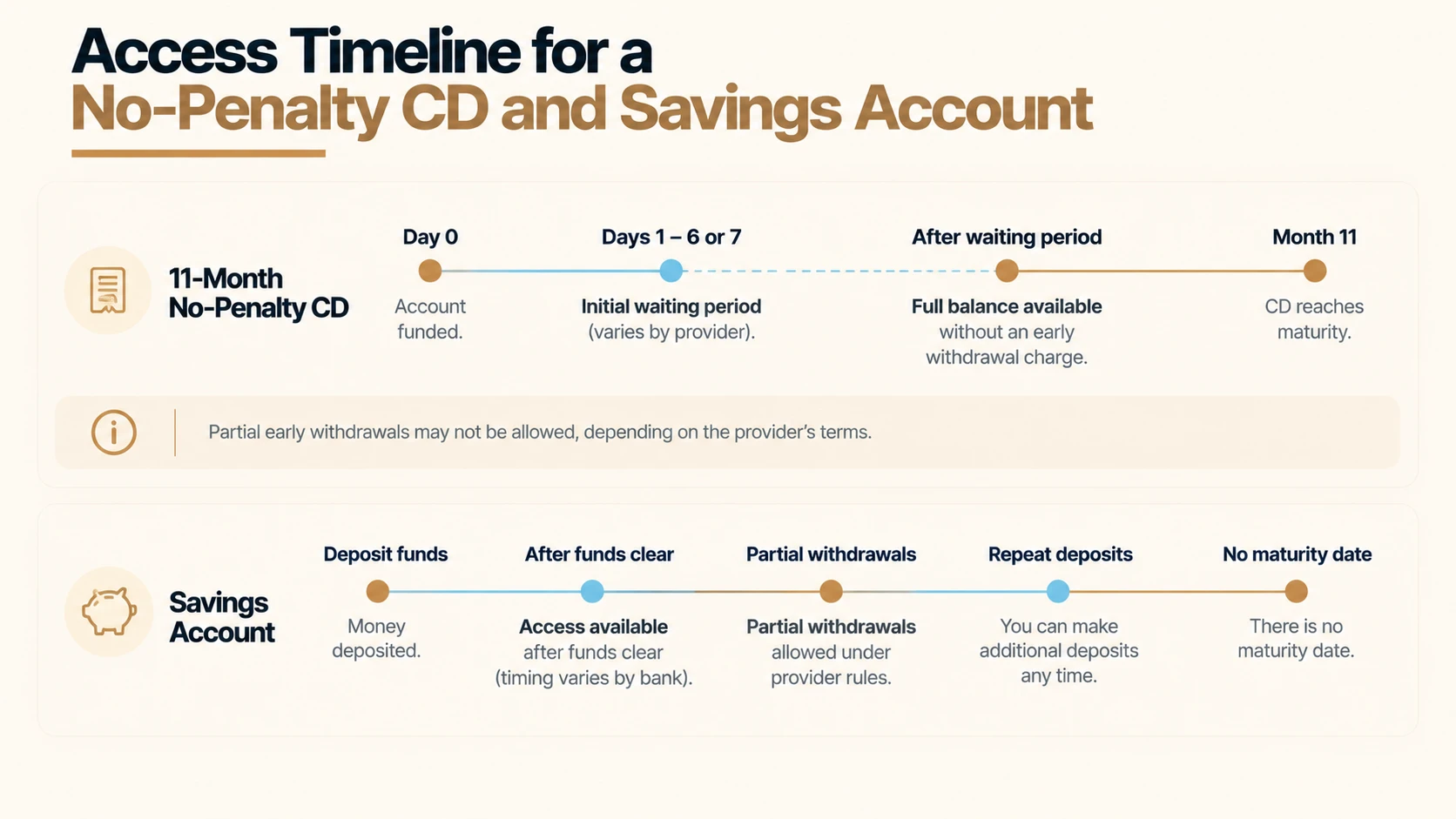
A savings account gives you more control over the amount you move. You can usually take out $200 and leave the rest in place. You can also add money on a regular schedule.
A no-penalty CD is less flexible. It may block withdrawals during the first six or seven days. After that period, the provider may require you to close the CD and take the full balance. If you only need a small amount, that rule can be inconvenient.
Transfer speed also matters. An online transfer can take several business days. A provider may place a hold on a new deposit. Do not treat either account like a checking account for urgent payments.
For cash that may need to move often, review the provider’s full savings withdrawal rules.
What Happens at the End of the CD Term?
A no-penalty CD has a maturity date. When it arrives, the provider may renew the CD automatically unless you give other instructions.
Most banks provide a grace period. You can withdraw the balance or move it into another product. If you do nothing, the CD may renew at the rate available on that date.
Put the maturity date and grace-period deadline on your calendar. This gives you time to compare the new offer with current savings accounts and other CDs.
A savings account has no maturity process. Its APY can still change. Read more about why savings APYs change.
Fees and Minimum Deposits
Many online savings accounts have no monthly fee. Some require a minimum opening deposit. Others require a certain balance to earn the top APY or avoid a fee.
No-penalty CDs often have no monthly maintenance fee. Opening minimums vary. Marcus currently requires $500 for its no-penalty CD. Ally lists no minimum opening deposit for its version.
Check four items before opening either account:
- The minimum opening deposit
- The balance needed for the advertised APY
- Monthly maintenance fees
- Transfer, wire, or account-closing fees
A headline APY has less value if you cannot meet the balance rule. The same is true when fees reduce your earnings.
Are Both Accounts Federally Protected?
Eligible CDs and savings accounts at an FDIC-insured bank receive FDIC coverage within the legal limits. Eligible accounts at a federally insured credit union receive similar coverage through the NCUA.
Coverage is based on the depositor, institution, ownership category, and account balances. It is not a separate limit for every account. If you hold several accounts at one institution, their balances may be added together for coverage purposes.
Confirm that the institution is federally insured. Then review how your accounts are titled and how much money you hold there. This protection applies to eligible deposit accounts. It does not cover investments that can rise or fall in value.
Which Option Gives You More Flexibility?
A savings account wins on day-to-day flexibility. You can add money, make partial withdrawals, and keep the account open without tracking a maturity date.
A no-penalty CD gives you a different kind of flexibility. You can lock an APY without accepting the normal early withdrawal charge. You still need to work within the waiting period and full-withdrawal rules.
Choose a no-penalty CD when:
- You have one lump sum ready to deposit.
- You want a fixed APY for a known period.
- You are unlikely to need part of the money.
- You can handle closing the full CD if plans change.
Choose a savings account when you need an emergency fund, want to make regular deposits, or expect to take out smaller amounts.
A money market account is another option if you want savings features with different access tools. Our money market account vs high-yield savings account guide explains the difference.
Can You Use Both?
Yes. The two accounts can handle different jobs. Keep short-term cash and emergency money in a savings account. Move a separate amount into a no-penalty CD if you want to fix the APY for several months. This setup keeps some cash easy to reach while reducing the effect of a savings rate cut on the CD balance.
Do not put every available dollar into the CD. The full-withdrawal rule could force you to close it for one small expense. Keep enough accessible cash to cover expected bills and a reasonable buffer.
Put your dollars into something real
With PureFi, your projected earnings come from shares of real homes with tenants. Choose your properties from your phone, review the documents, and see every fee before you confirm.
Learn more about how PureFi can help you own real estate shares or download the app to get started today.
Up to 6% APY is projected, variable, and not guaranteed. Property shares can lose value. PureFi is not a bank, and its balances and real estate shares are not covered by FDIC insurance or another government deposit scheme.