
How to Invest in Real Estate

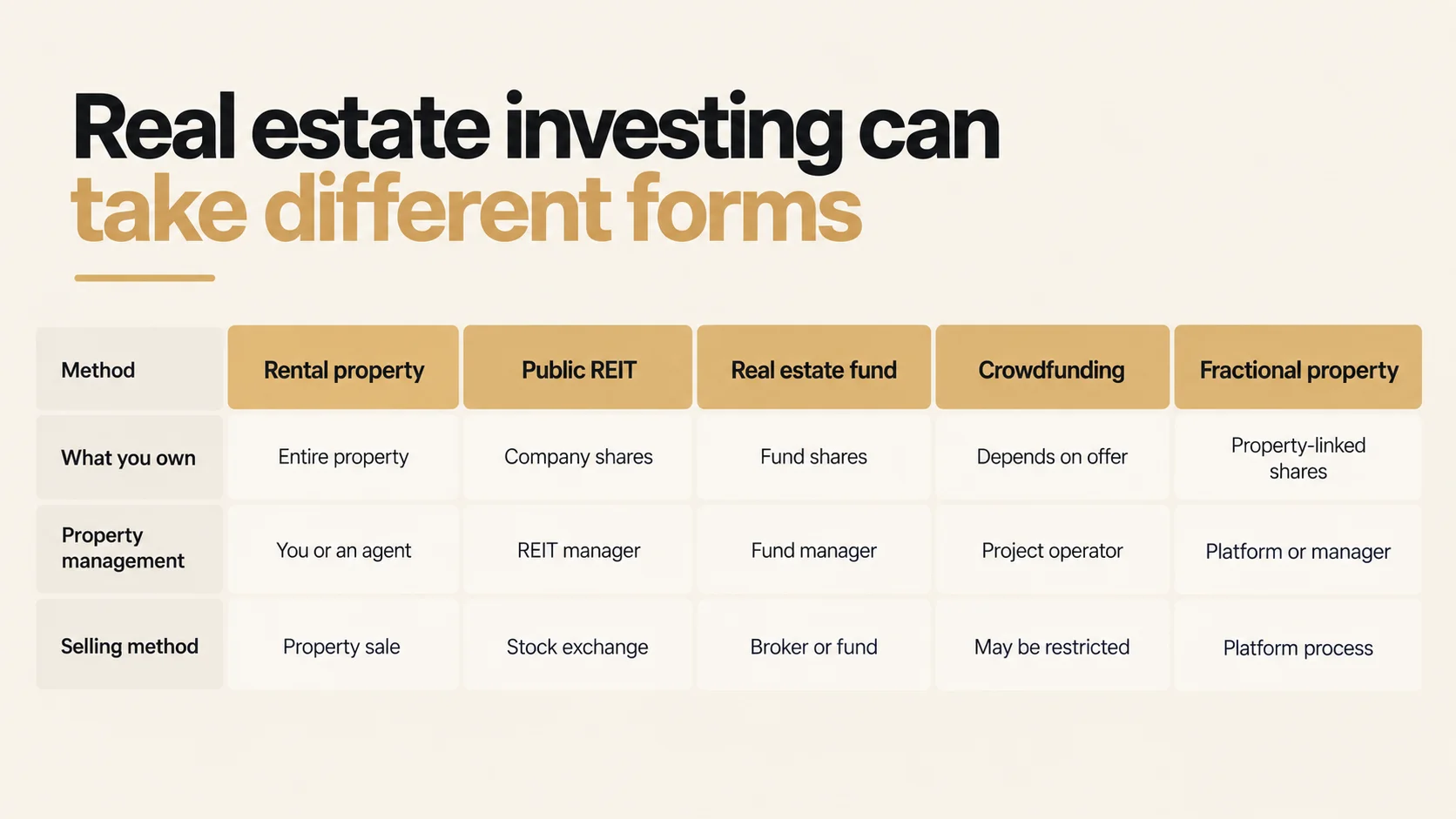
You can invest in real estate without following one fixed route. You may buy a rental property yourself, purchase shares in a real estate company or fund, join a crowdfunding offer, or use a high-yield investment platform that provides access to property shares.
Each method gives you different rights and responsibilities. The starting amount, fees, risks, and selling process can also vary widely. Some options require you to manage a property. Others let a company or platform handle the daily work.
In this article, we explain the main ways to invest in real estate, where the earnings may come from, how much access you have to your funds, and what documents, costs, and risks to check first.
Disclaimer: This article is for general education only. It is not financial, investment, tax, or legal advice. Projected returns can change, and investments may lose value.
How does a real estate investment earn money?
Real estate can generate returns in two main ways.
The first is rent. A tenant pays to use a home, office, shop, warehouse, or another type of property. After management costs and property expenses are paid, some or all of the remaining rent may go to the owner or investors.
The second is a change in the property’s value. If a property is sold for more than its total purchase and ownership costs, the owner may make a gain. If its value falls, the owner may lose money.
A property’s value and rental income can change for many reasons. These include its location, condition, local demand, nearby jobs, available housing, operating costs, and wider economic conditions.
The advertised rental amount is not the same as profit. Insurance, repairs, property taxes, management fees, empty periods, and selling costs may all reduce the final return.
Real estate investing is different from using a digital savings platform. A high yield digital savings account or high yield savings app normally holds cash and pays a stated yield. A property investment gives you exposure to an asset that can rise or fall in value.
The same distinction applies to an online savings app or multi currency savings account. These products may help you hold and manage cash, but they do not automatically give you ownership in real estate.
5 Ways to invest in real estate
You do not need to use every method. The right route depends on how much you can invest, whether you want to manage property, and how soon you may need the funds again.
1. Buy a rental property directly
Direct ownership means buying a house, apartment, shop, office, or another property and renting it to tenants. You control the property and make the main decisions. You choose the location, tenant, rental amount, repairs, and time of sale. You also receive the rental income after costs.
That control comes with work and expense. You may need a large upfront amount. If you borrow to buy the property, repayments continue even when it has no tenant. You are also responsible for maintenance, insurance, local charges, and legal requirements.
Before buying, estimate the full cost rather than looking only at the purchase price. Include inspections, repairs, taxes, insurance, management, empty periods, and selling costs. Rental income should be checked against these expenses.
Direct property can take time to sell. It is usually not suitable for money you may need at short notice.
2. Buy shares in a REIT
A real estate investment trust, or REIT, is a company that owns or operates income-producing real estate. Its properties may include apartment buildings, offices, warehouses, hotels, shopping centers, or storage facilities.
You can buy shares in some REITs through a brokerage account. This gives you exposure to property income without buying and managing an entire building yourself.
Publicly traded REIT shares can be bought and sold on a stock exchange. Their prices can change each trading day. The price may be affected by property performance, company debt, management decisions, market conditions, and investor demand.
Not every REIT is publicly traded. Non-traded REITs may be harder to sell, and their share values may be less clear. They can also carry large upfront fees. The US Securities and Exchange Commission advises investors to check whether a REIT is publicly traded because this affects its liquidity, pricing, fees, and risks. Read the SEC guide to REITs.
3. Invest through a real estate fund or ETF
A real estate mutual fund or exchange-traded fund may hold shares in several REITs or property-related companies. This allows one purchase to provide exposure to several holdings.
A fund can reduce your reliance on one property or company. It may hold different property types or operate across several locations. This does not prevent losses. Several holdings may still fall at the same time.
Check the fund’s holdings before buying. A fund described as real estate-focused may invest in a narrow part of the market, such as offices, hotels, or warehouses. It may also charge management and trading fees. ETF shares are normally traded on an exchange. Their market price may change during the day and may not always match the value of the assets held by the fund.
4. Use a real estate crowdfunding platform
Real estate crowdfunding allows many people to contribute smaller amounts to a property or property business. The platform handles the online process and provides information about the offer.
The legal structure can vary. You may be buying shares in a company that owns the property, providing funds for a project, or purchasing another type of security. Do not assume that joining a property offer means your name will appear on the property title.
Some crowdfunding investments have minimum holding periods or limited ways to sell. Investors may also receive less frequent financial information than they would from a publicly traded company.
Rules depend on the country and the type of offer. In the United States, securities sold under Regulation Crowdfunding must be offered through an eligible broker-dealer or registered funding portal. Resale limits can also apply. See the SEC crowdfunding guide for investors.
Before investing, read the offering documents. Check the platform, property, ownership structure, fees, funding target, expected holding period, and process for selling.
5. Buy fractional shares of individual properties
Fractional real estate investing divides a property into smaller shares. This can lower the amount needed to gain exposure to a particular home or building.
Investors may receive a share of the rent after expenses. Their shares may also rise or fall with the property’s value. The exact rights depend on the legal structure used by the provider.
Fractional ownership is not the same as a REIT. A REIT may own many properties, and investors own shares in the company. A fractional platform may allow investors to select shares linked to individual properties.
Ask who holds the legal title, where your shares are recorded, how rent is divided, and how the property is valued. You should also know whether you can sell your shares, who may buy them, and how the sale price is set.
What should you check before investing?
A property photo and a projected return are not enough to judge an investment. You need to understand the asset, the legal structure, and the costs.
Start with these questions:
- What property or legal entity will you own?
- Where will the projected earnings come from?
- Is the property already producing rent?
- Who chooses and manages the tenants?
- Which expenses are taken from the rent?
- Are there purchase, management, or selling fees?
- How is the property valued?
- Can you review ownership and property documents?
- When and how can you sell?
- What happens if the platform closes?
- Which laws and investor protections apply?
Pay close attention to the return shown by the provider. Find out whether it is based on current rent, an estimate of future property value, or both. A projection is not a promise.
Check the selling rules as carefully as the buying process. A platform may let you request a sale without guaranteeing that a buyer will be available immediately. Direct property, non-traded REITs, and private offers can also take time to sell.
If you are comparing property investing with lists of the best high-yield savings accounts, remember that they serve different purposes. Savings products generally focus on holding cash. Real estate investments expose your funds to rent, property costs, and changing asset values.
What are the risks of real estate investing?
Every form of real estate investing carries risk. The type and level of risk depend on what you buy and how the investment is structured.
Property values may fall
Real estate prices do not always rise. A local market may weaken, a neighborhood may change, or a property may need major repairs. You may receive less than you invested when you sell.
Rental income can change
A tenant may leave or fall behind on rent. A new tenant may agree to pay less. Local rules may also affect rent increases, deposits, or the removal of tenants.
Costs may be higher than expected
Repairs, insurance, taxes, utilities, and management fees can rise. A major problem with the roof, plumbing, wiring, or structure may reduce earnings for a long period.
Selling may take time
A physical property cannot normally be sold as quickly as cash can be taken from a savings account. Non-traded REITs, crowdfunding offers, and fractional shares may also have limited buyers or special selling rules.
Borrowing increases the risk
Borrowing can let an investor buy a larger property with less cash upfront. It also creates required repayments. If rent falls or the property loses value, the amount owed does not fall with it.
One property creates concentration risk
If most of your funds are tied to one home, city, or property type, one local problem can have a large effect. Spreading investments may reduce concentration, but it cannot remove the chance of loss.
A platform adds another layer to check
With an online platform, you need to assess both the property and the company providing access to it. Review how assets are held, what happens if the company stops operating, and whether your ownership remains legally separate.
Real estate is sometimes discussed as a way to protect savings from inflation because rents and property values may rise as prices increase. This can happen, but it is not guaranteed. Property income may fall while repairs and other costs rise.
Frequently asked questions
How much money do you need to invest in real estate?
The amount depends on the method. Buying a full rental property may require a large upfront payment plus money for fees and repairs. REITs, funds, crowdfunding offers, and fractional platforms may allow smaller purchases. Each provider sets its own minimum.
Can beginners invest in real estate?
Yes, but beginners should understand what they are buying. A publicly traded fund or property-share platform may require less daily work than managing a rental home. Simpler access does not remove risk.
Do you need to buy an entire property?
No. REITs, real estate funds, crowdfunding, and fractional ownership can provide exposure without buying a whole property. Your legal rights and access to the funds will depend on the product.
What is the difference between a REIT and fractional real estate?
A REIT is a company that usually owns or operates several properties. You buy shares in that company. Fractional real estate may let you buy shares connected to an individual home or building.
How do real estate investment platforms work?
The platform lists property opportunities and handles the purchase process. Depending on its structure, it may also manage the property, collect rent, distribute earnings, provide documents, and arrange share sales.
Can you sell a real estate investment at any time?
Not always. A physical property can take months to sell. Some REIT shares can be sold on an exchange, while non-traded REITs and crowdfunding offers may have restrictions. A fractional platform may use its own selling process.
How to protect savings from inflation with real estate?
Real estate may help because rents and property values can rise over time. However, there is no guarantee that they will rise faster than inflation. Property costs and values can also work against the investor.
Should you build savings before investing?
It is generally sensible to keep funds available for bills and unexpected costs before placing money into an asset that may fall in value. Tips for saving money fast can help you build that cash reserve, but your plan should still be realistic and sustainable.
Is a real estate platform the same as a savings app?
No. A digital savings platform, online savings app, or multi currency savings account normally helps users hold cash. A real estate platform provides access to an investment. The value, access rules, risks, and protections are different.
How does PureFi earn from real estate?
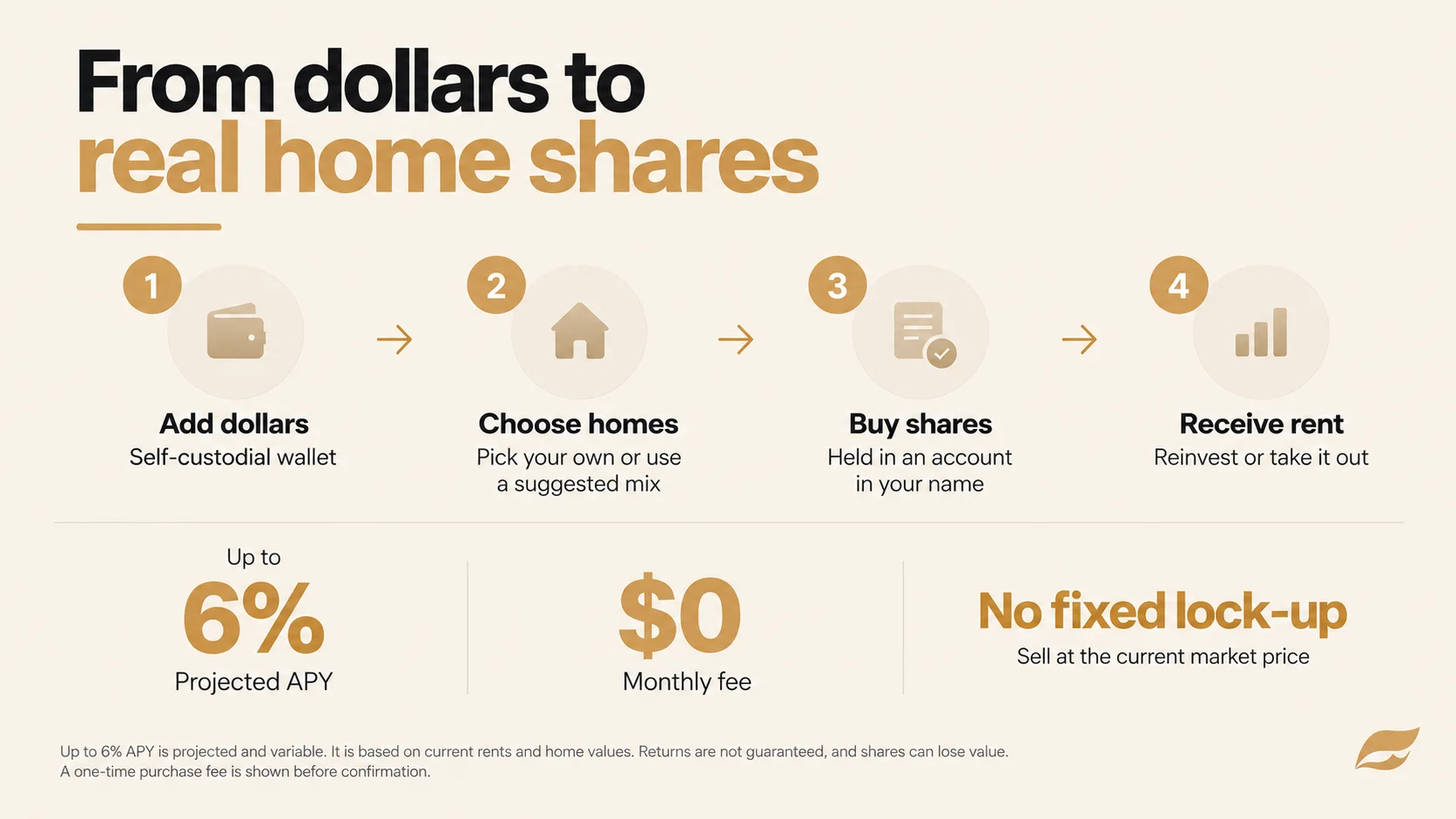
PureFi users buy shares of real homes with tenants. Projected earnings come from rent and changes in the value of those homes. Nothing is lent out.
Put Your Dollars Into Something Real
With PureFi, your projected earnings come from shares of real homes with tenants. Choose your properties from your phone, review the documents, and see every fee before you confirm.
Learn more about how PureFi can help you own real estate shares or download the app to get started today.