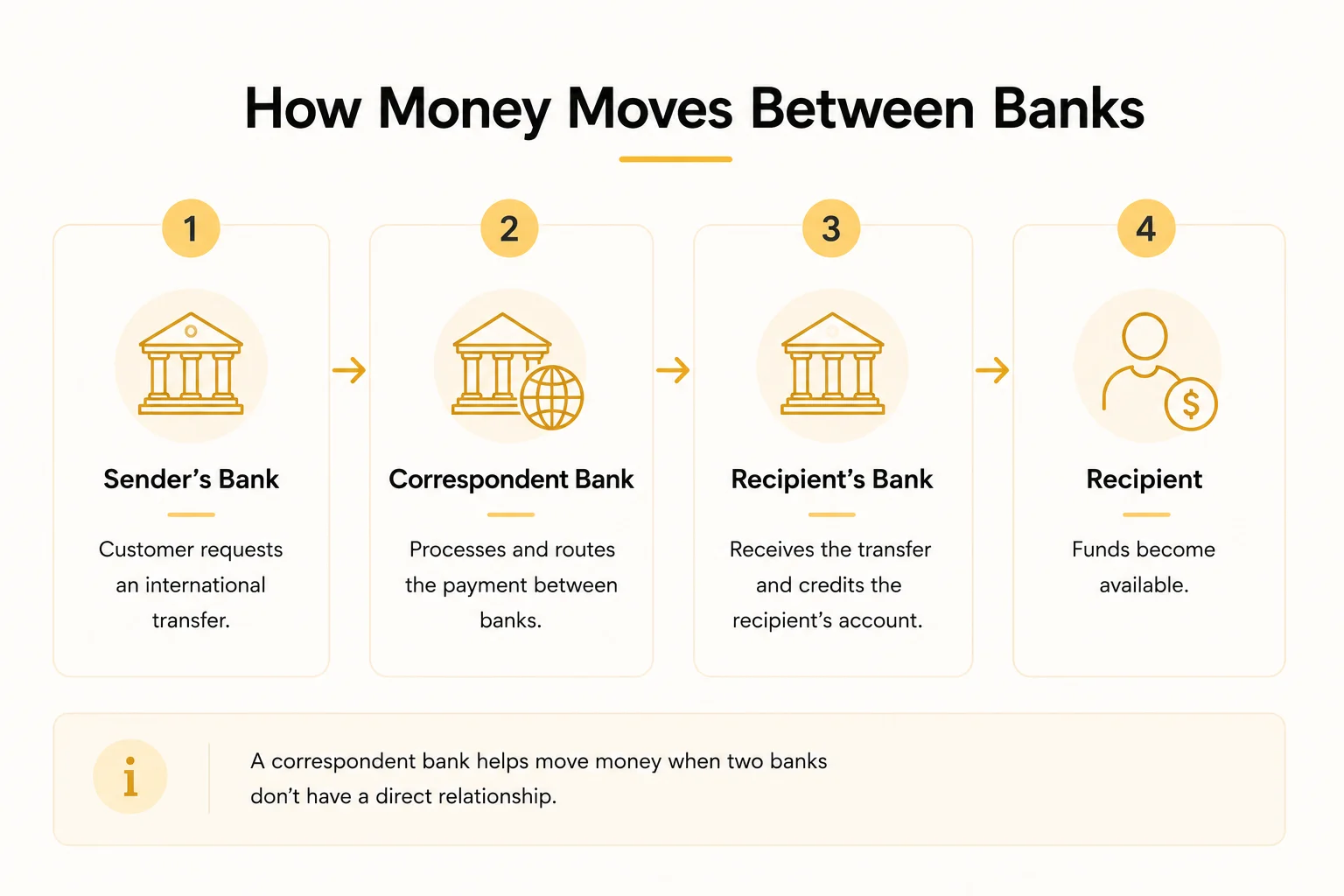
In 2024, people around the world sent $905 billion to family abroad, per the World Bank. The platform you use for international money transfer determines how much of every transfer actually arrives. Banks average 14.55% in total transfer cost globally per World Bank RPW Q1 2025. Many online remittance services at the low end charge under 1%. On $300 per month, that difference is over $500 per year.
Table of Contents
1. What It Costs: The Real Numbers
2. How Your Family Can Receive the Money
3. Best Platforms in 2026
4. The 1% US Remittance Tax
5. Five Questions Before Every Transfer
6. Frequently Asked Questions
What It Costs: The Real Numbers
| Method | Est. Fee on $300 | Annual Cost (12 sends) | Source |
|---|---|---|---|
| Bank wire (average) | ~$44 (14.55%) | ~$524/year | World Bank RPW Q1 2025, VERIFIED |
| Western Union (total est.) | ~$21 (~7%) | ~$252/year | Approximate from rate cards, includes FX margin |
| Remitly Economy | ~$9 (~3%) | ~$108/year | Approximate from rate cards |
| Wise | ~$2 (~0.6%) | ~$22/year | Approximate, mid-market rate, no FX margin |
Bank average verified from World Bank RPW Q1 2025. All other figures approximate from platform rate cards as of April 2026. Actual costs vary by corridor, amount, and payment method. Always verify on each platform before sending.
The cost of an overseas money transfer has two components. The visible fee is what the platform charges upfront. The exchange rate margin is the gap between the real mid-market rate and the rate the provider offers. Many traditional providers still charge hidden margins, which makes finding a cheap international transfer option important for families sending money regularly.
Western Union’s own terms acknowledge it makes money from currency exchange. That margin never appears as a fee on any receipt.
How Your Family Can Receive the Money

Bank deposit is the most common method in countries with developed banking systems. The sender specifies your account number, IBAN, and SWIFT code. Mobile wallets like GCash, M-Pesa, and bKash are becoming popular because they make digital money transfer much faster and easier.
Remitly supports over 350,000 cash pickup locations globally and GCash wallet delivery. WorldRemit supports M-Pesa and other mobile money networks. These features make them popular family remittance services for users without bank accounts.
Confirm which method your family member can access before choosing a platform. A low-fee money transfer app that cannot deliver to your family’s preferred channel is still the wrong option.
Under the CFPB Remittance Transfer Rule, licensed US providers must show the exact amount the recipient will receive in local currency before you confirm the cross border payment.
Best Platforms in 2026

| Platform | Countries | Cash Pickup | Mobile Wallet | Rate Type | Approx. Fee |
|---|---|---|---|---|---|
| PureFi | 50+ | No | Limited | Mid-market, 0% margin | 0%, 6% annual yield on balance |
| Wise | 150+ | No | Limited | Mid-market, 0% margin | ~0.43-0.6% |
| Remitly | 170+ | Yes (350K+ locations) | Yes (GCash, UPI) | FX margin added | ~2-4% total |
| WorldRemit | 130+ | Yes | Yes (M-Pesa, more) | FX margin added | ~2-4% total |
| Western Union | 200+ | Yes (500K+ agents) | Limited | FX margin added | ~5-8% total |
All fee figures approximate from platform rate cards as of April 2026. Country counts from platform documentation. Verify current coverage and costs on each platform before sending.

The 1% US Remittance Tax
The One Big Beautiful Bill Act (Public Law 119-21), effective January 1, 2026, adds a 1% excise tax only to cash-funded US transfers. Bank account, debit card, and credit card-funded transfers are fully exempt per IRS IRC Section 4475(d).
For people using digital remittance services or funding transfers directly from a bank account, this new tax changes very little. Most modern international remittance services already operate digitally.
Five Questions Before Every Transfer
1. What is the mid-market rate right now? Search your currency pair on Google or XE.com before opening any app. That is the real rate.
2. How does my family member need to receive it? Bank account, mobile wallet, or cash pickup. Confirm this before choosing a platform.
3. What is the exact amount they will receive? Licensed US providers must show the destination amount in local currency before you confirm.
4. Am I sending before the cutoff time? Bank transfers after ~3 PM do not process until the next business day. Many fastest way to send money abroad platforms now offer near-instant delivery.
5. Is this platform licensed? Verify in the NMLS Consumer Access database (US) or the relevant central bank registry in your sending country.
Frequently Asked Questions
What is the cheapest way to send money to family abroad?
Platforms using the mid-market rate with a transparent flat fee. Wise charges from approximately 0.43%. Check the World Bank Remittance Prices Worldwide report to compare costs for your specific corridor.
How long does it take?
Digital platform Express transfers usually take minutes. Standard international money transfer services may take several hours or one business day. Bank wires usually take 1 to 5 business days.
What if my family does not have a bank account?
Cash pickup and mobile wallet delivery are the right options. Remitly supports over 350,000 cash pickup locations globally and GCash, UPI, and OXXO wallet delivery. WorldRemit supports M-Pesa and other mobile money networks across Africa and Southeast Asia.
Does the 1% US tax apply to all transfers?
No. Only cash, money orders, and cashier’s check-funded transfers. Digital transfers funded by US bank account, debit card, or credit card are exempt per IRS IRC Section 4475(d).
PureFi uses the mid-market rate, covers 50+ countries, is exempt from the 1% US remittance tax when funded digitally, and yields 6% annually on held balances. Download the PureFi app.
Related Reading
The Hidden Fees in International Money Transfers, PureFi Blog
Common Remittance Scams, PureFi Blog
World Bank Migration Brief 40, World Bank
2026 PureFi. Bank average from World Bank RPW Q1 2025. World Bank $905B figure from Migration Brief. Platform fees approximate from rate cards April 2026. 1% US remittance tax from IRS (Public Law 119-21). Updated April 2026.